

Maddy summarySRES 21 is a symbolic Senate resolution designating October 10, 2025, as "American Girls in Sports Day." It recognizes the positive impact of sports on young girls and celebrates women's athletic achievements in U.S. history. The resolution specifically calls for protecting "biological women and girls" in sports and references Title IX, while noting concerns about biological males competing in women's sports. This resolution does not create new laws or policies but serves as a symbolic recognition and call to action for sports organizations.
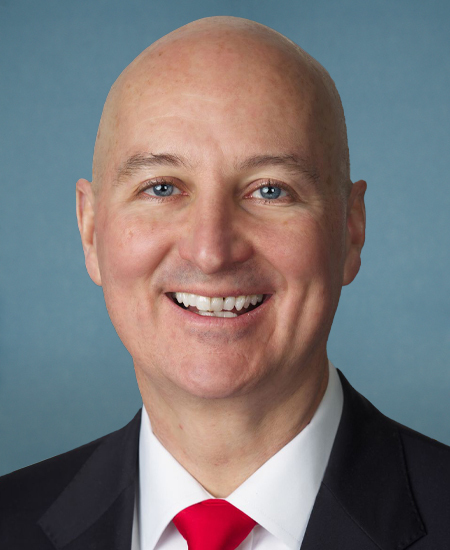
Sen. Pete Ricketts
Sponsored bills
Maddy summarySRES 19 is a Senate resolution honoring former President Jimmy Carter's life and legacy, commending his decades of public service, humanitarian work, and diplomatic achievements including the Camp David Accords and founding The Carter Center. The resolution specifically recognizes his Nobel Peace Prize, efforts to combat diseases like Guinea worm, and 30+ years of Habitat for Humanity homebuilding. It formally mourns his passing and extends condolences to his family, while highlighting his role in establishing U.S.-China diplomatic relations and creating the Departments of Education and Energy. As a symbolic resolution with no policy impact, it directly affects no individuals or entities but serves as a formal Senate tribute to Carter's historical contributions.
Maddy summaryThe STOP MADURO Act (S 39) increases the maximum reward to $100 million for information leading to the arrest and conviction of Venezuelan President Nicolás Maduro Moros. It directly affects Maduro and his regime officials by authorizing this reward through the State Department's existing rewards program. The bill's key provision allows the reward to be funded exclusively by liquidating assets already withheld from Maduro's regime under U.S. sanctions laws. This change does not alter existing sanctions but specifically boosts the financial incentive for securing his conviction.
End Child Trafficking Now Act This bill imposes restrictions related to adult non-U.S. nationals ( aliens under federal law) being admitted into the United States with a minor. Such an adult may not be admitted with a minor unless the adult (1) presents documents and witness testimony proving that the adult is a relative or guardian of the minor, or (2) submits to a DNA test that proves such a relationship. The Department of Homeland Security may request a DNA test only if the required relationship cannot be established by the presented documents and witness testimony. An adult who does not consent to a requested DNA test shall be inadmissible. If the required relationship cannot be established and the immigration officer believes the adult is guilty of a felony offense, the officer may arrest the adult. The bill makes it a crime for an adult to knowingly use a minor to whom the adult is not a relative or guardian to enter the United States.
Maddy summaryThis bill would allow individuals with a valid concealed carry permit from their home state to carry concealed handguns in other states that either permit concealed carry for residents or don’t ban it entirely. It applies to permit holders who are federally eligible to possess firearms, require government-issued ID, and must follow the host state’s specific restrictions (like where carry is prohibited). The bill does not override state laws on issuing permits but ensures reciprocity for those who legally carry in their home state, excluding machineguns and destructive devices.
Maddy summaryThe VALOR Act of 2025 establishes criteria for determining when a democratically elected government is in power in Venezuela, requiring free and fair elections with international observer oversight, respect for human rights, and the release of political prisoners. The bill authorizes U.S. sanctions against the Maduro regime, including blocking transactions involving Venezuelan debt instruments, cryptocurrency, and government property, while prohibiting support for nondemocratic governments. It also creates mechanisms for U.S. assistance to Venezuelans under a democratically elected government, including humanitarian aid and support for democratic institutions, with specific reporting requirements for sanctions and assistance programs. The sanctions remain in place until the President certifies a democratically elected government is in power, at which point the U.S. would work to terminate sanctions and coordinate international support for Venezuela's transition.
Maddy summarySJRES 1 proposes a constitutional amendment limiting congressional terms: it would bar Representatives from serving more than three terms (including time filling vacancies lasting over a year) and Senators from serving more than two terms (including time filling vacancies lasting over three years). The amendment would only apply to future elections, not current members or terms served before ratification. It directly affects candidates seeking election to the House or Senate after the amendment is approved by states. The key provision sets a clear term cap for each chamber, with specific rules for handling vacancies to prevent circumventing the limit.
Maddy summaryThe Stop Institutional Child Abuse Act (S. 1351) directs the Department of Health and Human Services to contract with the National Academies of Sciences, Engineering, and Medicine to study child abuse in youth residential programs. The study, to be completed within three years and updated every two years for a decade, will examine the prevalence of abuse, funding sources, regulations, and barriers to community-based alternatives for youth. It will identify risk assessment tools, recommend improved oversight and training for staff, and provide best practices for care including reducing the use of seclusion and restraints. The bill directly affects youth in residential programs, child welfare systems, and the agencies that oversee them, with recommendations aimed at improving safety and care. The study will involve consultation with child advocates, health professionals, individuals with lived experience, and government agencies to ensure comprehensive recommendations.
Maddy summaryThe Beagle Brigade Act of 2023 establishes a National Detector Dog Training Center under the U.S. Department of Agriculture to train dogs and handlers for detecting foreign pests and diseases threatening U.S. agriculture and natural resources. The Center will collaborate with federal agencies like U.S. Customs and Border Protection and state agricultural departments, while ensuring dog welfare and facilitating adoptions for retired or non-completing dogs. The law requires the Secretary of Agriculture to submit a report within one year detailing current threats, the Center’s role, and recommendations for improving coordination and adoption programs. This bill directly affects federal agencies, state agricultural officials, and the dog-training program, focusing on concrete policy changes to enhance pest and disease prevention.
Maddy summaryThis bill extends existing federal tax credits for biodiesel and renewable diesel producers and users through 2025, replacing the previous 2024 expiration date. It directly affects biodiesel producers, refiners, and businesses using these fuels by maintaining their eligibility for tax credits on qualifying fuel sales or use. Key provisions include extending the biodiesel credit (Section 40A) and the biodiesel mixture credit (Section 6426), while adding a rule preventing double claims for fuel covered under another credit (Section 45Z(a)). The changes apply to fuel sold or used after December 31, 2024.