

Credit Union Board Modernization Act This bill revises the required frequency of meetings held by a credit union's board of directors. Specifically, new credit unions and credit unions with a low soundness rating must meet monthly. All other credit unions must hold at least six meetings annually, with at least one meeting held during each fiscal quarter. Currently, all credit union boards must meet at least once a month.
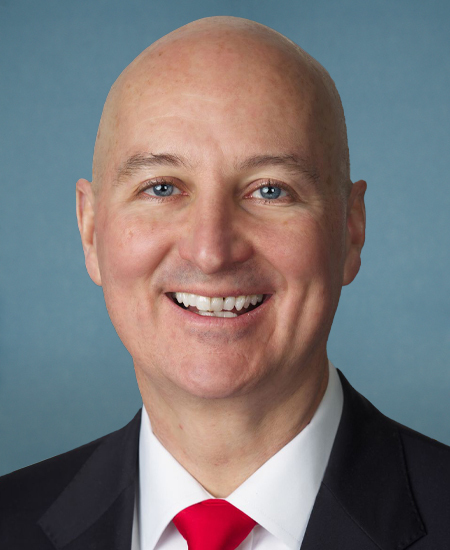
Sen. Pete Ricketts
Sponsored bills
Maddy summaryS 505, the "Protect Small Businesses from Excessive Paperwork Act of 2025," extends the filing deadline for certain small businesses already subject to federal reporting requirements. It modifies a provision in 31 U.S. Code by changing the deadline from "before January 1, 2024" to "not later than January 1, 2026." This directly affects small businesses that must submit specific reports under existing law, giving them an additional two years to comply. The bill aims to reduce administrative burden by delaying the filing obligation.
Maddy summaryThis bill amends the Higher Education Act of 1965 to exempt certain family-owned assets from financial need calculations for college students. Specifically, it removes the net value of a family farm (where the family resides) or a small business (with 100 or fewer full-time equivalent employees) owned and controlled by the family from being counted as assets when determining federal financial aid eligibility. The change applies to need analysis for award years starting after the bill's enactment date. This policy directly affects students from qualifying family farms or small businesses when applying for federal student aid under Title IV programs.
Maddy summaryThis bill amends the CARES Act by removing subsection (c) of Section 4024. It does not create new policies or directly affect any specific group; it only modifies an existing provision in federal law. The change is purely procedural, eliminating a specific subsection without altering the law's overall structure or requirements. No new rules or impacts on housing are introduced. (1 sentence, as it is a procedural amendment).
Maddy summaryThis bill prohibits federal tax deductions or credits for businesses involved in marijuana trafficking, maintaining the current tax treatment under Section 280E of the Internal Revenue Code. It directly affects businesses operating in the legal marijuana industry (where permitted by state law) by preventing them from deducting ordinary business expenses like rent or supplies on federal tax returns. The key provision expands the existing rule to explicitly include marijuana trafficking under federal law, regardless of state legalization. This policy change means marijuana businesses cannot use standard business expense deductions for federal tax purposes, aligning with federal prohibition on marijuana.
Maddy summaryThis bill permanently extends the New Markets Tax Credit (NMTC) program, which incentivizes private investment in low-income communities. It modifies the tax code to keep the credit available beyond 2025 (replacing "2020 through 2025" with "2020 and each calendar year thereafter") and adds automatic annual inflation adjustments to the credit amount starting in 2026. The bill also provides tax relief by allowing NMTC credits to offset the alternative minimum tax, specifically for investments made after December 2024. This directly affects community development financial institutions (CDFIs) and investors who fund projects in designated low-income areas.
Maddy summaryThis bill (S 482) adds Czechia to the list of countries whose business traders can enter the U.S. as E-1 nonimmigrants, provided Czechia offers similar status to U.S. nationals. It directly affects Czech businesspeople seeking to operate trade in the U.S. and U.S. citizens needing reciprocal treatment in Czechia. The key provision modifies the Immigration and Nationality Act to include Czechia as a qualifying country if the Czech government grants comparable business visitor status to U.S. citizens. This change would allow Czech nationals to access E-1 visa benefits for conducting trade, contingent on Czechia’s reciprocal policy. The bill focuses solely on updating eligibility criteria without altering broader immigration rules.
Maddy summaryThis bill requires mandatory country of origin labeling for beef products, including ground beef, so consumers can see where their beef comes from. It updates existing labeling rules under the Agricultural Marketing Act of 1946 to specifically include beef (and ground beef) alongside other meats. The law directs the U.S. Trade Representative and Agriculture Secretary to find a World Trade Organization-compliant way to reinstate this labeling within a year of enactment. It directly affects beef producers, retailers, and consumers by changing how beef packaging must identify its country of origin.
Maddy summaryThis bill amends federal securities laws to expand regulatory exemptions for retirement plans used by charities and educational institutions. It specifically updates definitions to include 403(b) plans (common for nonprofit employees) under exemptions from certain registration and oversight rules, provided they meet three conditions: (1) they follow federal retirement law (ERISA), (2) the employer acts as a fiduciary for investment choices, or (3) they are governmental plans. This change directly affects employees of qualifying charities and educational institutions who participate in these 403(b) plans, reducing compliance burdens for their retirement plans. The policy change streamlines regulatory requirements without altering retirement benefits or funding.
Maddy summaryS 427 (TAILOR Act of 2025) requires federal banking regulators (like the Federal Reserve and FDIC) to adjust rules based on each financial institution’s specific risk level and business model, rather than applying uniform regulations. It directly affects all federally regulated banks, particularly community banks, by limiting unnecessary regulatory burdens like costly reporting. Key provisions include tailoring rules to minimize costs (e.g., reducing reporting requirements for community banks eligible under the Community Bank Leverage Ratio, as specified in Section 3), documenting this tailoring in rulemaking notices, and submitting annual reports to Congress on implementation. The bill aims to modernize supervision while preserving flexibility for institutions serving local communities.