

Maddy summaryS 1169, the "Freedom from Unfair Gun Taxes Act," prohibits states and local governments from imposing excise taxes on the sale of firearms, ammunition, or firearm parts during interstate or foreign commerce. This directly affects firearm manufacturers and dealers who sell across state lines, preventing them from facing state-level taxes on those transactions. The bill explicitly states it does not change the Pittman-Robertson Wildlife Restoration Act, which allows separate federal excise taxes on firearms for conservation funding. The key provision is a blanket ban on state taxes for interstate firearm sales, aiming to standardize tax treatment across state lines.
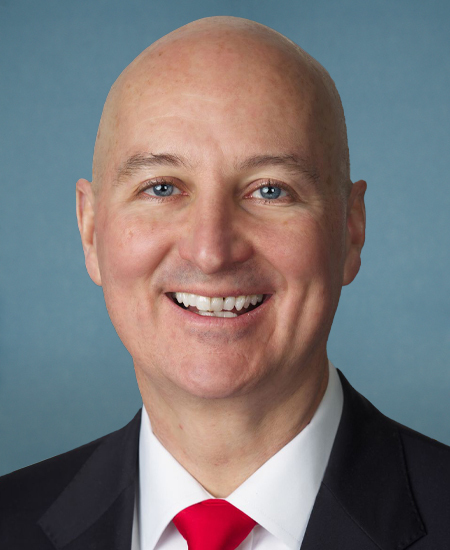
Sen. Pete Ricketts
Sponsored bills
Maintaining and Enhancing Hydroelectricity and River Restoration Act of 2025 This bill establishes a new investment tax credit in the amount of 30% of the basis of any hydropower improvement property. The bill defines hydropower improvement property as property that adds or improves fish passage at a qualified dam; maintains or improves the quality of the water retained or released by a qualified dam; promotes downstream sediment transport and habitat maintenance; upgrades, repairs, or reconstructs a qualified dam to meet safety and security standards; improves public uses of, and access to, public waterways impacted by a qualified dam; removes an obsolete river obstruction; or places into service an approved remote dam. Further, written approval for hydropower improvement property must be obtained from the Federal Energy Regulatory Commission or state or local officials prior to January 1, 2035. The bill also allows an election to claim the investment tax credit for qualified progress expenses for some types of hydropower improvement property in advance of such property being placed into service. Any investment tax credit amount claimed for qualified progress expenses reduces the amount of the investment tax credit that may be claimed once the hydropower improvement property is placed into service. The bill authorizes certain entities, including tax-exempt and governmental entities, to treat the investment tax credit for hydropower improvement property as a payment of tax and receive a refund of any overpayment (also known as elective pay). Finally, the investment tax credit for hydropower improvement property may be transferred (i.e., sold).
Maddy summaryThe SHORT Act redefines firearm classifications under federal law to remove certain restrictions on short-barreled rifles and shotguns. It eliminates special prohibitions for these weapons when used lawfully, preempts state taxes or registration requirements for them, and requires federal destruction of historical records related to these firearms. The bill directly affects owners of short-barreled rifles and shotguns, as well as state governments that previously imposed separate regulations. Key provisions include revising IRS definitions to exclude shotgun shells from "destructive devices," mandating record destruction within one year of enactment, and blocking state laws targeting these weapons in interstate commerce. These changes aim to standardize federal treatment while removing duplicative state-level barriers.
Maddy summarySRES 141 is a symbolic Senate resolution recognizing March 25, 2025, as the 204th anniversary of Greece's independence. It celebrates the historical and ongoing democratic partnership between Greece and the United States through historical references and current bilateral ties, including NATO membership and energy cooperation. The resolution does not create new laws, policies, or obligations; it solely expresses the Senate's formal recognition of Greece's independence day and reaffirms shared democratic values. It directly affects no individuals or groups, serving only as a ceremonial gesture to honor the U.S.-Greece relationship.
Maddy summaryThis bill allows state and federal correctional facilities (like jails and prisons) to operate cellphone jamming systems to block wireless signals used for contraband devices or by incarcerated individuals. It restricts the FCC from preventing this use, but requires jamming systems to be limited to housing areas within the facility. Facilities must fund the systems entirely themselves (if state-run), consult local law enforcement before implementation, and notify the Bureau of Prisons about operations. The law specifically targets blocking signals to/from contraband devices or inmates, not general cellphone use.
Maddy summaryThis bill defines biological sex for federal law by amending Title 1 of the U.S. Code. It specifies that "female" means a person biologically characterized by egg-producing systems at conception, "male" means sperm-producing systems at conception, and "gender identity" is not recognized as replacing biological sex in federal contexts. The law directly affects all federal agencies, departments, and laws requiring interpretation of terms like "sex," "female," or "male" by mandating these biological definitions. It does not create new programs or funding but changes how federal agencies must interpret existing laws and regulations.
Maddy summaryThe WATCH Act requires foreign laboratories receiving U.S. federal funding for animal research to undergo quarterly inspections to ensure compliance with U.S. animal welfare standards. It directly affects overseas labs conducting NIH-funded studies involving animals, mandating inspections of their animal care committees, treatment reviews, and record-keeping. Labs must maintain compliance, with public certificates of compliance issued after each inspection; persistent non-compliance may lead to funding suspension. The law takes effect 180 days after enactment, requiring coordination with foreign authorities while respecting their sovereignty.
Maddy summaryS 1108, the Tax Cuts for Veterans Act of 2025, excludes specific military retirement and disability benefits from taxable income for veterans. It directly affects veterans receiving retirement pay under Titles 10 or 14 U.S. Code, or disability-related payments under Titles 10, 14, 37, or 38 U.S. Code. The bill amends the Internal Revenue Code to remove these benefits from gross income calculations, effectively reducing taxable income for qualifying veterans. This policy change applies to taxable years beginning after the bill's enactment, providing immediate tax relief for affected veterans.
Maddy summaryS 1109, the Social Security Check Tax Cut Act, temporarily reduces how much of Social Security benefits counts toward taxable income for retirees and survivors. It applies to taxable years 2026 and 2027, cutting the taxable portion by 10% in 2026 and 20% in 2027 for benefits under old-age/survivors programs (Section 202 of the Social Security Act). The bill also requires funding equal to the revenue loss to be transferred to Social Security trust funds to protect their solvency. This change directly affects Social Security beneficiaries receiving retirement or survivor benefits during those years.
Maddy summaryThis bill requires federal agencies to use AI systems to annually identify redundant or outdated regulations in the Code of Federal Regulations. It directs the Office of Management and Budget, with National Institute of Standards and Technology guidance, to implement an AI review process meeting strict standards for accuracy and security. Agencies must then review identified regulations within 30 days, either rescinding redundant rules or amending outdated ones - bypassing standard procedural requirements under Title 5 of the U.S. Code. The law mandates public posting of determinations and allows expedited action through amendments to federal regulation procedures. It directly affects all federal agencies responsible for creating or maintaining regulations.