

Maddy summaryThis bill requires the U.S. Department of Agriculture to conduct annual residue testing on imported organic feedstuffs shipped in bulk with a national organic program certificate, and to submit yearly reports to Congress detailing testing methods, results, and corrective actions. It directly affects importers of bulk organic feedstuffs by mandating compliance with new verification standards and prohibiting shipments that test above allowed levels of banned chemicals from being sold or labeled as organic. The Secretary of Agriculture must develop annual risk-based testing protocols (considering factors like shipment frequency and chemical risks) and take mandatory corrective actions when violations occur. The law does not change organic production standards but adds verification steps for specific imported feedstuffs to ensure compliance with existing organic regulations.
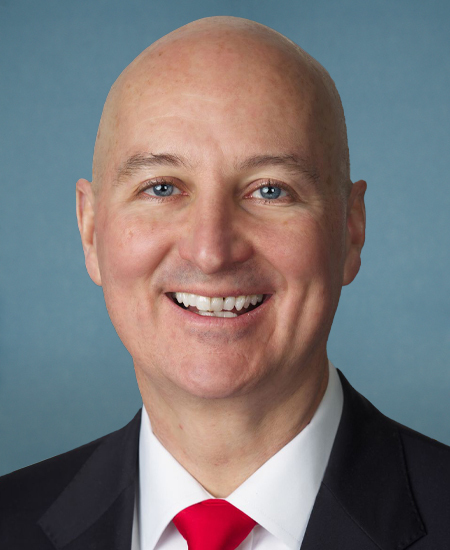
Sen. Pete Ricketts
Sponsored bills
Maddy summaryThe Targeting Child Predators Act of 2025 amends federal law to strengthen confidentiality for ongoing investigations into child predators. It requires recipients of certain administrative subpoenas (issued by the Secretary of Homeland Security) to keep the subpoena's existence and details secret for up to 180 days, unless a federal official certifies disclosure would endanger the investigation (e.g., by threatening safety, causing flight, destroying evidence, or intimidating witnesses). The bill also establishes a new court process for reviewing these confidentiality orders, requiring federal officials to provide specific justifications and courts to rule quickly on whether disclosure would jeopardize the investigation. This directly affects entities like financial institutions and online platforms that may receive such subpoenas.
Maddy summaryThis bill, S 1326 (Food Security and Farm Protection Act), prohibits state and local governments from imposing additional production standards on agricultural products sold across state lines. It directly affects farmers, food producers, and businesses involved in interstate agricultural trade by preventing states from creating new rules for farming that occurs in another state, unless federal or the producing state's rules already cover it. Key mechanisms include banning such extra state rules and creating a federal court process for affected parties (like producers or distributors) to challenge those rules and seek damages. The law also requires courts to issue temporary injunctions against enforcement of challenged regulations while cases are resolved, unless the state proves it will likely win and would suffer severe harm without the rule.
Maddy summaryThis resolution (SRES 159) is a ceremonial Senate measure honoring the late Senator John Bennett Johnston, Jr. (1932-2024), who represented Louisiana in the U.S. Senate from 1972 to 1997. It commemorates his career, including his work on energy policy, flood control, and Louisiana conservation efforts, and requests the Senate adjourn in his memory while sending condolences to his family. As a non-binding resolution, it has no policy impact or direct effect on any individuals or laws.
Maddy summarySenate Joint Resolution 45 seeks to block an Environmental Protection Agency (EPA) rule that would have allowed California to enforce its Advanced Clean Cars II vehicle emission standards. The resolution uses the congressional disapproval process under federal law to declare the EPA rule invalid, preventing California from implementing its stricter pollution controls for cars and trucks. If passed, this resolution would stop the rule from taking effect, meaning California could not override federal vehicle emission standards with its own requirements. The bill directly affects California's ability to set state-level environmental regulations for motor vehicles and the EPA's regulatory authority.
Maddy summarySJRES 46 is a joint resolution seeking congressional disapproval of an Environmental Protection Agency (EPA) rule concerning California's vehicle emission standards. The rule, submitted in 2023, relates to California's pollution control requirements for motor vehicles, including advanced clean trucks, zero-emission airport shuttles, and heavy-duty engine emissions. This resolution would block the rule from taking effect using a specific federal disapproval process under Title 5 of the U.S. Code. If passed, the rule would have no legal force, meaning California's current standards would remain without the EPA's formal approval for these specific provisions.
Maddy summaryThis bill (SJRES 47) seeks congressional disapproval of an Environmental Protection Agency (EPA) rule that approved California's stricter vehicle pollution standards. Specifically, it targets the EPA's "Omnibus Low NOx Regulation" for motor vehicles and nonroad engines, which California had submitted for federal approval under waiver authority. If passed, the resolution would block this EPA rule from taking effect, preventing California's state-level pollution controls from being implemented under federal oversight.
Maddy summaryS 1289 authorizes the U.S. Mint to produce and sell commemorative $5 gold and $1 silver coins to mark the 25th anniversary of the September 11, 2001, terrorist attacks. The bill specifies coin specifications (e.g., 90% gold/silver content, design requirements including "Never Forget"), sets a one-year issuance window (January 1, 2027-2028), and requires surcharges of $35 per gold coin and $10 per silver coin. These surcharges will be paid directly to the National September 11 Memorial and Museum to support its operations and maintenance, with coins sold at a price covering face value, surcharge, and production costs. The legislation does not impose new regulations or affect public policy but focuses on commemoration and funding for the museum.
Defending Education Transparency and Ending Rogue Regimes Engaging in Nefarious Transactions Act or the DETERRENT Act This bill expands oversight and disclosure requirements related to foreign sources and institutions of higher education (IHEs). Specifically, the bill requires an IHE to annually disclose to the Department of Education (ED) any year in which the IHE receives a gift from a foreign country of concern (e.g., China or Russia) or foreign entity of concern of any dollar amount; receives a gift or contract from a foreign source (other than a foreign country of concern or foreign entity of concern) that is valued at $50,000 or more, considered alone or in combination with all other gifts or contracts within a calendar year (current disclosure threshold is $250,000 or more), or which has an undetermined monetary value; enters into a contract with a foreign country of concern or foreign entity of concern after receiving a waiver for such contract; or is substantially controlled by a foreign source. Additionally, the bill prohibits IHEs from entering into contracts with a foreign country of concern or with a foreign entity of concern without obtaining a waiver, and requires certain IHEs to disclose gifts or contracts between covered individuals (e.g., researchers) and foreign sources. The bill requires ED to investigate possible violations of this bill and outlines the various penalties for each violation. Penalties may include losing eligibility for federal student financial aid.
Maddy summaryThis bill requires the Department of Housing and Urban Development (HUD) to develop guidelines for states and local governments to reform zoning laws that limit housing supply. The guidelines would recommend specific changes like eliminating parking minimums, allowing more housing types (such as duplexes and accessory units), and streamlining approval processes for new projects. It directly affects state and local governments, housing developers, and communities facing housing shortages - addressing a 3.85 million home shortfall cited in the bill. HUD must report to Congress on which states and localities adopt these reforms and their impact on building permits.