

Maddy summaryThis bill authorizes the U.S. Treasury to mint three commemorative coins in 2026 to honor Golda Meir (Israel’s first female Prime Minister) and mark the 75th anniversary of U.S.-Israel relations. It specifies $5 gold, $1 silver, and half-dollar coins bearing her image and inscriptions like "Golda Meir, Israel 75, 2026," with surcharges of $35, $10, and $5 per coin respectively. All surcharge revenue will fund Kiryat Sanz Laniado Hospital in Israel, while the coins - minted only in 2026 - will be sold as collectibles with no net cost to the U.S. government.
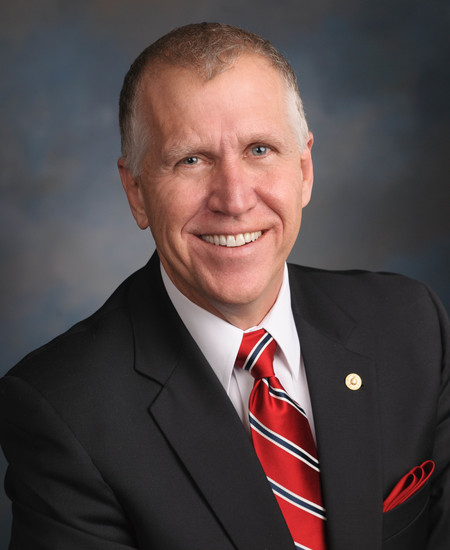
Sen. Thom Tillis
Sponsored bills
Maddy summaryThis bill requires the VA Secretary to respond to written questions from Senate and House Veterans' Affairs committees within 45 business days. If delays are expected, the VA must notify the committee member in advance, explaining the reason, providing a new timeline, and detailing steps needed to answer. It also mandates other federal agencies to promptly assist the VA when requested to meet these deadlines. The bill directly affects the VA Secretary, congressional committees, and other federal agencies involved in VA oversight.
Maddy summaryThis joint resolution (SJRES 25) seeks congressional disapproval of a specific Department of Labor rule regarding wage rates for H-2A agricultural workers. It targets the rule published in the Federal Register (88 Fed. Reg. 12760) that established a methodology for calculating "Adverse Effect Wage Rates" (AEWR) for temporary H-2A nonimmigrant workers in non-range occupations. If passed, the resolution would block this rule from taking effect, directly affecting agricultural employers who rely on H-2A visas and the workers themselves by preventing the implementation of the new wage calculation method. The resolution does not create new policy but aims to halt an existing rule through the congressional disapproval process under U.S. Code.
Maddy summaryThe Save Local Business Act (S 1261) clarifies when businesses can be held jointly liable for labor violations under federal law. It amends the National Labor Relations Act and Fair Labor Standards Act to define "joint employer" status strictly: an employer must directly and immediately control essential employment terms like hiring, pay, scheduling, and discipline for another employer’s workers. This directly affects businesses operating under multi-employer structures (e.g., franchises, staffing agencies) by limiting joint liability to cases where control is demonstrable and immediate. The bill does not change existing labor protections but sets clearer, more specific criteria for determining joint employer responsibility.
Maddy summaryThe Family Farm and Small Business Exemption Act (S 1237) would amend the Higher Education Act of 1965 to exclude specific family-owned assets from being counted when calculating a student's financial need for federal aid. It directly affects students from families owning a farm where they reside or a small business (with 100 or fewer full-time employees) that is family-controlled. The bill adds explicit exemptions for these assets in the financial aid formula, removing their value from asset calculations. This change would increase eligibility for need-based aid like Pell Grants for affected students without altering other aid program rules.
Maddy summaryThe Combating Violent and Dangerous Crime Act amends federal criminal statutes to clarify legal standards and increase penalties for specific violent crimes. It clarifies that assaults on federal officers are general intent crimes (removing the need to prove defendants specifically intended to harm officers), increases carjacking penalties to 20 years for first offenses (up from 15) and up to 40 years when weapons are used, and creates a new offense for distributing candy-flavored controlled substances to minors with penalties of up to 20 years for repeat violations. The bill also updates sentencing guidelines to require a 2-level enhancement for the new candy-flavored drug offense. These changes apply to existing federal criminal codes without creating new crime categories beyond the specified provisions.
Maddy summaryThis bill (SJRES 10) seeks to block a specific rule issued by the Department of Veterans Affairs (VA) regarding reproductive health services for veterans. It requests Congress disapprove the rule (published September 2022) under a process in federal law that allows Congress to halt agency regulations. If approved, the VA rule would be nullified and could not take effect, meaning the VA could not enforce its provisions on reproductive health services for veterans. The bill directly affects the implementation of this VA policy for veterans receiving care at VA facilities.
Maddy summaryThis bill amends key labor laws to strengthen worker protections and clarify union election processes. It requires employers to provide voter lists for union elections with only one employee-chosen contact detail (like email or phone), mandates secret ballot elections for union representation, and restricts union dues from funding non-representational activities without written employee consent for at least 35 days. The bill also clarifies joint employment standards, making it harder for companies to avoid responsibility for workers' pay and conditions, and adds tribal sovereignty protections to labor law definitions. These changes directly affect employers, unions, and employees in collective bargaining contexts.
Maddy summarySRES 161 is a symbolic Senate resolution designating April 22-30, 2023, as "National Park Week." It does not create new laws or affect specific groups, but formally recognizes the National Park System's significance. The resolution highlights the parks' historical value, visitor impact (312 million visits in 2022), and economic contributions ($42.5 billion in 2021). It encourages public engagement with national parks but contains no funding, regulatory changes, or policy mechanisms. As a procedural resolution, it serves purely to honor the parks' legacy.
Maddy summarySenate Bill 1184 requires the U.S. Comptroller General to study sister city partnerships between American local governments (like cities or counties) and foreign communities from countries scoring 45 or lower on Transparency International’s 2019 Corruption Perceptions Index. The study will examine partnership criteria, activities, transparency of contracts, economic risks, and potential security concerns like foreign espionage or coercion. It will assess how these partnerships affect freedom of expression, U.S. economic security, and whether they enable foreign malign activities. The Comptroller General must submit findings and recommendations to Congress within six months.