

Maddy summaryThis bill excludes capital gains from the sale of certain property rights when sold to organizations participating in the Department of Defense's REPI program. The REPI program helps military bases protect environmentally sensitive land while maintaining training readiness. Landowners selling qualifying property - including full ownership, remainder interests, or perpetual land use restrictions - to REPI-participating organizations can exclude the sale profit from taxable income. It directly affects property owners who sell to REPI programs, with specific rules for family-owned entities.
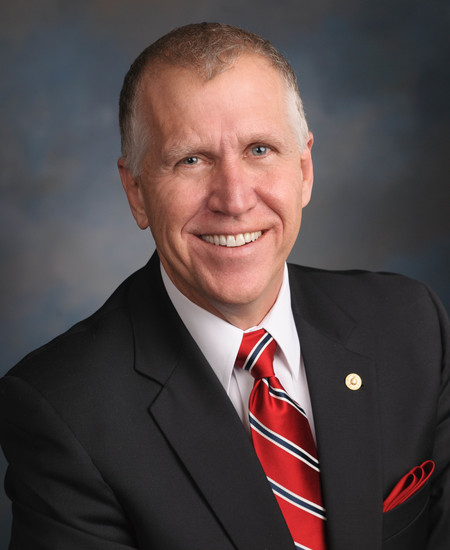
Sen. Thom Tillis
Sponsored bills
Maddy summaryThis bill amends federal securities laws to expand regulatory exemptions for retirement plans used by charities and educational institutions. It specifically updates definitions to include 403(b) plans (common for nonprofit employees) under exemptions from certain registration and oversight rules, provided they meet three conditions: (1) they follow federal retirement law (ERISA), (2) the employer acts as a fiduciary for investment choices, or (3) they are governmental plans. This change directly affects employees of qualifying charities and educational institutions who participate in these 403(b) plans, reducing compliance burdens for their retirement plans. The policy change streamlines regulatory requirements without altering retirement benefits or funding.
Maddy summaryS 427 (TAILOR Act of 2025) requires federal banking regulators (like the Federal Reserve and FDIC) to adjust rules based on each financial institution’s specific risk level and business model, rather than applying uniform regulations. It directly affects all federally regulated banks, particularly community banks, by limiting unnecessary regulatory burdens like costly reporting. Key provisions include tailoring rules to minimize costs (e.g., reducing reporting requirements for community banks eligible under the Community Bank Leverage Ratio, as specified in Section 3), documenting this tailoring in rulemaking notices, and submitting annual reports to Congress on implementation. The bill aims to modernize supervision while preserving flexibility for institutions serving local communities.
Maddy summaryS 383 (the JOBS Act of 2025) expands Federal Pell Grant eligibility to students enrolled in certain short-term job training programs at eligible institutions of higher education. The bill creates a "job training Federal Pell Grant" for programs meeting specific criteria: 150-600 clock hours over 8-15 weeks, aligned with high-demand industry sectors, and leading to recognized postsecondary credentials that meet employer hiring requirements or licensure prerequisites. It also lowers the minimum Pell Grant award from 10% to 5% of the full annual amount. This directly affects students seeking career-focused training and institutions offering qualifying programs that validate industry partnerships.
Maddy summaryS 385, the Fairness for Servicemembers and their Families Act of 2025, requires the Secretary of Veterans Affairs to review the automatic maximum coverage amount for Servicemembers’ Group Life Insurance (SGLI) and Veterans’ Group Life Insurance (VGLI) every five years starting in 2026. The review compares the current coverage limit to a new amount calculated as $500,000 multiplied by the average change in the Consumer Price Index over the previous five years. This adjustment mechanism ensures coverage levels better reflect inflation, directly affecting active-duty servicemembers and veterans enrolled in these insurance programs. The bill mandates that the review results be submitted to congressional committees, potentially guiding future coverage increases within existing administrative structures.
Maddy summaryThis bill prohibits critical skill pay supplements for Senior Executive Service (SES) employees working at the Department of Veterans Affairs' (VA) Central Office (including Veterans Health Administration, Benefits Administration, and National Cemetery Administration), regardless of where they perform duties. It allows limited exceptions for SES employees primarily working at non-Central Office facilities, requiring incentives to be proportional to time spent at those locations. The bill also mandates annual reports to Congress listing VA SES employees receiving such incentives, starting one year after enactment. The policy directly affects VA senior leadership positions at the Central Office and modifies existing pay incentive rules for these roles.
Maddy summaryS 400 enhances the tax credit for employers that provide paid family and medical leave to their workers. Employers can now choose to calculate the credit based on either wages paid to employees on leave or premiums paid for an insurance policy covering the leave. The bill clarifies that state or local government-paid leave counts toward the leave provided but does not count toward the credit amount, and extends the credit to cover up to six months of leave. Additionally, it requires the Small Business Administration and IRS to conduct outreach to help employers understand and use the credit.
Maddy summaryThe Fair Access to Banking Act (S 401) prohibits large financial institutions ($10 billion+ in assets) and payment networks from denying services to lawful businesses based on political or reputational factors, such as the type of legal business they operate. It requires banks to justify denials using objective, risk-based standards instead of category-based decisions, and mandates written explanations for denials. The law enables lawsuits against violators with treble damages and civil penalties up to 10% of service value (capped at $10,000 per violation). It directly affects major banks, payment processors, and credit unions that serve large-scale customers, ensuring fair access for businesses operating within federal law.
Maddy summaryThe SHOW UP Act of 2025 requires federal agencies to return to telework policies in effect on December 31, 2019, within 30 days of enactment. Agencies cannot expand telework beyond this baseline until they submit a detailed plan to Congress and receive certification from the Office of Personnel Management (OPM) Director, proving the expansion will improve mission performance, reduce costs, and provide adequate resources for teleworkers. This bill directly affects all federal executive agencies and their telework arrangements, mandating a study on pandemic-era telework impacts as part of the planning process. The legislation aims to standardize telework practices by requiring evidence-based changes rather than unilateral agency decisions.
Maddy summaryThis bill establishes a 5-year pilot program to create a performance-based pay system for certain federal employees. It affects senior federal workers (GS-11 to GS-15 or higher roles with measurable work, like managers, IT specialists, or customer service roles) at 1-10% of eligible employees per agency. Key provisions include tiered pay adjustments: employees exceeding goals get a 15% raise, those meeting goals see no change, and those falling short face a 15% pay cut plus mandatory training. Agencies must report annual productivity data and outcomes, with all implementation using existing agency funds.