

Maddy summaryThe Concrete and Asphalt Innovation Act of 2025 establishes a federal research, development, and demonstration program focused on reducing greenhouse gas emissions in cement, concrete, asphalt binder, and asphalt mixture production. The program, funded with $200 million over fiscal years 2025-2029, will support demonstration projects, provide technical assistance to update building codes and standards, and establish Manufacturing USA institutes for low-emissions materials. It also creates a Federal Highway Administration initiative that reimburses states for higher costs of using low-emissions materials in highway projects and offers 2% incentives on project costs. The bill aims to reduce embodied greenhouse gas emissions in construction materials while supporting domestic manufacturing and creating jobs in the construction sector.
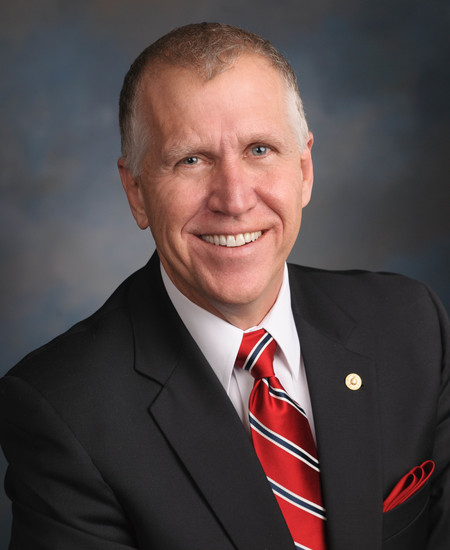
Sen. Thom Tillis
Sponsored bills
This joint resolution nullifies the rule titled Gross Proceeds Reporting by Brokers That Regularly Provide Services Effectuating Digital Asset Sales and issued by the Internal Revenue Service (IRS) on December 30, 2024. The rule generally requires persons effectuating decentralized financial (DeFi) transactions to report certain information regarding digital asset sales to the IRS.
Maddy summarySenate Resolution 126 calls on the United Nations Security Council to expand the existing Darfur arms embargo to cover all of Sudan and strengthen enforcement mechanisms. It specifically requests extending the embargo to include dual-use equipment and holding violators accountable, aiming to prevent weapons from reaching the Sudanese Armed Forces (SAF) and Rapid Support Forces (RSF). The resolution is procedural and does not impose new U.S. sanctions, but urges international action to block weapons flowing into Sudan. This follows documented reports of foreign weapons supply to both parties, which have been linked to ongoing atrocities.
Maddy summaryThis bill amends the Food Security Act of 1985 to create an exception for farmers and ranchers seeking disaster program payments. It allows individuals or entities to qualify for payments under specific programs (like those in the 2014 and 1996 Farm Acts) if at least 75% of their average adjusted gross income comes from farming, ranching, silviculture, agritourism, or related activities. The key provision removes income-based eligibility barriers for those whose primary livelihood is agriculture. This directly affects farmers who previously might have been disqualified due to income thresholds from non-farming sources. The change applies to crop, fiscal, or program years as determined by the Secretary.
Maddy summaryThe Medical Supply Chain Resiliency Act (S 998) aims to strengthen U.S. access to critical medical goods by creating "trusted trade partner agreements" with foreign countries that meet specific criteria, such as maintaining open trade during health emergencies and protecting intellectual property. It directly affects the U.S. Trade Representative, foreign governments, and medical manufacturers by reducing tariffs and trade barriers for medical devices and pharmaceuticals with these partners. Key mechanisms include establishing a framework to diversify supplier networks, harmonize regulatory standards, and expedite cross-border movement of medical goods during crises. The bill requires the President to submit regular reports to Congress and mandates that agreements must be approved by Congress before taking effect.
Maddy summaryThis bill reauthorizes a federal program supporting pregnant and postpartum women with substance use disorders. It increases annual funding from $29.9 million to $38.9 million for fiscal years 2025-2029, updates terminology to "health care services," and requires applicants to include outreach plans targeting women disproportionately impacted by maternal substance use disorder. The program directly affects eligible women seeking treatment during pregnancy and postpartum, ensuring continued access to care through expanded funding and targeted outreach. The changes apply to the existing Public Health Service Act program (Section 508) without altering its core purpose.
Maddy summaryThe SOIL Act of 2025 requires the Committee on Foreign Investment in the United States (CFIUS) to review certain foreign purchases of agricultural land and real estate near military bases. It specifically targets transactions involving foreign entities from countries designated as nonmarket economies (like China or Russia under trade law) or identified as national security risks in the annual intelligence threat report. The bill prohibits federal subsidies for agricultural land held by such foreign entities and updates disclosure rules to include long-term leases of agricultural land. It also mandates annual public reports detailing foreign ownership of U.S. farmland by country, including holdings near military installations within 50 miles.
Veterans 2nd Amendment Protection Act of 2025 This bill prohibits the Department of Veterans Affairs (VA) from transmitting certain information to the National Instant Criminal Background Check System (NICS) utilized by licensed importers or dealers of firearms. Specifically, the bill prohibits the VA from transmitting personally identifying information of a veteran or a beneficiary to the NICS solely on the basis that such veteran or beneficiary has an appointed fiduciary to manage their benefits, unless there is an order or finding of a judicial authority that such veteran or beneficiary is a danger to themselves or others.
Maddy summaryThe Restore VA Accountability Act of 2025 establishes new rules for disciplining VA supervisors and management officials (excluding senior executives and political appointees) for poor performance or misconduct. It requires the VA Secretary to use specific, written criteria - like the offense's severity, the employee's role, and past record - when deciding on removal, demotion, or suspension, and mandates decisions within 15 business days. The bill creates an internal grievance process for affected employees and strengthens whistleblower protections by requiring Special Counsel approval before disciplining someone who disclosed wrongdoing. It also limits judicial review to cases of arbitrary or capricious decisions and explicitly prohibits courts from reducing penalties. The law applies to VA employees covered under the bill's definition, effective from the 2017 VA Accountability Act's enactment date.
Maddy summarySRES 121 establishes the Senate Human Rights Commission, a bipartisan forum for discussing international human rights issues. The 10-member commission (5 from each party, led by two co-chairs) will hold hearings, monitor global human rights violations, and collaborate with other groups - but it has no legislative power or authority to draft bills. Funded with a $200,000 annual cap from the Senate’s Contingent Fund, the commission will sunset on January 1, 2029. It directly affects Senate members appointed to serve and builds on the existing Senate Human Rights Caucus.