

This resolution addresses free speech issues at institutions of higher education (IHEs). Specifically, the resolution recognizes that free speech zones and restrictive speech codes of IHEs are inherently at odds with the freedom of speech guaranteed by the First Amendment to the Constitution. In addition, the resolution urges (1) IHEs to facilitate and recommit themselves to protecting the free and open exchange of ideas; (2) the Department of Education to promote policies that foster debate, academic freedom, intellectual curiosity, and viewpoint diversity on campuses of public IHEs; and (3) the Department of Justice to defend and protect the First Amendment across public IHEs.
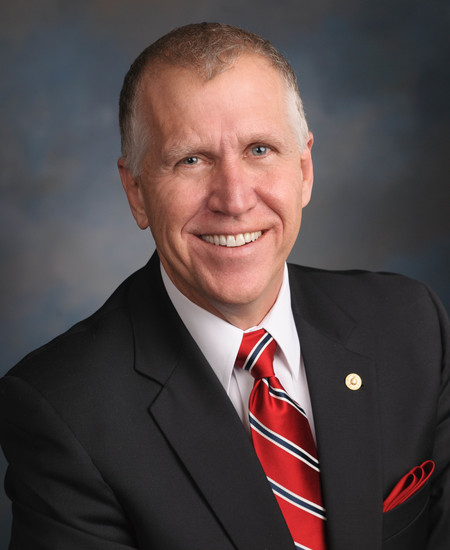
Sen. Thom Tillis
Sponsored bills
Improving Seniors' Timely Access to Care Act of 2021 This bill establishes several requirements and standards relating to prior authorization processes under Medicare Advantage (MA) plans. Specifically, MA plans must (1) establish an electronic prior authorization program that meets specified standards, including the ability to provide real-time decisions in response to requests for items and services that are routinely approved; (2) annually publish specified prior authorization information, including the percentage of requests approved and the average response time; and (3) meet other standards, as set by the Centers for Medicare & Medicaid Services, relating to the quality and timeliness of prior authorization determinations.
Save Our Servicemembers Act of 2021 This bill requires the Office of the Under Secretary of Defense for Personnel and Readiness within the Department of Defense (DOD) to evaluate and standardize DOD's suicide prevention efforts. Specifically, the bill directs the Defense Suicide Prevention Office to collaborate with each military department to (1) develop and implement a process to ensure that individual nonclinical suicide prevention efforts are assessed for effectiveness, and (2) develop consistent suicide-related definitions for use throughout DOD. The bill also requires the use of such suicide-related definitions in any updated policies of DOD or each military department.
This resolution authorizes the use of the atrium in the Phillip A. Hart Senate Office Building for a bipartisan Halloween dog parade on October 27, 2021.
This resolution supports the designation of October 3-October 9, 2021, as National 4-H Week. It also (1) recognizes the important role of 4-H in youth development and education, and (2) encourages all citizens to recognize 4-H for the significant impact the organization and members have made and continue to make by empowering young people with the skills needed to lead for a lifetime.
This bill requires the Department of Veterans Affairs (VA) to designate one week each year as Buddy Check Week for the purposes of organizing outreach events and educating veterans on how to conduct peer wellness checks. The VA shall ensure that the Veterans Crisis Line has a plan for handling the potential increase in calls that may occur during such week.
This resolution honors and commends the women who served in the Navy Women Accepted for Voluntary Emergency Service (WAVES) during World War II. Additionally, the resolution recognizes that the WAVES opened opportunities for women and contributed vitally to the victory of the United States and Allies in World War II.
This bill directs the Department of the Treasury to consider sanctioned transactions involving precious metals when assessing whether a jurisdiction, financial institution, class of transactions, or type of account is of primary money laundering concern for purposes of reporting, recordkeeping, and certain account restrictions.
Global Malnutrition Prevention and Treatment Act of 2021 This bill sets out programs and otherwise directs the U.S. Agency for International Development (USAID) to carry out activities to prevent and treat malnutrition globally. In coordination with relevant federal agencies, bilateral and multilateral donors, partner countries, and other stakeholders, the USAID may scale up programs for preventing and treating malnutrition globally. This includes focusing on interventions for the populations most susceptible to severe malnutrition (e.g., pregnant and lactating women and children younger than five years of age). The USAID must select countries based on specified malnutrition-related indicators for purposes of targeting malnutrition prevention and treatment programs and update the selection within five years. To support these programs, the USAID must leverage additional private sector resources in priority countries, including by considering opportunities within the Development Finance Corporation's impact framework for supporting improved nutrition outcomes. The USAID must provide Congress with an implementation plan and annual reports concerning its programs for preventing and treating malnutrition. The bill also establishes the Nutrition Leadership Council, comprised of various USAID bureaus and offices, to coordinate agency activities to prevent and treat malnutrition. The bill's provisions terminate seven years after its enactment.
Better Enforcement of Grievous Offenses by unNaturalized Emigrants or the BE GONE Act This bill expands, for immigration purposes, the definition of aggravated felony to include sexual assault and aggravated sexual violence. (Under current law, a conviction for an aggravated felony is grounds for deportation and may bar an individual from other immigration-related benefits.)