

Eliminating Abusive and Rampant Neglect of Interactive Technologies Act of 2022 or the EARN IT Act of 2022 This bill revises the federal framework governing the prevention of online sexual exploitation of children. The bill establishes the National Commission on Online Child Sexual Exploitation Prevention. The commission must develop best practices for interactive computer services providers (e.g., Facebook and Twitter) to prevent, reduce, and respond to the online sexual exploitation of children. Additionally, the bill limits the liability protections of interactive computer service providers with respect to claims alleging violations of child sexual exploitation laws. The bill replaces various statutory references to child pornography and material that contains child pornography with child sexual abuse material . Finally, the bill makes changes to the reporting requirements for electronic communication service providers and remote computing service providers (providers) who report apparent instances of crimes involving the sexual exploitation of children to the National Center for Missing and Exploited Children. Among the changes, the bill requires providers to report facts and circumstances sufficient to identify and locate each minor and each involved individual. The bill also increases the amount of time that providers must preserve the contents of a report.
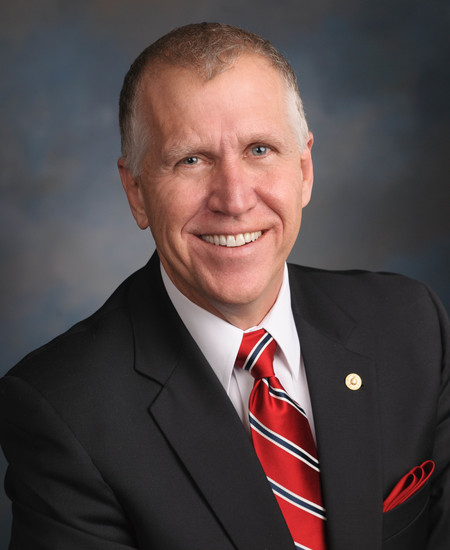
Sen. Thom Tillis
Sponsored bills
Strengthening Enforcement to Curtail Unlawful, Risky Entrance to Flights Act of 2022 or the SECURE Flights Act of 2022 This bill prohibits the use of warrants and other documents issued by U.S. Immigration and Customs Enforcement (ICE) as proof of identification at airport security checkpoints unless the individual is leaving the United States pursuant to immigration laws. If an individual uses prohibited documents as a proof of identification, the Transportation Security Administration (TSA) must (1) inform ICE and local law enforcement to determine whether the individual is in violation of any term of release, and (2) collect the individual's biometric information unless the TSA can verify the individual is a U.S. national. The TSA must also submit the biometric information to a national biometric identification system.
Delivering Essentials to Mothers Amid Natural Disasters Act of 2022 or the DEMAND Act of 2022 This bill directs the Federal Emergency Management Agency (FEMA) to designate breast pumps and certain lactation supplies as eligible for financial assistance under major disaster relief provisions.
Driving for Opportunity Act of 202 1 This bill authorizes the Department of Justice to make grants to states that do not suspend, revoke, or refuse to renew a driver's license of an individual based on such individual's failure to pay a civil or criminal fine or fee. Grants shall be awarded to (1) cover the costs incurred by a state to reinstate driver's licenses previously suspended for unpaid fines and fees; (2) maximize the number of individuals with suspended driver's licenses eligible to have driving privileges reinstated or regained; (3) provide assistance to individuals living in areas where public transportation options are limited; and (4) ease the burden on states where the state or local law that permitted the suspension or revocation of, or refusal to renew, driver's licenses or the registration of a motor vehicle based on the failure to pay civil or criminal fines or fees was in effect during the three year period ending on the date on which a state applies for or receives a grant under this bill. The Government Accountability Office must study the implementation of the grant program authorized by this bill, including the known effects of repealing state laws that have permitted the suspension, revocation, or refusal of a driver's license or motor vehicle registration based on the failure to pay civil or criminal fines or fees.
Kids in Classes Act This bill prohibits a state educational agency from receiving specified federal education funds unless funds are provided directly to a parent or guardian of an eligible child for certain qualified educational expenses (e.g., educational materials, tutoring, or private school tuition). Eligible child refers to a child who attends a public elementary or secondary school and such school (1) receives specified federal education funds; and (2) does not provide, for more than three days during a school year and for reasons related to a public health emergency or collective bargaining action, in-person instruction for all students who wish to attend.
Maddy summarySRES 501 designates the week of January 23-29, 2022, as "National School Choice Week" through a symbolic Senate resolution. The resolution encourages parents to learn about K-12 education options - including public schools, charters, private schools, and homeschooling - and urges the public to host events raising awareness of educational choice. It does not create new policies or affect any individuals or institutions, as it is a ceremonial designation focused solely on promoting public awareness. The resolution was adopted unanimously by the Senate on February 1, 2022.
This resolution honors and commends the women who served in the Navy Women Accepted for Voluntary Emergency Service (WAVES) during World War II. Additionally, the resolution recognizes that the WAVES opened opportunities for women and contributed vitally to the victory of the United States and Allies in World War II.
This resolution states that the Senate continues to refuse to recognize Alyaksandr Lukashenka as the legitimately elected leader of Belarus. It also condemns Lukashenka's ongoing crackdown on peaceful protesters and calls for new presidential and parliamentary elections.
This bill revises membership of the Board of Directors of the Federal Deposit Insurance Corporation. Currently, the Comptroller of the Currency and the Director of the Consumer Financial Protection Bureau have statutorily designated seats on the five-member board. The bill removes this requirement and bars any officer of either agency from holding seats on the board. Additionally, the bill revises the continuation of service requirements to limit a board member's service beyond the end of their term.
Stop the Nosy Obsession with Online Payments Act of 2022 or the SNOOP Act of 2022 This bill modifies requirements for third party settlement organizations to eliminate their reporting requirement with respect to the transactions of their participating payees unless they have earned more than $20,000 on more than 200 separate transactions in an applicable tax period. A third party settlement organization is the central organization that has the contractual obligation to make payments to participating payees (generally, a merchant or business) in a third party payment network. This reverses a provision in the American Rescue Plan Act of 2021 that lowered the reporting threshold to $600 with no minimum on the number of transactions.