

Continuing Emergency Support for Restaurants Act This bill provides an additional $48 billion in FY2021 for the Restaurant Revitalization Fund and designates specified amounts for fund administrative expenses and audits of grants made from the fund. The fund was established in response to COVID-19 to make grants to eligible food and beverage purveyors for covering specified costs such as payroll, operational expenses, and paid sick leave. The bill designates the funding as emergency spending, which is exempt from discretionary spending limits.
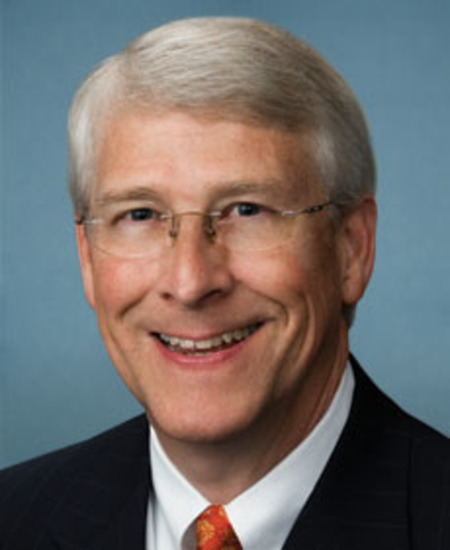
Sen. Roger F. Wicker
Sponsored bills
This resolution designates March 24, 2022, as National Women in Agriculture Day. It also recognizes the important role of women in agriculture as producers, educators, leaders, mentors, and more
Homeowner Flood Insurance Transparency and Protection Act This bill allows National Flood Insurance Program policyholders to elect to pay premiums at the rate in effect prior to the implementation of Risk Rating 2.0. Risk Rating 2.0 bases premium rates on an individual property's specific flood risk instead of the flood risk of a general location and property type. Policyholders may elect to pay the previous rate until the Federal Emergency Management Agency performs several actions regarding Risk Rating 2.0, including publishing all data and methods used to calculate premium rates under Risk Rating 2.0, creating an online database where policyholders can see premium rates for their property using specified calculations, and publishing an assessment of the economic and social impacts of Risk Rating 2.0.
This joint resolution nullifies the rule titled Patient Protection and Affordable Care Act; Updating Payment Parameters, Section 1332 Waiver Implementing Regulations, and Improving Health Insurance Markets for 2022 and Beyond , which was issued by the Centers for Medicare & Medicaid Services and the Department of the Treasury on September 27, 2021. The rule expands the open enrollment period for individual health coverage and rescinds the previous interpretation of certain requirements relating to Section 1332 waivers (also known as State Innovation Waivers or State Relief and Empowerment Waivers).
Prohibiting Religious Exemption and Accommodations Databases Act This bill prohibits federal agencies from disclosing to other agencies or organizations any information relating to the religious beliefs, identity, or affiliation of an individual with a religious accommodation, including with respect to a COVID-19 vaccine requirement. The bill specifically incorporates such information into the Privacy Act of 1974 (which restricts how agencies may disclose or share records that identify individuals in the absence of written consent) and exempts related records from disclosure under the Freedom of Information Act (which provides the public a right to access federal agency information).
Employee Rights Act This bill makes various changes with respect to the collective bargaining process and labor relations. For example, the bill permits an employer to refuse to collectively bargain with a union within 90 days prior to the expiration of a collective bargaining agreement if the employer receives evidence that the majority of the employees in the bargaining unit do not support the union. The bill requires support from a majority of the employees in the bargaining unit (not just a majority of the employees voting) when electing union representation. The bill also requires unions to provide bargaining unit employees with the right to vote by secret ballot, including when voting whether to engage in a strike or refusal to work. Further, union dues, fees, assessments, and other contributions may be used for only collective bargaining or contract administrative functions. Additionally, the bill establishes a process for nullifying executive orders that the Office of Management and Budget determines are likely to result in an employer ordering a plant closure or mass layoff.
This resolution expresses that the Senate encourages the President of the United States to support the transfer of aircraft, such as MiG-29s, and air defense systems to Ukraine; supports continued efforts by members of the North Atlantic Treaty Organization and other countries around the globe to identify additional aviation and air defense capabilities to transfer to the Armed Forces of Ukraine; and stands with Ukrainian President Volodymyr Zelensky and the people of Ukraine in their struggle against Russian aggression.
This joint resolution nullifies the rule issued by the Centers for Disease Control and Prevention on February 3, 2021, that requires the use of face masks on planes, trains, buses, and other public conveyances and at transportation hubs to prevent the transmission of COVID-19.
This resolution strongly condemns the ongoing violence, including war crimes and systematic human rights abuses, being carried out by Russia's military and its proxies at the direction of Russian President Vladimir Putin. It also encourages the U.S. government and partner nations to use their influence and vote in international organizations to hold those responsible for such crimes and abuses accountable.
Asset Seizure for Ukraine Reconstruction Act This bill authorizes the President to confiscate the property of certain foreign persons (i.e., individuals or entities) that derive wealth through political support for or corruption linked to Russian President Vladimir Putin. The President may also liquidate the confiscated property and use the resulting funds to provide assistance to Ukraine. Specifically, upon a declaration of a national emergency relating to Russia's invasion of Ukraine, the President may confiscate the property of such a person if (1) the property is valued at more than $2 million; and (2) the person is subject to U.S. sanctions relating to corruption, human rights violations, Russia's malign influence, or conflicts in Ukraine.