This joint resolution nullifies a Department of Health and Human Services rule published on November 30, 2021, concerning vaccine and mask requirements to mitigate the spread of COVID-19 in Head Start programs. These programs provide comprehensive early education and development services to low-income children.
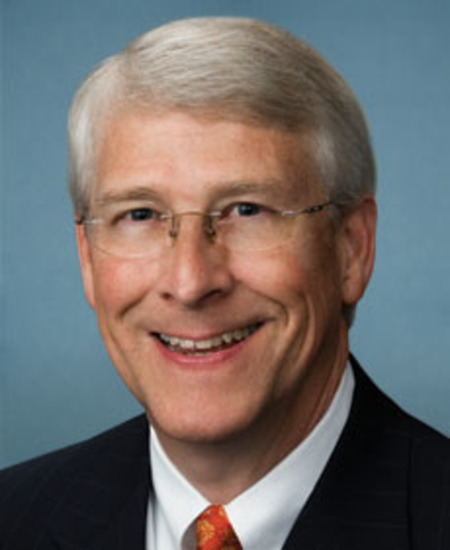
Sen. Roger F. Wicker
Sponsored bills
William T. Coleman, Jr. and Norman Y. Mineta Department of Transportation Headquarters Act This bill designates the headquarters building of the Department of Transportation located at 1200 New Jersey Avenue, SE, in Washington, DC, as the William T. Coleman, Jr. and Norman Y. Mineta Federal Building.
Chronic Wasting Disease Research and Management Act of 2022 This bill directs the Department of Agriculture (USDA) to address chronic wasting disease afflicting deer, elk, and moose populations. Specifically, the bill directs USDA to establish a program to research and manage the disease. Under the program, USDA must offer to enter into agreements with state or tribal wildlife agencies and departments of agriculture, institutions of higher education, and research centers to support research on the transmission of, resistance to, and diagnosis of the disease. In addition, USDA must offer to enter into agreements with such agencies and departments to support state and tribal efforts to develop and implement management strategies that address the disease. USDA must also develop and maintain materials to inform the public on chronic wasting disease and techniques to help prevent the spread of the disease. In addition, USDA must solicit public feedback on potential updates and improvements to standards of the chronic wasting disease herd certification program.
Fairness for Crime Victims Act of 2022 This bill establishes budget points of order in the House of Representatives and the Senate against considering provisions in appropriations legislation that contain changes in mandatory programs (CHIMPs) that would cause the amount available for obligation during the fiscal year from the Crime Victims Fund (CVF) to be less than the annual average for the three previous fiscal years. A CHIMP is a provision that (1) would have been estimated as affecting direct spending or receipts if the provision were included in legislation other than an appropriations bill; and (2) results in a net decrease in budget authority in the current year or the budget year, but does not result in a net decrease in outlays over the period of the total of the current year, the budget year, and all fiscal years covered under the most recently adopted budget resolution.
Start Making Adjustments and Require Transparency in Cocaine Sentencing Act or the SMART Cocaine Sentencing Act This bill reduces the federal sentencing disparity between drug offenses involving crack cocaine and powder cocaine. Currently, different threshold amounts of crack cocaine and powder cocaine (e.g., 28 grams of crack cocaine and 500 grams of powder cocaine) trigger the same statutory criminal penalties. This bill reduces the federal sentencing disparity by altering the threshold amounts of crack cocaine and powder cocaine that trigger statutory criminal penalties. Specifically, the bill increases the threshold amounts of crack cocaine (e.g., from 28 to 160 grams) and decreases the threshold amounts of powder cocaine (e.g., from 500 to 400 grams) that trigger statutory criminal penalties. The changes may apply retroactively, but only if the Department of Justice (DOJ) certifies that the sentence of a defendant should be reduced. The bill requires DOJ to review and report on various data related to crack cocaine and powder cocaine, including individual dosage amounts, addictiveness, and associated violence. Additionally, the U.S. Sentencing Commission must report publicly on cocaine offenses and offenders, including trends in cocaine trafficking patterns, price, and use; the interaction of state penalties with federal prosecutorial decisions; and federal case law developments related to federal cocaine sentencing.

Human Trafficking Survivor Tax Relief Act This bill excludes from gross income, for income tax purposes, any civil damages, restitution, or other monetary award (including compensatory or statutory damages and restitution imposed in a criminal matter) awarded pursuant to an order of mandatory restitution or in a criminal proceeding for peonage, slavery, or human trafficking.
This joint resolution nullifies the rule issued by the Department of Health and Human Services on October 7, 2021, that reverts requirements for federally funded providers of family planning services to those in effect before May 3, 2019, and makes other changes to family planning programs. Specific changes in the rule include (1) removing restrictions on pregnancy options counseling and referrals for abortion services, (2) eliminating requirements for physical and financial separation between abortion-related activities and specified family planning activities, and (3) providing a particular focus on health equity.
Maddy summarySRES 595 is a ceremonial Senate resolution designating April 18-24, 2022, as "National Osteopathic Medicine Week." It recognizes osteopathic physicians (DOs) and medical students across the U.S., highlighting their contributions to healthcare - including pandemic response, rural community service, and patient-centered care. The resolution specifically celebrates their role in training future physicians and improving community health through education and services. As a non-binding commemorative measure, it does not create new laws or funding but formally acknowledges the profession’s impact.
Samya Rose Stumo National Air Grant Fellowship Program Act of 2022 This bill commemorates the lives lost as a result of Boeing 737 MAX 8 airplane crashes. In particular, the bill changes the name of the National Air Grant Fellowship Program to the Samya Rose Stumo National Air Grant Fellowship Program in honor of a public health advocate who died in one of the crashes. (The fellowship provides graduate students in aerospace engineering and related fields with aviation policy experience.)
This bill eliminates the restriction that prohibits a retired or former regular officer of the Armed Forces from serving as the Deputy Administration of the Federal Aviation Administration (FAA) if the current FAA Administrator is also a former regular officer of the Armed Forces.