

Maddy summaryThe Protect Funding for Women's Health Care Act prohibits federal funding for Planned Parenthood Federation of America and its affiliates, clinics, subsidiaries, or successors. It redirects these funds to other eligible health care providers - including community health centers, hospitals, and clinics that serve underserved populations - to ensure continued access to services like contraception, cancer screenings, prenatal care, and STI testing. The bill explicitly states it does not alter existing abortion funding restrictions or reduce overall federal support for women’s health services. This policy change aims to maintain funding availability for essential women’s health care while shifting resources away from Planned Parenthood.
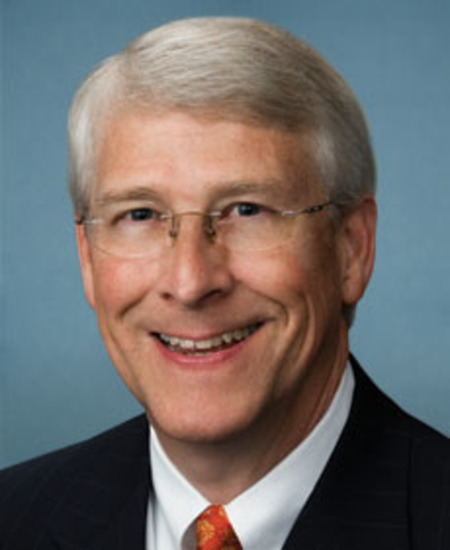
Sen. Roger F. Wicker
Sponsored bills
Childhood Cancer Survivorship, Treatment, Access, and Research Reauthorization Act of 2022 or the Childhood Cancer STAR Reauthorization Act This act reauthorizes through FY2028 and modifies pediatric cancer research and related programs, including to expand collection of and access to relevant biospecimens and to support the transition of pediatric cancer survivors to primary care.
National Heritage Area Act This act establishes a National Heritage Area System. The Department of the Interior may provide technical and financial assistance to local coordinating entities to support the establishment, development, and continuity of such areas. The National Heritage Area System shall be composed of each National Heritage Area, National Heritage Corridor, National Heritage Canalway, Cultural Heritage Corridor, National Heritage Route, and National Heritage Partnership designated by Congress before or on enactment of this act; and each National Heritage Area designated by Congress after enactment of this act. A National Heritage Area shall not be considered to be a unit of the National Park System nor subject to the authorities applicable to such units. Interior may carry out or review a study to assess the suitability and feasibility of each proposed heritage area for designation as a National Heritage Area. Interior must review and certify whether the proposed area meets specified requirements, including that it has natural, historic, and cultural resources that represent distinctive aspects of the heritage of the United States. An area shall be designated as a National Heritage Area only by an act of Congress. Interior shall conduct studies to assess the suitability and feasibility of designating specified areas in Hawaii as the Kaena Point National Heritage Area and in Virginia and North Carolina as the Great Dismal Swamp National Heritage Area. The act also (1) establishes or extends specified National Heritage Areas, (2) redesignates the America's Agricultural Heritage Partnership in Iowa as the Silos & Smokestacks National Heritage Area, and (3) extends the deadline for the management plans for certain heritage areas.
Emmett Till and Mamie Till-Mobley Congressional Gold Medal Act of 2021 This act provides for the posthumous presentation of a Congressional Gold Medal in commemoration of Emmett Till and Mamie Till-Mobley. After it is awarded, the medal shall be given to the National Museum of African American History and Culture.
Flood Level Observation, Operations, and Decision Support Act or the FLOODS Act This act addresses forecasting and the communication of flood, tornado, and hurricane events by the National Oceanic and Atmospheric Administration (NOAA). For example, the act directs NOAA to establish a National Integrated Flood Information System to inform and provide for timely decisions to reduce flood-related effects and costs. NOAA must also establish partnerships with institutions of higher education and federal agencies to improve total water predictions. In addition, NOAA must (1) evaluate and improve flash flood watches and warnings, (2) estimate and communicate the frequency of precipitation, and (3) identify gaps in the availability of snow-related data to assess and predict floods and flood impacts. Further, NOAA must ensure that the tornado warning improvement and extension program periodically examines the value of incorporating innovative observations, such as acoustic or infrasonic measurements, observations from phased array radars, and observations from mesonets (i.e., a network of certain weather observing stations). In addition, the National Weather Service must designate a service coordination hydrologist at each of its River Forecast Centers to increase impact-based decision support services at the state and local level. Finally, the act establishes an Interagency Committee on Water Management and Infrastructure to ensure that federal agencies that engage in water-related matters work together where such agencies have joint or overlapping responsibilities.
Supply Chain Disruptions Relief Act This bill modifies the treatment of liquidations of new motor vehicle inventory as qualified LIFO (last in first out accounting method) inventory. It allows new motor vehicle dealers to elect to wait until the end of 2025 to replace their inventory for purposes of determining income attributable to the sale of such inventory during 2020 and 2021.
Orbital Sustainability Act of 2022 or the ORBITS Act of 2022 This bill directs specified agencies to take actions to remediate orbital debris (human-made space objects that are no longer in use and can harm orbiting satellites and on-orbit activities). First, the National Aeronautics and Space Administration (NASA) must publish and periodically update a list of orbital debris that pose the greatest immediate risk of harm to orbiting satellites and on-orbit activities, establish a demonstration program to foster the development of technologies to remediate the orbital debris on the list, and carry out other research and development activities to advance technologies for remediating orbital debris. NASA (and other relevant agencies) may also contract for remediation services to support the commercial availability of such services. Second, the National Space Council must update the Orbital Debris Mitigation Standard Practices within 90 days of the enactment of the bill and update them periodically thereafter. The updates must address matters including satellite constellations and other planned space systems, collision risks, and disposal of space systems after missions. The updates must inform (1) regulations of other agencies concerning orbital debris, and (2) bilateral and multilateral discussions with other countries concerning certain space activities. Third, the Department of Commerce must facilitate the development of standard practices to coordinate on-orbit space traffic. Upon completion of the practices, Commerce and other federal departments must promote their adoption and use for space missions.
Coast Guard Authorization Act of 2022 This bill authorizes appropriations through FY2023 for the U.S. Coast Guard. It also revises a variety of requirements concerning the Coast Guard's personnel, operations, infrastructure, and environmental compliance. For example, the bill revises requirements concerning maritime cybersecurity and artificial intelligence, workforce readiness, oil spills, healthcare, vessel safety, sexual assault, and sexual harassment.
Continuity for Operators with Necessary Training Required for ATC Contract Towers Act of 2021 or the CONTRACT Act of 2021 This bill exempts certain air traffic controllers from a required reduction in their retirement annuity payment on account of earnings from certain work performed while entitled to such annuity. Under current law, retired Federal Aviation Administration air traffic controllers receive an annuity payment during the period between the mandatory retirement age of 56 and the Social Security minimum age of 62. Such annuity payment is required to be reduced by a certain percentage of any excess earnings during this period. The bill exempts from such reduction in annuity payments an air traffic controller who participates in the Air Traffic Control Contract Program (a public-private partnership for air traffic control services) following mandatory retirement.
This joint resolution nullifies a Department of Education rule published on July 6, 2022, concerning final priorities, requirements, definitions, and selection criteria for the Charter Schools Program.