

Maddy summaryThis bill allows states to waive the 35-mile rule for certain rural hospitals seeking Critical Access Hospital (CAH) designation under Medicare. It targets hospitals that are sole community hospitals, Medicare-dependent small rural hospitals, low-volume hospitals, or subsection (d) hospitals located in high-poverty or health professional shortage areas, with two consecutive years of negative margins. To qualify, hospitals must commit to adding high-demand services like obstetrics or behavioral health and submit annual reports on these services. The bill caps total CAH designations at 120 nationwide (5 per state) and requires transition to new payment models after 9 years. It also mandates studies by GAO and MedPAC to evaluate impacts on access and costs.
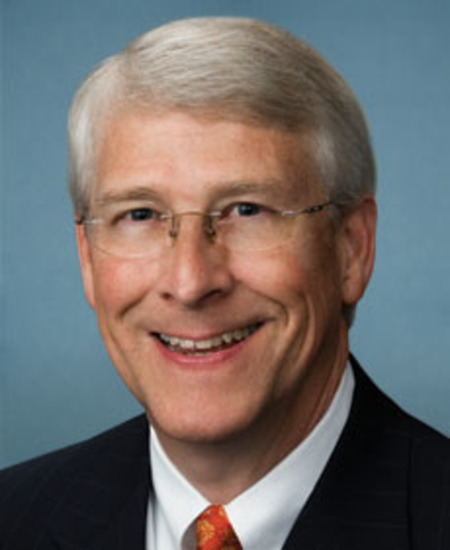
Sen. Roger F. Wicker
Sponsored bills
Maddy summaryThis joint resolution proposes a constitutional amendment to permanently set the number of justices on the Supreme Court at nine. It would require the Supreme Court to always consist of exactly nine justices, directly affecting the Court's composition. The amendment would become part of the Constitution only if ratified by three-fourths of state legislatures within seven years. This is a procedural change to the Constitution's structure, not a policy affecting other areas.
Maddy summarySRES 64 is a Senate resolution honoring the 67 victims of a mid-air collision between American Airlines Flight 5342 and a U.S. Army aircraft near Washington, D.C., on January 29, 2025. It directly affects the families, friends, and communities of the victims, who were from multiple U.S. states and several countries. The resolution formally commemorates the lives lost, offers condolences to grieving families, and expresses gratitude to the 42 emergency response agencies that assisted in rescue and recovery efforts. As a commemorative resolution, it has no policy or legal effect beyond expressing collective mourning and recognition.
This resolution supports the designation of Career and Technical Education Month to celebrate career and technical education across the United States.
Maddy summaryThis bill prevents private property restrictions, such as those in homeowners' associations or covenants, from blocking amateur radio operators from installing or maintaining antennas needed for emergency communications. It preempts such restrictions unless they are limited to reasonable safety requirements (like structural integrity), visual screening for certain antennas, or compliance with building codes. The bill requires that any prior approval process for antenna installation must be completed within 45 days or be deemed approved, and exempts small antennas (e.g., flagpoles under 43 feet, wire antennas) from needing prior approval. It directly affects over 770,000 licensed amateur radio operators in the U.S. who rely on these antennas for emergency response during disasters.
Maddy summaryThis bill permanently extends the New Markets Tax Credit (NMTC) program, which incentivizes private investment in low-income communities. It modifies the tax code to keep the credit available beyond 2025 (replacing "2020 through 2025" with "2020 and each calendar year thereafter") and adds automatic annual inflation adjustments to the credit amount starting in 2026. The bill also provides tax relief by allowing NMTC credits to offset the alternative minimum tax, specifically for investments made after December 2024. This directly affects community development financial institutions (CDFIs) and investors who fund projects in designated low-income areas.
Maddy summaryThis bill establishes the White Oak Restoration Initiative Coalition to coordinate federal, state, and private efforts for restoring white oak forests across the U.S. It directs the Agriculture and Interior Departments to launch 5 pilot projects on public lands (including national forests and wildlife refuges) to improve white oak regeneration and health, and creates a voluntary grant program to help private landowners restore white oak forests through partnerships with organizations like the National Fish and Wildlife Foundation. The bill also requires developing a national strategy to address white oak seedling shortages in nurseries and funds research at land-grant universities on white oak genetics, disease resistance, and reforestation techniques. These provisions directly affect federal agencies, land-grant universities, forest landowners, and conservation groups working on white oak ecosystem restoration.
Maddy summaryThe CHOICE Act creates three education choice programs. It expands DC's scholarship program to allow low-income students to use funds for public or private schools, with specific enrollment requirements. It establishes a parent option program under IDEA, permitting parents of children with disabilities to use public funds for private school education while requiring schools to meet accreditation standards and prohibiting discrimination (with religious exemptions). It also creates a 5-year military scholarship pilot program providing up to $8,000 annually for elementary students and $12,000 for secondary students to attend schools of their parents' choice, with specific eligibility requirements for military dependents living on installations that don't already offer full school options.
Maddy summaryS 383 (the JOBS Act of 2025) expands Federal Pell Grant eligibility to students enrolled in certain short-term job training programs at eligible institutions of higher education. The bill creates a "job training Federal Pell Grant" for programs meeting specific criteria: 150-600 clock hours over 8-15 weeks, aligned with high-demand industry sectors, and leading to recognized postsecondary credentials that meet employer hiring requirements or licensure prerequisites. It also lowers the minimum Pell Grant award from 10% to 5% of the full annual amount. This directly affects students seeking career-focused training and institutions offering qualifying programs that validate industry partnerships.
Maddy summaryThe Fair Access to Banking Act (S 401) prohibits large financial institutions ($10 billion+ in assets) and payment networks from denying services to lawful businesses based on political or reputational factors, such as the type of legal business they operate. It requires banks to justify denials using objective, risk-based standards instead of category-based decisions, and mandates written explanations for denials. The law enables lawsuits against violators with treble damages and civil penalties up to 10% of service value (capped at $10,000 per violation). It directly affects major banks, payment processors, and credit unions that serve large-scale customers, ensuring fair access for businesses operating within federal law.