

Maddy summaryThis bill (S 661) amends existing law to expand legal protections for postal facilities. It replaces the term "post office" throughout Section 404(d) with a broader definition covering "any acceptance, processing, shipping, delivery, distribution, or other facility owned or operated by the Postal Service that supports one or more post offices." This directly affects mail processing centers, distribution hubs, and other support facilities operated by the U.S. Postal Service. The key change ensures these supporting facilities receive the same legal protections previously applied only to traditional post offices.
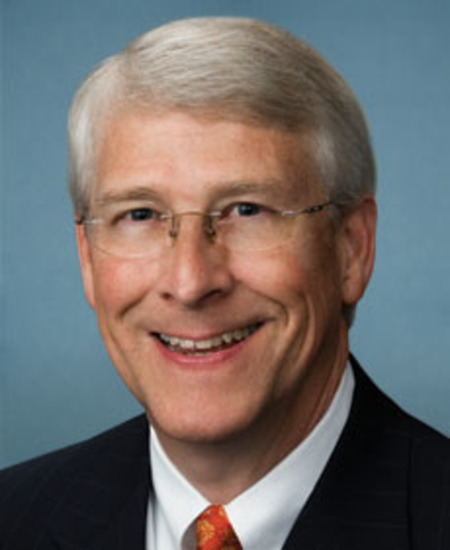
Sen. Roger F. Wicker
Sponsored bills
Maddy summaryThe Broadband Grant Tax Treatment Act (S 674) excludes specific federal and state broadband grants from being counted as taxable income for recipients. It applies to grants from programs like the Broadband Equity, Access, and Deployment Program (under the Infrastructure Investment and Jobs Act) and similar state/local initiatives funded by federal broadband grants. The law prevents double tax benefits by disallowing deductions for expenses covered by the excluded grant and reducing the property’s cost basis by the grant amount. This directly affects broadband providers and local governments receiving these grants, making the funds tax-free without allowing additional tax deductions for the same spending.
Maddy summaryThis bill prohibits U.S. federal funds from supporting two international environmental agreements until specific reclassifications of China occur. It blocks funding for the Montreal Protocol (regarding ozone-depleting substances) until China is removed from the "developing country" category in that agreement, and blocks funding for the UN Climate Change Convention until China is added to Annex I (which lists developed nations). The restrictions remain in place until the President certifies to congressional committees that these reclassifications have been made by the relevant international bodies. The bill directly affects U.S. government funding for these global environmental programs.
Maddy summaryThis Senate resolution (SRES 85) formally congratulates the Jackson State University football team for winning the 2024 Celebration Bowl, a championship game for Historically Black Colleges and Universities. It recognizes the team's 12-2 season record, 28-7 victory over South Carolina State, and honors the university community, including players, coaches, and staff. The resolution does not create new laws or policies but serves as a ceremonial expression of support, directing copies to the university president, athletic director, and head coach. It directly affects Jackson State University and its athletic program by publicly acknowledging their achievement.
Maddy summarySRES 53 is a bipartisan Senate resolution commemorating the 80th anniversary of the February 19-26, 1945, Battle of Iwo Jima and the iconic U.S. flag-raising on Mount Suribachi on February 23, 1945. It honors the service members who fought in the battle - including those who received the Medal of Honor - and recognizes the strategic importance of the victory in ending World War II. The resolution encourages public commemoration through ceremonies and events, while affirming U.S.-Japan reconciliation and honoring veterans' sacrifices. As a commemorative resolution, it has no binding effect or direct impact on policy or beneficiaries.
Maddy summaryThis bill prohibits the Environmental Protection Agency (EPA) from using assessments generated by its Integrated Risk Information System (IRIS) program in key regulatory actions. Specifically, it blocks the EPA from relying on IRIS assessments to develop or issue rules, conduct enforcement or permitting, or inform air toxics mapping tools. The bill directly affects how the EPA conducts its environmental regulation and risk assessment work. It represents a procedural change limiting the use of existing EPA scientific assessments in regulatory decision-making.
Maddy summarySRES 80 is a Senate resolution introduced on February 13, 2025, expressing gratitude to the Joint Congressional Committee on Inaugural Ceremonies, the Architect of the Capitol, the Sergeant at Arms, the Secretary of the Senate, law enforcement officers, emergency personnel, and volunteers. It specifically acknowledges their work during the January 20, 2025 inauguration of President Donald J. Trump, noting their efforts to adapt to cold weather challenges that required relocating events indoors. The resolution has no policy impact and serves solely as a ceremonial acknowledgment of their contributions to the inauguration's security and success.
Maddy summaryThis bill requires that federal water infrastructure projects funded through the WIFIA program must have construction payment and performance security covering at least 50% of the total construction contract value. It allows states or localities to satisfy this requirement if their existing laws already mandate similar security at that 50% threshold. If no such state/local requirement exists, the project must meet specific federal bond requirements under 40 U.S.C. §3131(b). The law directly affects contractors working on federally assisted water infrastructure projects and aims to protect taxpayers by ensuring financial security for project completion.
Maddy summaryThe Healthy Poultry Assistance and Indemnification Act of 2025 requires the U.S. Department of Agriculture to compensate poultry growers and egg-laying facility owners when their operations are in a USDA-designated "control area" (a zone established due to animal health threats like disease outbreaks). Compensation equals the average income from the owner's five most recent flocks multiplied by the number of flocks they were prohibited from raising during the control period, but cannot exceed the difference between this amount and any other compensation received. Payments must be made within 60 days of the owner's request. This bill directly assists poultry producers facing income loss due to USDA-mandated restrictions during disease control efforts.
Maddy summaryS 576, the "One Flag for All Act," prohibits displaying any flag other than the U.S. flag on the exterior of covered public buildings or in publicly accessible interior areas (like lobbies or hallways) of those buildings. Covered buildings include congressional offices, military installations, embassies, and other federal facilities. The bill allows exceptions for specific flags, such as POW/MIA flags, state flags in congressional offices, military unit flags, historical U.S. flags (like the Betsy Ross flag), diplomatic flags, and flags commemorating events like Veterans Day. It does not restrict flag displays in private areas or on private property.