

This bill increases the annual limit on the tax credit for qualified railroad track maintenance expenses (also referred to as the short line railroad tax credit) and expands eligibility for claiming the credit. Under current law, the tax credit is limited each tax year to $3,500 multiplied by the sum of the number of miles of railroad track owned or leased by the taxpayer (miles owned or leased) and the number of railroad track miles assigned to the taxpayer by a Class II or III railroad (miles assigned). This bill increases the annual limit to $6,100 multiplied by the sum of miles owned or leased and miles assigned. The $6,100 amount used in the calculation of the tax credit limit is adjusted for inflation for tax years beginning after 2025. The bill also expands eligibility for the tax credit to include gross expenses for maintaining railroad tracks owned or leased as of January 1, 2024. Under current law, the tax credit is limited to gross expenses for maintaining railroad tracks owned or leased as of January 1, 2015.
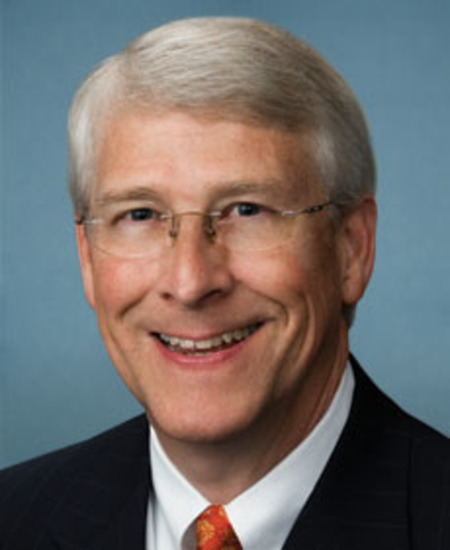
Sen. Roger F. Wicker
Sponsored bills
Maddy summary# Summary of the SHIPS for America Act of 2025 This comprehensive maritime legislation establishes a wide-ranging framework to strengthen the U.S. maritime industry, workforce, and infrastructure. Key components include: ## Shipbuilding and Maritime Infrastructure - Establishes a **Shipbuilding Financial Incentives Program** (Section 501) to support commercial vessel construction - Creates a **National Shipbuilding Research Program** (Section 522) to advance shipbuilding technology - Mandates an **Anticipated Commercial Vessel Construction Survey** (Section 506) to inform industry planning - Establishes a **United States Center for Maritime Innovation** (Section 521) to accelerate technology adoption - Requires a **Maritime Infrastructure Readiness Assessment** (Section 523) ## Workforce Development - Creates a **Merchant Marine Career Retention Program** (Section 606) with an 8-3-1 schedule to maintain mariner qualifications - Provides **Public Service Loan Forgiveness** for Merchant Marines (Section 601) - Establishes **Eligibility for Educational Assistance** (Section 602) for Merchant Mariners - Creates **Reimbursement for Spouse Relicensing Costs** (Section 604) - Implements **Noncompetitive Federal Employment** for Merchant Mariners (Section 605) ## Education and Training - Establishes **Centers of Excellence for Domestic Maritime Workforce Training** (Section 612) - Creates a **Maritime Career and Technical Education Advisory Committee** (Section 613) - Develops a **Military to Maritime Transition Program** (Section 616) - Establishes **International Exchange Programs** for mariners and naval architects (Section 618) - Mandates **Maritime Worker Data Collection** (Section 615) to track industry needs ## Additional Provisions - Requires **Reports on National Defense Reserve Fleet** (Section 509) - Mandates an **Assessment of Commercial Best Practices for Navy Shipbuilding** (Section 511) - Establishes **Military Sealift Command** improvements (Section 513) - Creates a **Maritime Workforce Data Collection System** (Section 615) The legislation is funded through the **Maritime Security Trust Fund** (established under Section 50301(b)) and represents a comprehensive strategy to strengthen U.S. maritime capabilities for national security, economic competitiveness, and workforce development.
Maddy summaryThe Affordable Housing Credit Improvement Act of 2025 updates the Low-Income Housing Tax Credit program to increase affordability and accessibility for low-income households. It raises state allocation amounts through revised per capita calculations, modifies income eligibility rules to better serve extremely low-income households, and adds protections for domestic violence victims in housing. The bill expands "difficult development areas" to include rural areas and Indian lands, and changes the program's name from "Low-Income Housing Credit" to "Affordable Housing Credit" to better reflect its purpose. These changes aim to make affordable housing more accessible while improving transparency and accountability in the program's implementation.
Maddy summaryThis bill (S 1501, the SAFE Act of 2025) amends the Animal Health Protection Act to require U.S. agencies to negotiate agreements with foreign governments about animal disease outbreaks that disrupt exports. It directly affects U.S. livestock and animal product exporters by aiming to reduce trade barriers caused by disease outbreaks. Key provisions mandate that the Secretary, working with trade and agriculture agencies, negotiate regionalization (geographic agreements), zoning, and facility-specific arrangements to maintain export access during disease events. The bill requires these negotiations to consider global scientific research but does not create new regulations or limit other trade negotiations.
Maddy summaryThis bill requires most health insurance plans to cover diagnostic and supplemental breast examinations with no out-of-pocket costs (like deductibles or copays) for enrollees. It specifically covers medically necessary exams used to evaluate abnormalities (diagnostic) or for high-risk screening (supplemental), following national cancer guidelines. Insurance plans may still require prior authorization but cannot impose cost-sharing for these services. The rule applies to group and individual plans starting January 1, 2026, and does not override stricter state laws protecting coverage.
Maddy summarySRES 173 is a symbolic Senate resolution supporting World Malaria Day (observed April 25) and affirming U.S. leadership in global malaria efforts. It recognizes malaria's global impact (263 million cases, 597,000 deaths in 2023) and highlights U.S. contributions through the President’s Malaria Initiative and the Global Fund. The resolution urges continued U.S. leadership to reduce malaria cases by 90% by 2030, commends progress in countries like Rwanda and India, and emphasizes how fighting malaria aligns with U.S. interests in citizen safety, global stability, and economic prosperity.
Maddy summaryThis resolution (SRES 177) designates 2025 as the "Vicksburg Bicentennial" to commemorate the 200th anniversary of Vicksburg, Mississippi's incorporation on January 29, 1825. It honors the city's historical significance, including its role in the Civil War siege, preservation of Vicksburg National Military Park, and contributions to Mississippi and U.S. history. The Senate encourages Americans to acknowledge this milestone and requests the Secretary of the Senate transmit a copy of the resolution to Vicksburg. As a ceremonial resolution, it has no legal effect or direct impact on policy or constituents.
Maddy summaryThis resolution designates the week of April 19-27, 2025, as "National Park Week" in the U.S. Senate. It encourages the public to responsibly visit, experience, and support national parks across the United States. The resolution highlights the National Park System’s role in preserving natural and cultural resources while acknowledging its economic impact and recreational value. It does not create new laws or alter funding, focusing solely on recognition and public engagement.
Maddy summarySRES 181 designates April 14-20, 2025, as "National Osteopathic Medicine Week" to honor osteopathic physicians and medical students in the U.S. The resolution recognizes over 157,000 osteopathic physicians, their training in rural and underserved communities, and their 150-year history since the founding of the first osteopathic medical school. It specifically acknowledges their whole-person healthcare approach and contributions to the U.S. healthcare system. This is a symbolic resolution with no new policy or funding changes; it simply celebrates the profession.
Maddy summaryThe Combating Organized Retail Crime Act amends federal law to strengthen legal tools for addressing organized retail crime, including theft from stores, online, and supply chains. It establishes a new Organized Retail and Supply Chain Crime Coordination Center within the Department of Homeland Security to coordinate Federal, State, local, and tribal law enforcement efforts. The Center will share information, assist with investigations, track crime trends, and provide training to combat these crimes. The bill expands legal definitions to include organized retail crime as a specific category and requires annual reports on the Center's activities. The Center will operate for 7 years before sunset.