

Maddy summaryThis resolution urges all NATO member countries to commit to spending at least 5% of their gross domestic product (GDP) on defense. It specifies that 3.5% should cover traditional military spending and 1.5% should address non-military security efforts like cyber resilience and infrastructure. The resolution directly addresses all 32 NATO members, particularly those not meeting prior spending targets, and criticizes current ambiguity in defense commitments. As a non-binding Senate resolution, it formally expresses the U.S. Senate's position without creating new law or altering existing obligations.
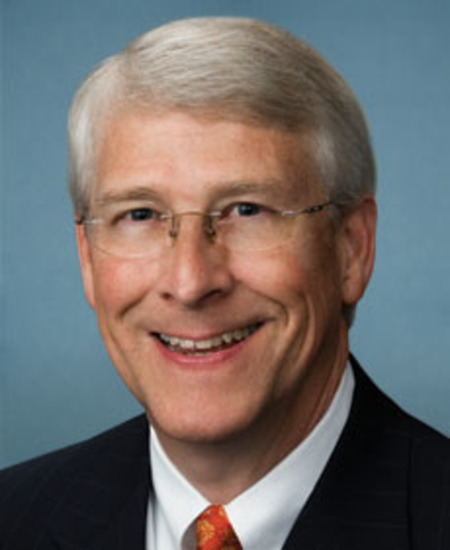
Sen. Roger F. Wicker
Sponsored bills
Maddy summaryS 901 (LIONs Act of 2025) increases the maximum loan amounts available through key Small Business Administration (SBA) programs. It raises the cap for standard 7(a) loans from $3.75 million to $7.5 million, and for development company loans from $5 million to $10 million. These changes directly affect small businesses seeking SBA financing, allowing them to access larger loan amounts for operations, equipment, or expansion. The bill modifies existing legal thresholds without altering program eligibility or application processes.
Maddy summaryThis resolution (SRES 344) commemorates the 20th anniversary of Hurricane Katrina's 2005 Gulf Coast devastation and acknowledges rebuilding progress in affected areas. It recognizes the recovery efforts of communities across Louisiana, Mississippi, Alabama, Florida, and Georgia, citing specific improvements like the 87% population growth in Gulfport-Biloxi-Pascagoula (2006-2024) and increased tourism in New Orleans (3.7 million to 17.5 million visitors since 2006). The Senate formally expresses support for Katrina victims, commends recovery efforts, and reaffirms commitment to the Gulf Coast's ongoing rebuilding. As a symbolic resolution, it does not create new policies or allocate funds.
Maddy summaryThe CLEAR Waters Act (S 2421) clarifies the definition of "navigable waters" under the Clean Water Act by explicitly excluding certain water features from federal regulation. It directly affects wastewater treatment facilities (like lagoons and ponds), seasonal streams that flow only after rain, and groundwater by removing them from the Clean Water Act's jurisdiction. Key provisions add specific exclusions to the definition, including waste treatment systems, ephemeral features, groundwater, and future exclusions determined by the EPA and Army Corps. This changes which water bodies require federal permits for pollution control, shifting oversight away from these excluded features.
Maddy summaryThis bill protects U.S. businesses and citizens whose property (specifically ports, harbors, or marine terminals) in Western Hemisphere countries with U.S. free trade agreements has been taken without compensation by foreign governments. It requires the Secretary of Homeland Security to identify and publicly list these "prohibited properties" within 60 days of the bill's enactment. The law then prohibits vessels using these listed ports from importing goods into the U.S., docking passenger vessels, or conducting maintenance in U.S. ports. It directly affects U.S. property owners in those countries and foreign governments that have seized such assets.
Maddy summaryThis bill requires the Secretary of Health and Human Services to publish regular physical activity recommendations for the public every 10 years, starting by December 2029. Each report must be based on current scientific evidence and include specific guidance for groups like children and people with disabilities. Federal agencies must consider these reports when developing their own physical activity guidelines. The bill does not create any mandatory fitness standards for individuals.
Maddy summaryThis bill authorizes the minting of commemorative coins for the 2028 Los Angeles Olympic and Paralympic Games and the 2034 Salt Lake City Olympic and Paralympic Winter Games. It specifies four coin types ($5 gold, $1 silver, half-dollar, and proof silver $1) with defined quantities and designs reflecting U.S. athletic participation. A surcharge on each coin sale (e.g., $35 for $5 coins) funds the respective Olympic committees' legacy programs, including youth sports initiatives. The coins are legal tender but intended solely for commemoration, with surcharges directed to the organizing committees after covering minting costs.
Maddy summaryThe SAWMILL Act establishes a $220 million loan guarantee program for rural sawmills and wood-processing facilities. It provides guarantees to eligible entities (like sawmill operators) located within 250 miles of federally designated "high priority" lands needing ecological restoration through vegetation removal. The program requires that the facility's presence must substantially lower the cost of these restoration projects, as determined by the Agriculture Secretary. This directly affects rural wood-processing businesses and federal land management efforts focused on ecological restoration. The loan guarantees are limited to $220 million total and require coordination between the Agriculture and Interior Departments.
Maddy summaryThis bill reauthorizes two existing federal diabetes programs through 2027. It provides $160 million annually for fiscal years 2026 and 2027 for the Special Diabetes Program for Type I Diabetes (serving people with Type I diabetes) and the Special Diabetes Program for Indians (serving Native American communities through Indian Health Services). A final $40 million is allocated for October-December 2027 for both programs, with all funds remaining available until expended. The bill extends current funding levels without changing program eligibility or structure.
Maddy summaryThis Senate resolution (SRES 308) formally honors Frederick W. Smith, founder of FedEx, for his military service (including combat in Vietnam), pioneering business leadership, and dedication to Memphis, Tennessee. It recognizes his role in revolutionizing global logistics and his community contributions through FedEx's operations and philanthropy. The resolution directs the Senate to transmit a copy to his family and share it with the House of Representatives. As a commemorative resolution, it has no policy impact or direct effect on constituents.