

Maddy summaryThis Senate resolution (SRES 401) is a ceremonial honor for musician Jimmy Buffett, who died in September 2023. It recognizes his contributions to music, his Mississippi roots, and his cultural impact through songs like "Margaritaville" and businesses like Margaritaville restaurants. The resolution has no policy or funding provisions - it simply expresses the Senate's respect, extends condolences to his family, and requests the Secretary of the Senate send a copy to his family. It does not create any new laws or affect any government programs.
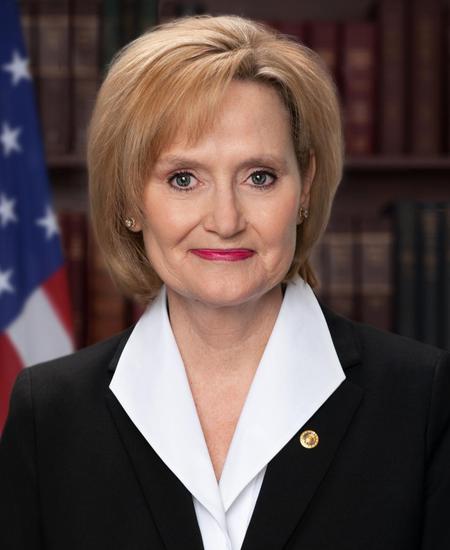
Sen. Cindy Hyde-Smith
Sponsored bills
This resolution supports the designation of October 1 through October 7, 2023, as National 4–H Week and recognizes the important role of 4–H in youth development and education.
Maddy summarySRES 394 is a Senate resolution introduced on October 3, 2023, honoring the late James L. Buckley, a former U.S. Senator from New York (1971-1977) who died in 2023. The resolution expresses the Senate's sorrow at his passing and directs the Senate to communicate the resolution to the House of Representatives and Buckley's family, while calling for an immediate adjournment in his memory. This ceremonial resolution does not create new laws or affect any policies, as it solely serves to commemorate Buckley's life and legacy.
Maddy summaryThis bill repeals a federal law (Section 248 of Title 18, U.S. Code) that prohibited blocking access to healthcare clinic entrances, including abortion clinics. It directly affects individuals participating in protests near such facilities by removing this specific criminal prohibition. The key mechanism is the repeal of the existing statute, meaning prosecutions under this provision for blocking clinic entrances would no longer be possible after enactment. The bill does not create new protest rights but removes a specific federal restriction on access.
Maddy summaryThis bill clarifies when a worker is classified as an employee versus an independent contractor under federal law. It adds specific criteria: a worker is an independent contractor if the company doesn't control *how* the work is done (only the final result) and the worker has entrepreneurial risks and opportunities. The bill explicitly prohibits using factors like compliance with health/safety standards, insurance requirements, or meeting deadlines to classify workers as employees. This directly affects workers (determining their eligibility for minimum wage, overtime, and union rights) and businesses that classify workers as contractors.
Maddy summaryS.3028, the PUNISH Act of 2023, extends existing U.S. sanctions against Iran by preventing their modification or removal until a specified termination date. It requires the Secretary of State to submit annual reports to Congress assessing whether Iran's government or affiliated entities (like the Islamic Revolutionary Guard Corps) have engaged in activities such as assassinations, violence against U.S. citizens, or politically motivated detention of Iranian nationals in the U.S. The bill maintains current sanctions tied to Executive Orders 13871, 13876, 13902, and 13949, as well as sanctions on Iran's Central Bank and National Development Fund. These measures remain in effect until the President certifies compliance with specific conditions under the Comprehensive Iran Sanctions Act.
Maddy summaryThe PREEMIE Reauthorization Act of 2023 extends federal funding for research and care related to preterm births and low birthweight infants through fiscal years 2024-2028, replacing previous funding periods. It updates existing programs to include screening for and treatment of chronic conditions in infant care and requires the Health and Human Services Secretary to establish an interagency working group within 18 months. The bill mandates a National Academies study to assess financial costs of preterm birth (including neonatal ICU stays and long-term family expenses), factors influencing birth rates, gaps in public health support, and research strategies for prevention, with a final report due within 24 months. This legislation directly affects federal health agencies, healthcare providers, and families caring for preterm infants by advancing evidence-based improvements in care.
Maddy summarySRES 380 is a non-binding Senate resolution designating October 1-7, 2023, as "Religious Education Week" to recognize the role of religious education in U.S. schools. It calls on all 50 states, territories, and the District of Columbia to accommodate students attending religious classes during school hours through "released time" programs. The resolution affirms that religious education contributes to students' moral, ethical, and civic development, referencing existing programs where approximately 540,000 public school students participate annually. As a symbolic gesture, it does not create new laws or alter funding, focusing instead on celebrating current religious education practices.
Maddy summaryThis bill creates a new federal tax credit for investors who make long-term investments in qualified Community Development Financial Institutions (CDFIs), allowing them to claim 3% to 4% of their investment amount annually over a 10-year period. The credit applies to investments held for at least 10 years, with specific "credit allowance dates" marking annual eligibility, and is subject to a national annual limit of $1 billion in 2023 (rising to $2 billion yearly after 2024, adjusted for inflation). CDFIs must apply for allocation of the credit limit based on criteria like community impact, ability to attract private capital, and investment plans, with unused limits carried over to future years. The credit is integrated into the general business tax credit system and applies to investments made after the bill's enactment.
Maddy summaryThis bill requires public colleges receiving federal funds to provide annual information to students about pregnancy-related accommodations and resources that exclude abortion services. It mandates colleges to send campus-wide emails or include this information in student handbooks/orientations, establish protocols for meetings with leadership regarding pregnancy-related concerns, and submit annual reports to Congress. The reports must include confidential student feedback on whether they felt adequate non-abortion resources were available, experienced potential Title IX violations due to pregnancy, or considered dropping out because of pregnancy or related health events. The bill directly affects public colleges and enrolled students, particularly those who are pregnant or may become pregnant while seeking to continue their education.