

Maddy summaryThis bill sets strict conditions the U.S. President must meet before negotiating a new nuclear agreement with Iran. It requires certification that Iran has ended all financial ties with China (including a $400 billion agreement), stopped funding Hamas, and destroyed chemical weapons, while also mandating China cease Uyghur detention. Any proposed agreement must verify the destruction of all Iranian nuclear, missile, and chemical capabilities, and the President cannot proceed without Senate treaty approval. The bill blocks federal funding for such negotiations until these requirements are fulfilled, effectively delaying any deal until these specific conditions are met.
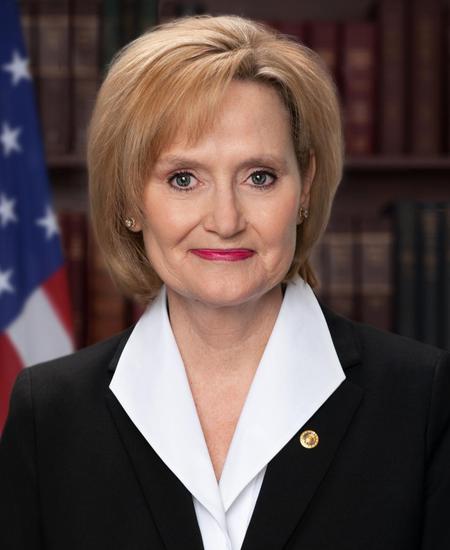
Sen. Cindy Hyde-Smith
Sponsored bills
Maddy summaryThis is a ceremonial Senate resolution (SRES 492) honoring the late First Lady Rosalynn Carter. It expresses the Senate's condolences for her passing and recognizes her lifetime of humanitarian work, including her advocacy for mental health care, founding of caregiver support programs, and service with The Carter Center. The resolution does not create new laws or policies; it is purely a commemorative statement. It was introduced by a bipartisan group of senators and adopted by the Senate on December 7, 2023.
Maddy summaryThis bill mandates the immediate resumption of federal oil and gas leasing on public lands and offshore areas. It requires the Interior Secretary to conduct at least four annual onshore lease sales in specified states (including Wyoming, Texas, and Alaska) and two annual offshore sales in the Gulf of Mexico and Alaska regions, offering all eligible parcels under existing resource plans. The bill also prohibits the President from delaying or blocking these leasing processes without Congressional approval, creating a rebuttable presumption that such actions violate existing law. These provisions directly affect energy companies seeking federal leases and federal land management practices.
Maddy summaryThe Fans First Act aims to improve transparency and fairness in the ticketing market by regulating how event tickets are sold and marketed. It requires sellers to clearly display the total ticket price (including all fees), disclose key details about ticket seating and refund policies, and prohibits deceptive practices like using artist names without permission or selling tickets a seller doesn't actually possess. The bill directly affects secondary ticketing platforms, resellers, and primary sellers by mandating clear disclosures, requiring proof of purchase for electronic tickets, and strengthening rules against automated ticket-buying systems. It creates new enforcement mechanisms through the Federal Trade Commission and state attorneys general, with civil penalties for violations. The legislation also mandates studies to assess ticket market practices, including how professional resellers obtain tickets and the prevalence of counterfeit tickets.
Maddy summaryThe Ban C-FOOD Act prohibits U.S. imports of seafood and aquaculture products from China for a period beginning one year after enactment and ending once three certifications are submitted to Congress. These certifications require the State Department to confirm China’s fishing fleets aren’t using forced labor, the Commerce Department to verify no excessive subsidies exist, and the Defense Department to certify Chinese fleets won’t be used in a Taiwan invasion. The bill also imposes financial sanctions on entities facilitating illegal transshipment of Chinese seafood into the U.S. and authorizes tariffs to prevent such imports. It mandates a congressional report within 90 days detailing U.S. efforts to combat illegal fishing and forced labor in China’s seafood industry, including funding requests.
Maddy summaryThis bill prohibits the Department of Health and Human Services from implementing a proposed rule requiring minimum staffing levels in nursing homes, which opponents argue could accelerate closures, especially in rural areas. Instead, it creates a 17-member Advisory Panel on the Nursing Home Workforce to study staffing shortages, barriers to care access for seniors in rural and underserved areas, and regulatory impacts. The panel must submit an initial report within 60 days of its first meeting, analyzing workforce challenges and recommending solutions to strengthen staffing without imposing new mandates. The bill directly affects rural nursing homes and seniors who rely on these facilities, aiming to prevent closures by addressing systemic workforce issues through analysis rather than immediate regulatory changes.
Maddy summaryS 3366, the Farmers Freedom Act of 2023, clarifies that "prior converted cropland" must be defined using the 2020 Navigable Waters Protection Rule. This directly affects farmers who converted wetlands to cropland before 2008, ensuring their land remains excluded from certain federal water pollution regulations. The bill mandates the EPA and Army Corps of Engineers to adopt the specific 2020 regulatory definition for this term, maintaining current regulatory status for affected agricultural land. It does not create new rules but preserves existing exemptions for prior converted cropland under the Clean Water Act.
Maddy summaryThis bill allows livestock producers and their employees to take (capture, kill, or disperse) black vultures that are causing or likely to cause harm to livestock, as defined under federal law. It directly affects livestock operations in areas where black vultures threaten animals, permitting this action under the Migratory Bird Treaty Act exemptions. Key provisions prohibit using poison to take vultures and require annual reports to the Fish and Wildlife Service using a simplified form developed within 180 days of enactment. The bill aims to balance livestock protection with conservation requirements by adding reporting obligations while restricting harmful methods.
This resolution commends the University of Mississippi for its 175 years of service to Mississippi and the United States. It also recognizes the University of Mississippi for its academic, research, cultural, and athletic excellence.
Maddy summaryThis bill prohibits state and federal governments from denying contracts, funding, or licenses to child welfare service providers (including religious organizations and individuals) who decline to provide services conflicting with their sincerely held religious beliefs or moral convictions. It specifically protects providers from adverse actions like refusing to renew contracts or canceling funding when their religious objections prevent them from offering certain services, such as foster care placements or adoption assistance. The law allows affected providers to sue for violations and requires states that violate the law to forfeit 15% of their federal child welfare funding. It applies to all federally funded child welfare services under Title IV of the Social Security Act, covering services like foster care, adoption support, and family preservation.