

Farmers First Act of 2025 This bill extends through FY2030 and revises the Farm and Ranch Stress Assistance Network (FRSAN). This Department of Agriculture program provides competitive grants to states, Indian tribes, and qualified nonprofit organizations to provide stress assistance programs (i.e., professional agricultural behavioral health counseling, helplines, and resources) to individuals engaged in farming, ranching, and agriculture-related occupations. The bill specifies that the grant funding for farm telephone helplines and websites may also be used for crisis lines. Further, FRSAN grant recipients may establish referral relationships with providers, including Certified Community Behavioral Health Clinics, health centers, rural health clinics, and critical access hospitals.
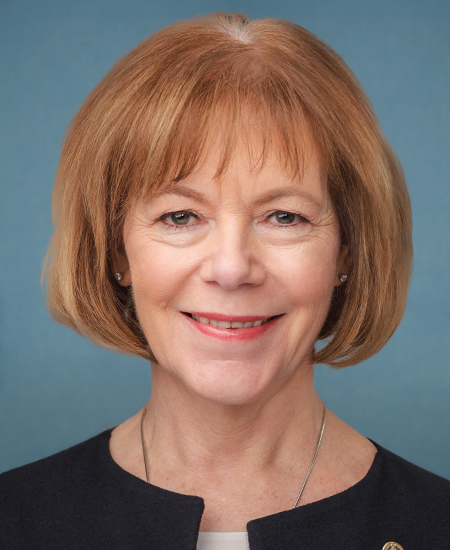
Sponsored bills
Maddy summaryThis bill authorizes the minting of commemorative coins for the 2028 Los Angeles Olympic and Paralympic Games and the 2034 Salt Lake City Olympic and Paralympic Winter Games. It specifies four coin types ($5 gold, $1 silver, half-dollar, and proof silver $1) with defined quantities and designs reflecting U.S. athletic participation. A surcharge on each coin sale (e.g., $35 for $5 coins) funds the respective Olympic committees' legacy programs, including youth sports initiatives. The coins are legal tender but intended solely for commemoration, with surcharges directed to the organizing committees after covering minting costs.
Maddy summaryThis symbolic resolution (SCONRES 16) recognizes the persistent wage gap affecting Black women in the U.S., specifically noting they earn just 66 cents for every dollar paid to White, non-Hispanic men for full-time work. It highlights that Black women face compounded racial and gender-based pay discrimination, with data showing the gap would take over 200 years to close at current rates. The resolution does not create new laws but formally acknowledges the economic impact on Black women - such as lost lifetime earnings and reduced family financial security - and reaffirms congressional support for equal pay principles. It was introduced to coincide with Black Women’s Equal Pay Day (July 10, 2025), using Census and EEOC data to underscore the disparity.
Maddy summaryThis bill extends the temporary waiver allowing hospitals to provide acute care at home until 2030, directly affecting hospitals participating in the Acute Hospital Care at Home initiative and the patients receiving care through this program. It requires the Department of Health and Human Services to conduct a detailed study by September 2028, comparing care quality, costs, patient outcomes, and experiences between home-based care and traditional inpatient hospital care. The study must analyze specific metrics like readmission rates, staffing ratios, treatment types, and patient demographics across participating and non-participating hospitals. The findings will be reported to Congress, providing data to inform future policy decisions about home-based hospital care.
Maddy summarySRES 312 is a non-binding Senate resolution designating June 2025 as "LGBTQ Pride Month" to honor the LGBTQ community's historical struggles and contributions to U.S. society. The resolution expresses symbolic support for LGBTQ rights and highlights ongoing challenges like discrimination in housing, employment, and healthcare, without creating new laws or policies. It serves as a formal acknowledgment by the Senate to promote awareness of LGBTQ history and advocacy, but has no legal effect on government actions or individual rights. The resolution was introduced by multiple senators and includes a preamble detailing key milestones in LGBTQ equality efforts.
Maddy summaryS 2229, the United States Foreign Service Commemorative Coin Act, authorizes the minting of three commemorative coins to honor the 100th anniversary of the U.S. Foreign Service (established by the 1924 Rogers Act). It specifies $5 gold coins (max 50,000), $1 silver coins (max 400,000), and half-dollar coins (max 750,000) to be issued in 2029, featuring designs symbolizing U.S. diplomacy. A surcharge from each coin sale ($35 for gold, $10 for silver, $5 for half-dollar) will fund the Association for Diplomatic Studies and Training to preserve diplomatic history through oral histories and other programs. The coins are legal tender and will be sold at face value plus surcharge and production costs, with all funds going directly to support the Association's work.
Maddy summaryThe Reducing Homelessness Through Program Reform Act amends the McKinney-Vento Homeless Assistance Act to reform key HUD homeless assistance programs. Key provisions include increasing administrative costs for Emergency Solutions Grants from 7.5% to 10%, establishing 2-year funding cycles for Continuum of Care programs with renewal options, and allowing housing choice vouchers to cover security deposits and holding fees. The bill also creates an Advisory Committee on Homelessness with lived experience members and requires improved coordination between healthcare systems and homeless services. These changes aim to streamline service delivery, reduce administrative barriers, and better serve people experiencing or at risk of homelessness.
Maddy summaryS 2212, the VISIBLE Act, requires immigration enforcement officers to visibly display their agency name and either their last name or unique badge number during all public-facing immigration enforcement activities in the United States. This applies to officers from U.S. Customs and Border Protection, U.S. Immigration and Customs Enforcement, and other authorized personnel during actions like stops, arrests, raids, or warrant service. The bill mandates that this identification be clearly legible from 25 feet away on outermost clothing, prohibits non-medical face coverings that obscure it (except in covert operations or hazardous conditions), and requires annual reports to Congress on compliance and disciplinary actions. It aims to increase transparency during immigration enforcement interactions where the public may be present.
Maddy summaryThe Break the Cycle of Violence Act establishes federal grants to fund community-based violence intervention programs that aim to reduce gun violence through evidence-based strategies. It creates a National Community Violence Response Center to coordinate efforts and provide technical assistance, while directing funding to communities disproportionately affected by violence, particularly those with high homicide rates. The bill includes provisions for hospital-based violence intervention programs, trauma-informed services, and job training programs for opportunity youth (ages 16-25 not in education or employment) to address root causes of violence. Funding for these programs totals $300 million in 2026, increasing to $700 million annually through 2033 for the Department of Health and Human Services, plus $1.5 billion for job training programs through the Department of Labor.
Maddy summaryThis bill prohibits defendants in federal criminal cases from using a victim's LGBTQ+ sexual orientation, gender identity, or expression as a legal excuse for violent crimes like assault or murder. It directly affects defendants who attempt to justify violence by claiming the victim's identity provoked them, and it protects LGBTQ+ victims by preventing their identities from being used to reduce sentences. The law bans such defenses entirely, except when evidence of the defendant's past trauma is admitted under standard federal evidence rules. It also requires the Attorney General to annually report on federal prosecutions involving violence against LGBTQ+ individuals motivated by bias. This is a concrete policy change to end the use of discriminatory defenses in federal court.