

Democracy Is Strengthened by Casting Light On Spending in Elections Act of 2021 or the DISCLOSE Act of 2021 This bill addresses campaign finance, including by expanding the prohibition on campaign spending by foreign nationals, requiring additional disclosures of campaign expenditures, and requiring additional disclosures regarding certain political advertisements. First, the bill prohibits foreign nationals from participating in the decision-making process regarding an election expenditure. Additionally, the bill expands existing foreign money prohibitions to include disbursements for paid web-based or digital communications and federal judicial nomination communications. It also prohibits foreign nationals from contributing to campaigns related to ballot initiatives and referenda. The Federal Election Commission (FEC) must conduct an audit after each federal election cycle to determine the incidence of illicit foreign money. Next, the bill makes it unlawful to establish or use a corporation, company, or other entity with the intent to conceal an election contribution or donation by a foreign national. A violator is subject to criminal penalties—a fine, a prison term of up to five years, or both. Covered organizations (e.g., corporations, labor organizations, and political organizations) must, within 24 hours, file reports with the FEC to disclose campaign expenditures of more than $10,000 during an election cycle. Finally, the bill requires organizations to provide additional disclosures regarding political advertisements, including the donors who contributed the most money to that organization in the last year.
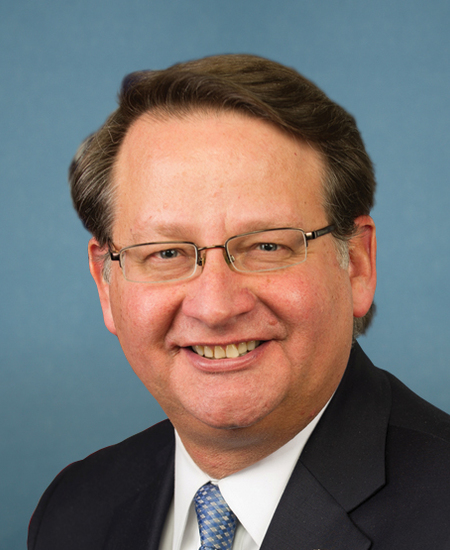
Sponsored bills
Discharge Review Board Outreach Improvement Act of 2022 This bill establishes the Department of Defense-Department of Veterans Affairs Discharge Review Board Committee to advise the Office of the Under Secretary of Defense for Personnel and Readiness and the Department of Veterans Affairs (VA) on matters relating to the boards that review the discharge or dismissal (other than a discharge or dismissal by sentence of a general court-martial) of any former member of an armed force. The committee must provide the Department of Defense (DOD) and the VA with recommendations on the strategic direction for the joint coordination and sharing efforts between and within DOD and the VA on matters regarding the review boards.
This joint resolution directs the President to remove U.S. Armed Forces from hostilities against the Houthis in Yemen within 30 days of the enactment of this joint resolution unless Congress authorizes a later withdrawal date, issues a declaration of war, or specifically authorizes the use of the Armed Forces. Prohibited activities include sharing intelligence or providing logistical support to enable offensive strikes by the coalition led by Saudi Arabia. This joint resolution shall not affect any military operations directed at Al Qaeda or forces associated with Al Qaeda.
This resolution recognizes the critical role the Equal Employment Opportunity Commission plays in addressing long-standing issues including the wage gap, combating workplace harassment, and ensuring all workers are treated with dignity and respect in the workplace.
Veterans Marriage Recognition Act of 2022 This bill revises the definition of a spouse and surviving spouse for purposes related to veterans' benefits, health care, and other matters. Specifically, the bill includes persons who are in same sex marriages as spouses and surviving spouses.
Veterans' Compensation Cost-of-Living Adjustment Act of 2022 This bill requires the Department of Veterans Affairs (VA) to increase the amounts payable for wartime disability compensation, additional compensation for dependents, the clothing allowance for certain disabled veterans, and dependency and indemnity compensation for surviving spouses and children. Specifically, the VA must increase the amounts by the same percentage as the cost-of-living increase in benefits for Social Security recipients that is effective on December 1, 2022. The bill requires the VA to publish the amounts payable, as increased, in the Federal Register. The VA is authorized to make a similar adjustment to the rates of disability compensation payable to persons who have not received compensation for service-connected disability or death.
Native American Direct Loan Improvement Act This bill addresses housing and homeownership for Native American veterans. Specifically, the bill revises the Native American Direct Loan program administered by the Department of Veterans Affairs (VA) to (1) allow Native American veterans to refinance existing mortgage loans; and (2) award grants to local service providers for conducting outreach, homebuyer education, housing counseling, risk mitigation, and other technical assistance to assist Native American veterans seeking to qualify for mortgage financing. Additionally, the bill directs the VA to carry out a pilot program to address the feasibility and advisability of making direct housing loans to Native community development financial institutions for relending loan amounts to qualified veterans.
Disaster Contract Improvement Act This bill directs the Federal Emergency Management Agency (FEMA) to establish an advisory working group to encourage and foster collaborative efforts among individuals and entities engaged in disaster recovery relating to debris removal. The bill requires (1) FEMA to conduct outreach to states, tribal governments, and local governments with respect to any guidance or support materials developed; and (2) the Government Accountability Office to conduct a study that includes examining the use and adoption rate of advance contracts for debris removal by states, tribal governments, and local governments.
This resolution (1) recognizes the increase in educational opportunities, including in sports, for women and girls since the passage of title IX of the Education Amendments of 1972; and (2) encourages the Department of Education and the Department of Justice to ensure that students have a safe learning environment by working to ensure schools prevent and respond to discrimination and harassment on the basis of sex.
Federal PFAS Research Evaluation Act This bill requires various studies and reports on the exposure, hazards, and management of perfluoroalkyl and polyfluoroalkyl substances, commonly referred to as PFAS. These substances are man-made and may have adverse human health effects. A variety of products contain the compounds, such as nonstick cookware or weatherproof clothing. Specifically, the bill requires the National Science Foundation (NSF) to enter into an agreement with the National Academies of Sciences, Engineering, and Medicine (NASEM) to conduct a two-phase study and report on the research and development needed to advance human exposure estimation and toxicity hazard estimation of individual or total PFAS. The bill also requires the NSF and the Environmental Protection Agency to jointly enter into an agreement with NASEM to conduct a study and submit a report on the research and development needed to advance the understanding of the extent and implications of environmental contamination by PFAS, how to manage and treat such contamination, and the development of safe alternatives. Finally, the White House Office of Science and Technology Policy must submit an implementation plan for federal PFAS research, development, and demonstration activities, taking into account the recommendations of the NASEM reports.