

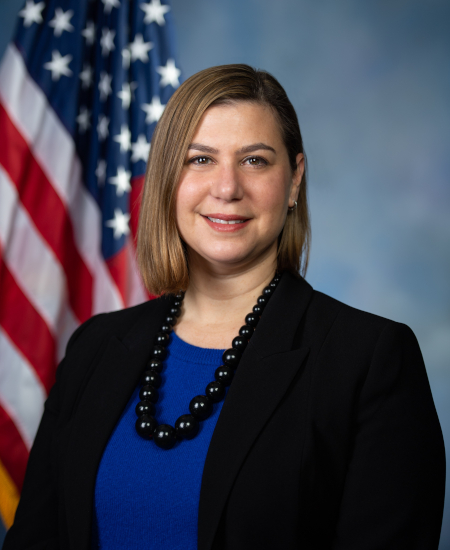
Maddy summaryHR 3229, the Stop Foreign Funds in Elections Act, amends the Federal Election Campaign Act to prohibit foreign nationals from contributing to or donating to state or local ballot initiatives and referendums. This bill directly affects foreign individuals or entities seeking to influence state or local voting measures through financial contributions. The key provision expands an existing ban on foreign contributions in elections by explicitly including ballot initiatives and referendums in the definition of prohibited activities. The amendment applies to contributions made on or after the law's enactment date.
Sponsored bills
Maddy summaryThis bill provides back pay and benefits to senior military officers (O-7 rank or higher) whose promotions were delayed due to a Senate confirmation suspension starting in February 2023. It requires the Secretary of Defense to retroactively pay these officers from a specific date - determined as the later of 30 days after their nomination was placed on the Senate Executive Calendar or the date they would have been appointed without the delay - and to establish their seniority from that same date. The law directly affects officers confirmed between December 5-31, 2023, who were impacted by the confirmation pause. It does not change future confirmation procedures but corrects past financial and career consequences for affected service members.
Maddy summaryThe Innovative FEED Act of 2023 defines and regulates "zootechnical animal food substances" - substances added to animal feed to affect digestion, reduce foodborne pathogens, or alter gut microbiome without providing nutrition. It requires these substances to be approved as food additives by the FDA under existing rules, with specific data on intended effects and mandatory labeling stating "Not for use in the diagnosis, cure, mitigation, treatment, or prevention of disease in animals." The bill excludes drugs, hormones, ionophores, and other substances from this category. This directly affects animal feed manufacturers, the FDA’s regulatory process, and the labeling requirements for these products.
Maddy summaryThe PLAN for School Safety Act of 2023 creates a federal program to fund State and regional centers that help schools develop and improve individualized safety plans. These centers, established by eligible entities like state education agencies or Tribal organizations, provide tailored consulting on school safety, mental health, and violence prevention using research-backed methods. The program requires centers to cover 5% of activity costs and prioritizes support for schools in rural, Tribal, or low-resourced communities. Annual reports to Congress will track implementation progress, effectiveness, and how centers assist schools in accessing funding for safety initiatives.
Maddy summaryThe Saving Vet Halls Act of 2023 authorizes the Department of Veterans Affairs to provide grants to eligible veterans service organizations (like local VFW or American Legion chapters) for repairing or upgrading existing facilities or technology at their locations. Organizations must submit a detailed plan for their proposed improvements and cannot use funds for new construction. Grants are capped at $75,000 per organization annually, and recipients cannot receive another grant for five consecutive fiscal years. The bill allocates $10 million in funding to support these facility and technology upgrades for veterans service organizations nationwide.
Maddy summaryThis bill reauthorizes the Never Again Education program, which funds Holocaust education initiatives in schools. It extends the program's funding authorization period from ending after four fiscal years to continuing annually through fiscal year 2030. The bill modifies the existing law (Public Law 116-141) by updating the funding timeline without changing program requirements or eligibility. It directly affects the existing grant program supporting educational materials and teacher training on the Holocaust. The change ensures continued federal funding for these specific educational efforts until 2030.
Maddy summaryThis bill creates a presumption that certain health conditions are linked to military firefighting service. It applies to veterans who served at least five years in a firefighting military role (e.g., fire suppression specialists) and develop specific illnesses within 15 years of leaving service. The covered conditions include heart disease, lung disease, and multiple cancers (like leukemia, lymphoma, and lung cancer), with the VA automatically presuming service connection for these if they meet the 10% disability threshold. This simplifies benefit claims by shifting the burden of proof to the VA, rather than requiring veterans to prove their illness was caused by service. The law affects military firefighters who served in designated fire-related roles and seek VA disability benefits for qualifying conditions.
Maddy summaryHRES 793 is a resolution passed by the U.S. House of Representatives calling on Hamas to immediately release all 199 hostages taken during Hamas' October 7, 2023 attack on Israel. The resolution condemns Hamas for the attack, the taking of hostages, and threats against hostages, while stating that holding hostages violates international humanitarian law under the Geneva Conventions. It demands the immediate release of all hostages and expresses sympathy for victims and their families. As a symbolic resolution, it does not create legal obligations but formally expresses the House's position.
Maddy summaryHR 6451, the Mental Health Justice Act of 2023, provides $250 million in federal grants to states, tribes, and localities to hire mental health professionals as first responders for specific emergencies. It directs these professionals to replace police in situations involving mental health crises, substance use, or intellectual/developmental disabilities - such as when a 911 caller describes a mental health emergency or a first responder identifies someone needing mental health support. The bill requires grantees to train responders in de-escalation techniques, link individuals to community-based services (not incarceration), and report on outcomes like reduced arrests or use of force. It also mandates data collection on demographics and prevents funneling people into institutional settings, with annual reports to Congress on program effectiveness.
Maddy summaryThe Specialty CROP Act of 2023 requires the U.S. Secretary of Agriculture and the U.S. Trade Representative to annually submit a report to Congress analyzing foreign trade barriers affecting U.S. specialty crop exports (such as fruits, vegetables, and nuts). The report must identify specific foreign policies like tariffs, quotas, or sanitary measures that hinder exports, estimate their economic impact, assess relevant international agreements, and detail U.S. actions taken to address these barriers. It also mandates public comment before the report is prepared and requires the unclassified version to be made publicly available in machine-readable format. This bill directly affects U.S. specialty crop producers and exporters by creating a formal mechanism to track and address international trade obstacles.