

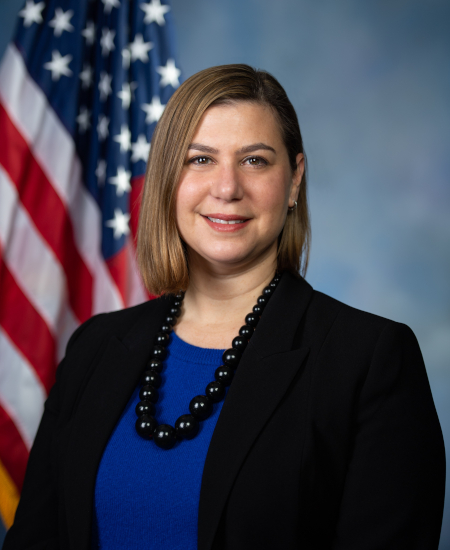
Save Our Servicemembers Act of 2021 This bill requires the Office of the Under Secretary of Defense for Personnel and Readiness within the Department of Defense (DOD) to evaluate and standardize DOD's suicide prevention efforts. Specifically, the bill directs the Defense Suicide Prevention Office to collaborate with each military department to (1) develop and implement a process to ensure that individual nonclinical suicide prevention efforts are assessed for effectiveness, and (2) develop consistent suicide-related definitions for use throughout DOD. The bill also requires the use of such suicide-related definitions in any updated policies of DOD or each military department.
Sponsored bills
Captain James C. Edge Gold Star Spouse Equity Act This bill addresses restrictions on benefits for surviving spouses of service members. Specifically, the bill prohibits the termination of the payment of an annuity under the Survivor Benefit Plan for certain surviving spouses of service members who died while on active duty solely because the surviving spouse remarries. The Department of Defense must resume payment of an annuity to surviving spouses who remarried before the age of 55 and before the enactment of this bill. The remarriage of a surviving spouse of a veteran does not bar the provision of dependency and indemnity compensation, regardless of their age when they remarried. The Department of Veterans Affairs must resume payment of dependency and indemnity compensation to surviving spouses who remarried before the age of 57 prior to the enactment of this bill.
United States Cadet Nurse Corps Service Recognition Act of 2021 This bill recognizes service as a member of the U.S. Cadet Nurse Corps between July 1, 1943, and December 31, 1948, as active duty service. The active duty designation entitles qualifying individuals to certain benefits afforded to veterans, such as burial benefits (not including interment or inurnment at Arlington National Cemetery) and honorary veteran status. Under the bill, the Department of Defense (DOD) must issue individuals who served in the corps during the specified period a discharge from their service under honorable conditions if such a discharge is warranted based on the duration and nature of the service. Such individuals are not entitled to Department of Veterans Affairs benefits aside from those related to burials and memorials. The bill also authorizes DOD to produce a service medal or other commendation, memorial plaque, or grave marker to honor the individuals.
Free Veterans from Fees Act This bill waives the application fee for any special use permit solely for a veterans special event at war memorials on land administered by the National Park Service in the District of Columbia and its environs.
Syrian Partner Protection Act This bill authorizes the Department of Homeland Security (DHS) to provide special immigrant status to qualified aliens who assisted U.S. efforts in Syria against the Islamic State. (A special immigrant is qualified to become a permanent resident.) A qualifying alien is a Syrian national (or stateless person who habitually resided in Syria) who (1) partnered with or worked for the United States in Syria in a sensitive and trusted capacity (such as an interpreter) on or after January 1, 2014, for at least one year, and (2) provided documented service to U.S. efforts against the Islamic State. The spouse or child of such an alien shall also qualify for special immigrant status. DHS may admit up to 4,000 principal aliens under this bill each fiscal year for the five fiscal years after this bill's enactment. Unused visas at the end of a fiscal year shall carry forward and be available the next year. Aliens admitted under this bill shall not be subject to other numerical limitations. If a qualifying alien applying for special immigrant status under this bill is in imminent danger, the Department of State shall provide protection to that alien. An alien who has received special immigrant status under this bill shall be eligible for benefits generally available to admitted refugees, such as resettlement assistance.
Bipartisan Border Solutions Act of 2021 This bill establishes regional processing centers for conducting immigration-related activities and addresses other related issues. The Department of Homeland Security (DHS) shall establish at least four regional processing centers along the southern border in high-traffic Border Patrol sectors. These centers shall conduct processing activities such as criminal history checks, medical screenings, asylum interviews and credible fear determinations, and short-term detention of individuals. The bill imposes various requirements, such as requiring the centers to (1) allow nongovernmental entities access to detained individuals to provide humanitarian or legal assistance, and (2) provide detained aliens access to legal counsel for certain asylum proceedings. The bill also requires DHS and the Department of Justice (DOJ) to develop pilot programs to improve asylum decisions, credible fear determinations, access to counsel, and case management of aliens awaiting asylum hearings or decisions. DOJ shall, to the greatest extent practicable, prioritize removal cases involving aliens apprehended while entering the United States during an irregular migration influx. Before placing an unaccompanied alien child with an individual, the Department of Health and Human Services must conduct a criminal background check of each adult member of that individual's household. An alien child may not be placed in a household where an individual has been convicted of certain crimes, including offenses involving sex or domestic violence. The bill also makes it a crime to make a materially false statement or knowingly use a false document to obtain custody of an unaccompanied alien child.
Holocaust Insurance Accountability Act of 2021 This bill allows a beneficiary (or an heir of a beneficiary) of certain insurance policies in effect during the Holocaust to sue in U.S. district court to enforce rights under such policies. An insurance policy covered under this bill must have been (1) in effect at any time between January 31, 1933, and December 31, 1945, and (2) issued to a policyholder domiciled in Nazi-controlled territory or Switzerland. A court shall award to a prevailing beneficiary (1) the amount due under a policy, (2) prejudgment interest of 6% a year, (3) attorney's fees and costs, and (4) treble damages if the insurer acted in bad faith. An action under this bill or state law related to a covered insurance policy shall be considered timely if filed within 10 years of this bill's enactment. Judgments and agreements entered before this bill's enactment shall not preclude a claim brought under the bill, with certain exceptions. Neither executive agreements between the United States and a foreign government nor U.S. executive foreign policies shall (1) affect or preclude claims brought under this bill, or (2) supersede or preempt any state laws relating to insurance policies covered by this bill.
Khalid Jabara and Heather Heyer National Opposition to Hate, Assault, and Threats to Equality Act of 2021 or the Jabara-Heyer NO HATE Act of 2021 This bill creates grants for state and local governments to combat hate crimes. It also authorizes additional penalties for hate crime offenses. Specifically, it establishes grants for states to create state-run hate crimes reporting hotlines. It also authorizes grants for states and local governments to implement the National Incident-Based Reporting System and to conduct law enforcement activities or crime reduction programs to prevent, address, or respond to hate crimes. Finally, in the case of an individual convicted of a hate crime offense and placed on supervised release, the bill allows a court to order that the individual participate in educational classes or community service as a condition of supervised release.
Healthcare Workforce Resilience Act This bill makes previously unused immigrant visas available to nurses and physicians who petition for such a visa before the date that is 90 days after the end of the declared national emergency relating to the COVID-19 (i.e., coronavirus disease 2019) outbreak. The number of visas available shall be the total number of unused employment-based immigrant visas from FY1992-FY2020, up to 40,000. Of such visas, 25,000 shall be reserved for nurses and 15,000 for physicians. Certain family members may accompany the principal beneficiary of a visa provided under this bill, and visas for such family members shall (1) be made available from the unused visas from FY1992-FY2020, and (2) not be counted against the 40,000 cap. Visas provided under this bill shall be exempt from per-country limitations.
VA Governors Challenge Expansion Act of 2021 This bill provides statutory authority for the Governors Challenge Program and otherwise revises the program. The program assists states and local communities with developing and implementing veteran suicide prevention activities. In particular, the bill expands the program by directing the Department of Veterans Affairs (VA) to make grants to states and American Indian and Alaska Native tribes for developing and implementing plans to prevent veteran suicides. Further, the bill requires the VA to provide technical assistance to tribes.