

Maddy summaryThis bill requires car manufacturers to include AM radio receivers as standard equipment in all new vehicles sold in the U.S., without additional cost to buyers. It mandates that AM radio controls be clearly visible on the dashboard for drivers. For vehicles sold before the rule takes effect, manufacturers must label them to disclose the absence of AM radio. The bill aims to maintain access to AM radio broadcasts, which are used for emergency alerts, but does not mandate new emergency systems.
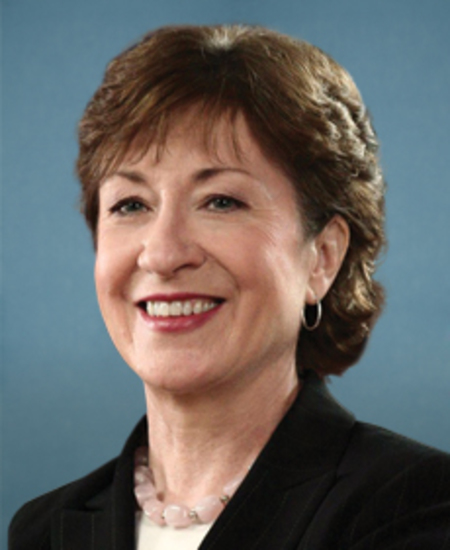
Sen. Susan M. Collins
Sponsored bills
Maddy summaryThis bill (S 2757) freezes current payment rates for veterans' transportation services provided through "special modes" (like non-emergency medical transport) starting January 1, 2023, preventing the VA from lowering these rates without strict conditions. It directly affects veterans relying on these transportation services and the contractors providing them. The key provision allows rate increases but requires the VA to conduct a detailed economic impact review, consult with veterans' groups and industry experts, and ensure new rates cover actual costs before any decrease can occur. This aims to protect veterans' access to care by preventing rate cuts that could disrupt transportation services.
Maddy summaryThis bill amends the Elementary and Secondary Education Act to allow schools to use existing federal funds for student sports clubs, teams, training, and related outdoor wellness activities. It directly affects K-12 schools by removing a previous restriction that barred such uses of ESEA funds. The key mechanism is an exception added to Section 8526(7), explicitly permitting these activities before the period ending that section. The change applies to funds already allocated under the ESEA, not creating new spending.
Maddy summaryThis bill amends a provision in the Elementary and Secondary Education Act to explicitly allow schools using federal funds to offer hunter safety education and similar activities like archery or culinary arts as part of approved educational programs. It directly affects schools and educational programs receiving funds under the Elementary and Secondary Education Act by removing a previous restriction on using those funds for such activities. The key mechanism is a new exception inserted into Section 8526(7), clarifying that these educational programs remain permissible. The bill does not change funding levels or create new programs, but specifically permits existing funds to be used for these instructional activities. This is a technical amendment to clarify funding eligibility for certain educational offerings.
Maddy summaryThis bill creates a data platform to track forest carbon emissions, sequestration, and the carbon footprint of wood products, helping measure environmental impacts. It modifies existing grant programs to prioritize rural wood mills in areas with high unemployment, supports wood-building education at colleges, and funds pilot projects using mass timber in rural infrastructure construction. The bill directly affects rural communities (especially those with wood manufacturing history), wood product manufacturers, and educational institutions developing wood-building curricula. Key mechanisms include mandatory carbon data reporting, targeted grants for economic development, and requirements for wood products to be "produced and assembled in the U.S." in pilot projects.
Financing Our Energy Future Act This bill expands the types of partnerships that qualify for treatment as publicly traded partnerships instead of as corporations for tax purposes. Under current law, partnerships that meet certain gross income requirements (i.e., at least 90% of the partnership's gross income in a taxable year consists of qualifying income) are excepted from being treated as a corporation for tax purposes. This bill expands the sources of income that are considered qualifying income and make a partnership eligible for such an exception. Specifically, the bill provides that income derived from the generation of specified alternative energy, alternative fuel projects, or the associated property, storage, or transportation for such projects (e.g., the conversion of renewable biomass into renewable fuel or the storage or transportation of such fuel) is considered qualifying income.
Maddy summaryThis bill requires the Health Secretary to create and regularly update a strategic framework for rapidly developing, distributing, and scaling diagnostic tests during public health emergencies involving infectious diseases or threats like bioterrorism. The framework must address domestic testing capacity, new technologies (like point-of-care tests), medical supply needs, and efficient distribution strategies, and be updated every three years. It mandates coordination with states, tribes, local governments, and industry to build domestic testing capacity through public-private partnerships. The law directly affects federal health agencies, state/local health departments, and diagnostic test manufacturers by establishing new requirements for emergency preparedness.
Maddy summaryThe SEASONAL Act allows U.S. states to request supplemental H-2B visas for seasonal labor shortages. Governors can petition for extra visas if a state has low unemployment (≤3.5%), unmet labor needs in specific job categories or economic zones, and certifies the visas won’t displace domestic workers or lower wages. The bill sets a 4-year expiration and requires states to comply with federal rules for visa allocation, including random assignment if demand exceeds requests. It mandates annual reports to Congress tracking visa usage, labor market impacts, and economic effects by state.
Maddy summaryThis bill (S 2647, SHINE for Autumn Act of 2023) provides federal funding to improve stillbirth data collection, research, and education. It authorizes $5 million annually for states to collect stillbirth data using existing health records while protecting privacy, $1 million for developing standardized data collection guidelines and public educational materials, and $3 million for specialized training programs in perinatal pathology and stillbirth research. The bill directly affects state health departments, medical professionals (like obstetricians and pathologists), and families impacted by stillbirth through improved data systems and educational resources. Key provisions require standardized data reporting, consultation with affected families and healthcare providers, and mandatory reports on program progress within five years of enactment.
Maddy summaryThe Better CARE for Animals Act of 2023 strengthens enforcement of the existing Animal Welfare Act by requiring dealers and exhibitors to maintain valid licenses for animal sales or transport. It expands enforcement authority for both the USDA and the Attorney General to pursue civil penalties (up to $10,000 per violation per day), seize animals in violation cases, and use penalty funds to cover temporary care costs for animals during legal proceedings. The bill also clarifies that enforcement applies to rules and regulations under the Act, and mandates a new coordination agreement between the USDA and DOJ to address repeat violators. These changes directly affect animal dealers, exhibitors, and federal enforcement agencies, improving accountability for animal welfare violations.