

Maddy summarySRES 435 is a Senate resolution designating October 30 through November 4, 2023, as "National Veterans Small Business Week." It formally recognizes the contributions of veterans who own small businesses, highlighting their role in the economy (over 1.7 million veteran-owned businesses employing 2.9 million people). The resolution expresses support for veterans' entrepreneurship, encourages policies reducing regulatory burdens for small businesses, and thanks veterans for their service through business ownership. This is a symbolic recognition with no new legal requirements or funding.
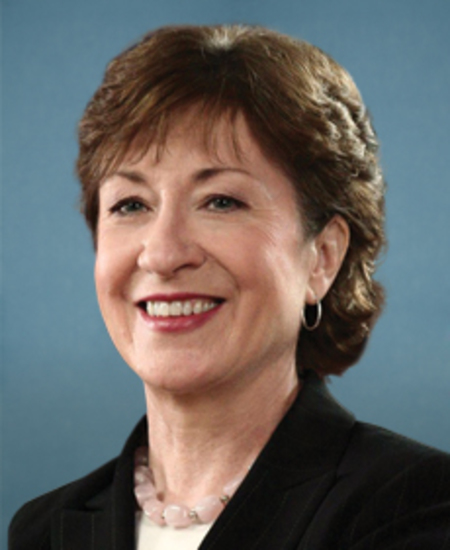
Sen. Susan M. Collins
Sponsored bills
Maddy summaryThis Senate resolution expresses support for afterschool programs and the Lights On Afterschool event held on October 26, 2023. It recognizes the role of high-quality afterschool programs in providing safe, engaging learning opportunities for children, supporting working families, and strengthening community partnerships. The resolution does not create new policies, funding, or requirements - it is a symbolic gesture acknowledging the value of these programs. It was introduced by Senators Smith, Collins, Warren, Kaine, and Casey.
Maddy summaryS 3141, the Antisemitism Awareness Act of 2023, requires the Department of Education to use the International Holocaust Remembrance Alliance (IHRA) definition of antisemitism when investigating discrimination claims under federal civil rights law (Title VI) in schools receiving federal funding. It specifically directs the Department to consider this definition when assessing whether discrimination against Jewish students or employees based on shared ancestry or ethnic characteristics violates anti-discrimination protections. The bill does not create new rights or alter existing legal standards but clarifies that antisemitism rooted in Jewish ancestry or ethnicity may fall under Title VI enforcement. It directly affects how the Department of Education handles discrimination complaints in K-12 schools and colleges, aligning enforcement with the IHRA definition already used by the Department since 2018. The bill explicitly states it does not expand the Department’s authority or impact First Amendment rights.
This resolution recognizes October 2023 as National Women's Small Business Month, honoring the role of women small business owners and entrepreneurs and encouraging the support and creation of women-owned small businesses.
Maddy summarySRES 430 designates October 20, 2023, as "National Early Childhood Literacy Awareness Day" to highlight early literacy challenges. The resolution encourages states, schools, nonprofits, and families to observe the day through activities promoting awareness of early childhood literacy development. It specifically urges parents and caregivers to engage children with reading, storytelling, and library visits to build foundational language skills. This symbolic resolution does not create new laws or allocate funds - it aims solely to raise public attention on improving early literacy outcomes for all children.
Maddy summaryThis bill updates the Runaway and Homeless Youth Act to better support vulnerable youth experiencing homelessness or at risk of exploitation. It creates new grant programs that provide temporary shelter, counseling, and transitional housing for youth up to age 26, with special attention to those who are victims of trafficking or from marginalized communities. The bill requires services to be culturally appropriate, trauma-informed, and to include support for education and job skills, while expanding prevention services to help youth avoid homelessness. It authorizes $200 million annually for these programs through 2028, with specific funding allocations for different service types. The bill directly affects runaway, homeless, and street youth, particularly those from historically underserved populations who face barriers to accessing services.
Maddy summaryS 3129, the Farm to School Act of 2023, expands federal support for programs connecting schools and early childhood programs with local farmers. It increases annual funding for the Patrick Leahy Farm to School Program from $5 million to $15 million, sets a $500,000 maximum grant amount per recipient, and requires projects to prioritize serving children from disadvantaged backgrounds or incorporating traditional Tribal foods. The bill mandates the Secretary to review regulatory barriers affecting local food procurement every three years and explicitly prioritizes projects involving Tribal agricultural producers, beginning farmers, and socially disadvantaged producers. Directly affecting schools, local farmers, Tribal communities, and land-grant colleges, it creates new mechanisms for procurement, educational activities, and improved distribution systems for locally sourced food.
Maddy summaryThe ABC Act requires Medicare, Medicaid, CHIP, and Social Security offices to review and simplify their application, eligibility, and communication processes. It directly affects family caregivers who help loved ones navigate these programs by targeting repeated paperwork, inconsistent information requests, and poor communication. Key mechanisms include mandating agencies to reduce duplicate forms, improve website accessibility (including ADA compliance), shorten call wait times, and provide multilingual support based on feedback from caregivers and advocacy groups. Agencies must submit detailed reports to Congress within one year outlining their findings and planned improvements.
Maddy summaryS. RES. 420 designates Betty K. Koed as Historian Emerita of the U.S. Senate, effective October 21, 2023, honoring her 25-year career as the Senate's first female Historian (serving from 2015-2023 after roles as Assistant and Associate Historian). The resolution recognizes her work preserving Senate archives, producing historical publications, and supporting educational programs about Senate history. It is a ceremonial honor with no policy changes or direct impact on legislation or constituents.
This resolution states that the Senate stands with Israel as it defends itself, reaffirms Israel's right to self-defense, and calls on all countries to unequivocally condemn Hamas' war on Israel. The resolution also reaffirms the United States' commitment to Israel's security, supports emergency resupply and certain other types of assistance to Israel, and calls on the United States to lead an international effort to deprive Hamas of Iranian and other sources of funding and lethal assistance. Furthermore, the resolution states that nothing in it may be construed as a declaration of war or an authorization for the use of military force.