

Maddy summarySRES 489 designates December 16, 2023, as "National Wreaths Across America Day" to honor the Wreaths Across America project. This project places wreaths on veterans' graves nationwide, coordinating with volunteers, the trucking industry, and patriotic escort groups (like motorcycle and law enforcement units) for annual ceremonies. The resolution recognizes the project's 32-year tradition of remembering fallen service members and honoring veterans' sacrifices. It specifically acknowledges the millions of volunteers, donors, and industry partners supporting this effort.
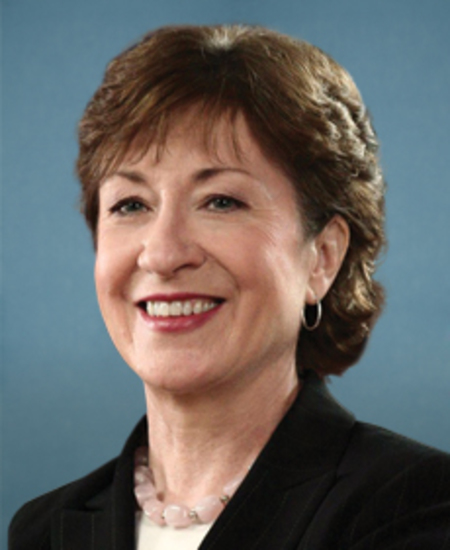
Sen. Susan M. Collins
Sponsored bills
Maddy summaryThis bill amends Section 547 of the Public Health Service Act to increase annual funding for community recovery programs from $5 million (2019-2023) to $16 million (2024-2028). It directly affects communities receiving grants under this program, which support local initiatives aiding individuals in recovery from substance use disorders. The key change is a significant funding boost for existing community-based recovery services, extending the program through 2028. The amendment updates the program's name to "Strengthening Communities of Recovery" and adjusts the funding level while maintaining the same program structure.
Maddy summaryThe Senate passed SRES 484, a resolution condemning the terrorist organization Hamas for its October 7, 2023, attacks on Israel. It formally opposes Hamas, affirms Israel’s right to self-defense, and emphasizes that terrorism and violence should not be defended. The resolution also recognizes religious freedom and encourages peaceful assembly while rejecting the use of conflict to incite division. As a procedural resolution, it does not create new laws or policies but expresses the Senate’s position.
Maddy summaryThis bill allows Social Security disability benefit applicants to receive payments during their initial waiting period (typically the first few months after applying) instead of waiting for the full period. Individuals can elect this option in writing during specific timeframes, such as within 45 days after the bill's enactment or during key application stages like filing an initial claim or requesting reconsideration. To maintain program funding stability, the Social Security Administration must calculate a percentage (starting at 96%) every five years to ensure the fiscal impact of early payments remains neutral over 75 years. The bill also requires updating application forms to include the election option, effective 180 days after enactment.
Maddy summaryThis bill prohibits the Department of Health and Human Services from implementing a proposed rule requiring minimum staffing levels in nursing homes, which opponents argue could accelerate closures, especially in rural areas. Instead, it creates a 17-member Advisory Panel on the Nursing Home Workforce to study staffing shortages, barriers to care access for seniors in rural and underserved areas, and regulatory impacts. The panel must submit an initial report within 60 days of its first meeting, analyzing workforce challenges and recommending solutions to strengthen staffing without imposing new mandates. The bill directly affects rural nursing homes and seniors who rely on these facilities, aiming to prevent closures by addressing systemic workforce issues through analysis rather than immediate regulatory changes.
Maddy summaryThis bill requires commercial fishing vessel operators and crew to receive safety training addressing behavioral and physical health risks, including substance use disorder and fatigue. It increases annual funding for these programs from $3 million to $6 million for fiscal years 2024 and 2025. The bill also allows the Department of Transportation to transfer funds to the Department of Health and Human Services to administer the training grant programs. These changes directly affect commercial fishing crews and vessel operators by mandating new wellness-focused safety training and providing dedicated funding for implementation.
Maddy summaryThis bill amends federal law to expand substance abuse treatment services for children, adolescents, and young adults to include suicide prevention and treatment. It specifically adds "suicide" to covered conditions and requires grant-funded programs to provide parental counseling on preventing overdose/suicide and supply safety tools (like lockboxes) to reduce access to lethal means. The law directs at least $2 million annually from federal grants toward these services, targeting providers including children's hospitals, emergency departments, tribal health programs, and pediatric specialists. It affects youth aged 12-25 and their families by integrating suicide prevention into existing substance abuse treatment funding streams. The changes apply to programs operating under the SUPPORT Act from 2024-2028.
Maddy summaryThis bill reauthorizes a federal program supporting maternal and child health services focused on preventing substance use. It extends the program's funding period by amending the Public Health Service Act to cover 2024 through 2028, replacing the previous 2019-2023 timeframe. The change directly affects state and local health programs that provide services to pregnant women, new mothers, and children, ensuring continued funding for prevention and treatment initiatives.
Maddy summaryThis bill prohibits U.S. federal agencies from purchasing cookware, utensils, carpets, or furniture containing PFOS or PFOA starting October 1, 2025. It requires agencies to prioritize buying products that do not contain PFAS (per- and polyfluoroalkyl substances) when available. The law directly affects all executive agencies defined under federal procurement rules, mandating a shift toward safer chemical alternatives in their purchasing decisions.
Maddy summaryThis Senate resolution designates November 2023 as "National Homeless Children and Youth Awareness Month" to highlight the issue of homelessness among children and youth. It cites statistics including 1.2 million homeless children identified in U.S. schools during the 2021-2022 school year and higher risks of health issues, school disruption, and suicide among homeless youth. The resolution encourages businesses, governments, schools, and organizations to raise awareness, share information about causes and solutions, and support efforts to prevent homelessness during that month. As a symbolic resolution, it does not create new laws or funding but aims to foster voluntary community action.