

Maddy summaryThe Grandfamily Housing Act of 2023 establishes a federal grant program for owners of intergenerational housing units - homes where grandparents or other relatives live with grandchildren. Grants cover costs for service coordinators to provide onsite support (like tutoring, healthcare, and after-school care), community outreach, and property modifications to support these families. The program requires coordination with local kinship navigator programs and mandates a report to Congress on the program's effectiveness within two years. It directly affects property owners in qualifying intergenerational housing units and aims to strengthen support services for these families through HUD-administered grants.
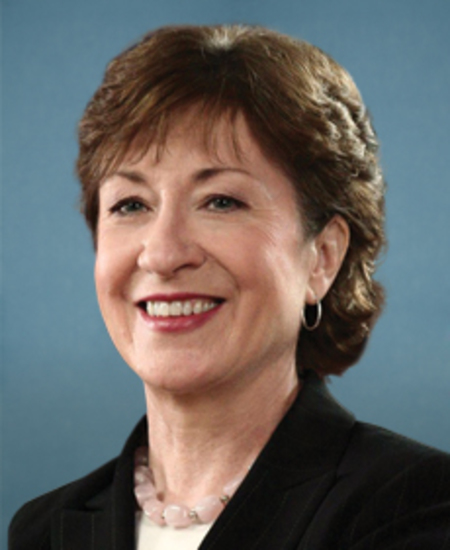
Sen. Susan M. Collins
Sponsored bills
Maddy summaryThis bill (S 735) modifies funding authorization for the U.S. Interagency Council on Homelessness under the McKinney-Vento Homeless Assistance Act. It removes fixed annual funding amounts (like the $3 million for 2010) and replaces them with flexible language allowing "such sums as may be necessary" for all fiscal years, ensuring funding can adjust as needed. The bill also reorganizes the law’s structure by removing Section 209 and redesignating Section 210 as Section 209, which now focuses on "Encouragement of State involvement" in homelessness efforts. These changes aim to streamline operations and strengthen state collaboration without altering core program requirements.
Maddy summarySRES 584 is a Senate resolution designating March 7, 2024, as "National Slam the Scam Day" to raise public awareness about government imposter scams. The resolution encourages education about scams where criminals impersonate agencies like the Social Security Administration or IRS to steal money or personal information. It urges the public to ignore suspicious requests, share scam awareness, and report incidents to specific agencies like the FTC or Social Security OIG. This is a symbolic awareness measure with no new legal requirements or funding.
Maddy summarySRES 582 is a symbolic Senate resolution supporting International Women’s Day, introduced by Senators Shaheen and Collins. It affirms the U.S. commitment to advancing women’s rights globally, recognizing that women’s empowerment is critical to economic growth, peace, and security. The resolution highlights ongoing challenges like gender-based violence, child marriage, and limited political participation, while referencing existing U.S. policies such as the Women, Peace, and Security Act. It does not create new laws or allocate funding but formally expresses congressional support for gender equality and women’s leadership.
Maddy summaryThis joint resolution (SJRES 63) seeks to block a specific rule issued by the Department of Labor (DOL) concerning worker classification under the Fair Labor Standards Act (FLSA). The DOL rule (published January 10, 2024) aimed to clarify how businesses must classify workers as employees or independent contractors for purposes of minimum wage and overtime pay. If passed, this resolution would formally disapprove the rule under a statutory process (Chapter 8 of Title 5, U.S. Code), preventing it from taking effect. The rule directly affects employers across industries who use independent contractors and their workers, as it would change how worker status is determined under federal labor law.
Maddy summaryThis non-binding Senate resolution (SRES 576) expresses support for designating March 4-8, 2024, as "National Social and Emotional Learning Week." It recognizes the role of social and emotional learning (SEL) programs - which focus on skills like self-awareness, relationship building, and responsible decision-making - in improving students' academic performance, mental wellness, and long-term success. The resolution encourages expanded access to SEL for students and educators but does not create new laws, funding, or mandates. It directly acknowledges the efforts of schools and communities already implementing SEL, without imposing requirements on any entity.
Maddy summarySRES 568 is a symbolic Senate resolution designating the week of February 26 through March 1, 2024, as "Public Schools Week." It does not create new laws, allocate funds, or directly affect any individuals or institutions. The resolution expresses support for public education by highlighting its role in democracy, student development, and community engagement, but it has no binding effect. This is a procedural resolution with no policy changes or implementation mechanisms.
Maddy summarySRES 553 is a ceremonial Senate resolution honoring Jean A. Carnahan, who served as Missouri’s first female U.S. Senator from 2001 to 2002 after her husband’s passing. The resolution expresses the Senate’s sorrow over her death, recognizes her service as First Lady of Missouri and U.S. Senator, and her advocacy for families and veterans. It directs the Senate Secretary to share the resolution with the House and Carnahan’s family, with no substantive policy changes or affected parties. This is a standard commemorative measure with no legislative impact.
Maddy summarySRES 547 is a symbolic Senate resolution commemorating the two-year anniversary of Russia's full-scale invasion of Ukraine (launched February 24, 2022). It expresses U.S. support for Ukraine's territorial integrity and sovereignty, condemns Russian actions including war crimes (like the Bucha massacre), and reaffirms congressional backing for Ukraine's defense against aggression. The resolution has no binding effect or policy changes - it serves as a formal statement of solidarity with Ukraine, acknowledging the humanitarian crisis and international aid efforts. It was introduced by 31 Senators and does not alter laws, funding, or military commitments.
Maddy summarySRES 548 designates the week of February 5-9, 2024, as "National School Counseling Week." The resolution encourages the public to observe this week with activities that raise awareness of school counselors' roles in supporting students' academic, social, and emotional development. It highlights counselors' contributions to mental health support, career preparation, and creating safe school environments, without imposing new requirements or funding. This is a symbolic, non-binding designation to promote recognition of school counseling services.