

Outdoors for All Act This bill directs the Department of the Interior to establish an outdoor recreation legacy partnership grant program under which Interior may award grants to states, certain political subdivisions of a state, special purpose districts, Indian tribes, or Alaska Native or Native Hawaiian communities or organizations. Funds must be used for projects to (1) acquire land and water for parks and other outdoor recreation purposes in qualifying areas, and (2) develop new or renovate existing outdoor recreation facilities that provide outdoor recreation opportunities to the public in qualifying areas. A qualifying area is an area that has a population of 30,000 or more in the most recent census, or that is administered by an Indian tribe or an Alaska Native or Native Hawaiian community organization. Interior shall give priority to projects that create or significantly enhance access to park and recreational opportunities in an urban neighborhood or community, engage and empower underserved communities and youth, provide opportunities for employment or job training for youth or underserved communities, establish or expand public-private partnerships, and take advantage of coordination among various levels of government.
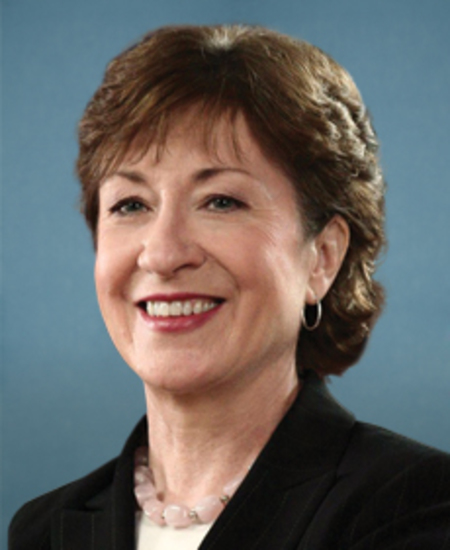
Sen. Susan M. Collins
Sponsored bills
Simplifying Outdoor Access for Recreation Act or the SOAR Act This bill sets forth and revises provisions regarding special recreation permits for use by individuals and groups to engage in recreational activities on federal recreational lands and waters.
Dairy Pricing Opportunity Act of 2021 This bill directs the Department of Agriculture (USDA) to hold national hearings to review Federal Milk Marketing Orders. (USDA uses these orders to establish a minimum price for various classes of milk.) The hearings must include the review of proposals from producers and the dairy industry on the price of Class I skim milk.
Maddy summarySRES 437 is a Senate resolution designating November 8, 2021, as "National First-Generation College Celebration Day." It symbolically recognizes first-generation college students - those whose parents did not earn bachelor’s degrees - and honors the 1965 Higher Education Act, which established key programs like Federal TRIO and Pell Grants supporting these students. The resolution does not create new laws or funding but urges nationwide acknowledgment of first-gen students’ contributions to education and workforce development. It directly affects awareness and recognition for this student group, linking their experiences to the historical context of the Higher Education Act.
Protecting Moms Who Served Act of 2021 This bill requires the Department of Veterans Affairs (VA) to implement the maternity care coordination program. The VA must provide community maternity care providers (i.e., non-VA maternity care providers) with training and support with respect to the unique needs of pregnant and postpartum veterans, particularly regarding mental and behavioral health conditions in relation to the service of the veterans in the Armed Forces. Additionally, the Government Accountability Office must report on maternal mortality and severe maternal morbidity among pregnant and postpartum veterans, with a focus on racial and ethnic disparities in maternal health outcomes for veterans.
Criminal Judicial Administration Act of 2021 This bill expands the authority of federal judges to reimburse defendants for expenses related to attending court proceedings. The bill also broadens the authority of magistrate court judges. Currently, when a defendant is released pending further court appearances, federal judges may order the U.S. Marshals Service to provide transportation and subsistence (food and lodging) expenses for a defendant to travel to court appearances, but not expenses during or to return home from such court appearances. This bill allows federal judges to order the Marshals Service to provide a defendant's transportation and subsistence expenses to return home from court proceedings, as well as subsistence expenses during such proceedings. Additionally, the bill authorizes magistrate court judges to rule on post-judgment motions pertaining to misdemeanor cases they tried and disposed of. Current law permits magistrate judges to try and dispose of misdemeanors in the district courts if the defendant consents.
This bill redesignates the Geospatial Learning Center in the Next NGA West facility in St. Louis, Missouri, as the Senator Roy Blunt Geospatial Learning Center.
Clean Cooking Support Act This bill provides for a way of increasing the number of clean cookstoves and fuels for household, institutional, or commercial use throughout the world. The Department of State and the U.S. Agency for International Development (USAID) shall jointly establish the Clean Cooking Interagency Working Group to assist with overseeing the planning, management, and coordination of initiatives to increase the number of clean cookstoves and fuels worldwide. The State Department, USAID, the Department of Energy, the National Institutes of Health, the Centers for Disease Control and Prevention, and the Environmental Protection Agency shall work with the Clean Cooking Alliance to carry out clean cooking activities that relate to the missions of such departments or agencies.
Bolstering Infectious Outbreaks Preparedness Workforce Act of 2021 or the BIO Preparedness Workforce Act of 2021 This bill establishes a student loan repayment program for health care and related professionals who are engaged in either bio-preparedness and response activities or infectious disease care in underserved communities. For each year that a professional meets the work requirements of the program, the Health Resources and Services Administration may pay up to $50,000 of the professional's student loan principal and interest, up to a maximum amount of $150,000.
Blue Carbon for Our Planet Act This bill establishes the Interagency Working Group on Coastal Blue Carbon to (1) assess the impediments to the conservation and restoration of coastal blue carbon ecosystems, and (2) establish national conservation and restoration priorities regarding these areas. Coastal blue carbon ecosystems are vegetated coastal habitats and include mangroves, tidal marshes, and other tidal, freshwater, or saltwater wetlands that have the ability to sequester and store carbon.