

Maddy summarySRES 657 is a Senate resolution designating May 16, 2022, as "Older Americans Mental Health Awareness Day" to highlight mental health challenges faced by older adults. The resolution recognizes that 20% of older adults experience mental health conditions like depression and anxiety, with higher suicide rates among those aged 75+ and 85+, and notes underutilization of services due to stigma and limited access. It emphasizes the need for increased public awareness and a specialized mental health workforce trained to address the unique needs of older adults. The resolution does not create new laws or funding but serves as a symbolic call to action for bipartisan efforts to improve mental health support for this population.
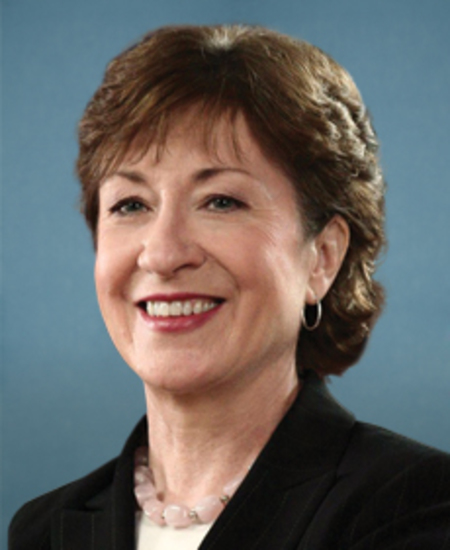
Sen. Susan M. Collins
Sponsored bills
This resolution celebrates 100 years of continuous diplomatic relations between the United States and Estonia, Latvia, and Lithuania (the Baltic States). The resolution also commits to providing continued support for the Baltic States through economic and security cooperation, including through the Baltic Security Initiative.
United States-Colombia Bicentennial Alliance Act This bill requires and authorizes various activities related to Colombia. For example, the bill requires the Department of State to develop and implement strategies to (1) engage with Colombia's government to combat corruption and the misuse of public resources, (2) support the efforts of Colombia's government in countering narcotics trafficking and transnational organized crime, and (3) support the efforts of Colombia's government to provide assistance to various groups that have been affected by natural disasters.
Interchangeable Biologics Clarity Act This bill provides a statutory definition for first interchangeable biosimilar biological product and makes other technical changes with respect to the provisions that establish the corresponding periods of market exclusivity.
Palliative Care and Hospice Education and Training Act This bill requires the Department of Health and Human Services (HHS) to take a series of actions relating to palliative-care training. Specifically, HHS must provide support for Palliative Care and Hospice Education Centers. The centers must improve the training of health professionals in palliative care and establish traineeships for individuals preparing for advanced-education nursing degrees, social-work degrees, or advanced degrees in physician-assistant studies in palliative care. HHS may provide support to medical schools, teaching hospitals, and graduate medical-education programs for training physicians who plan to teach palliative medicine. HHS must (1) provide Palliative Medicine and Hospice Academic Career Awards to individuals to promote their career development, (2) support entities that operate a Palliative Care and Hospice Education Center, (3) support individuals in specified fields who are pursuing an advanced degree in palliative care or related fields, and (4) award grants to nursing programs to train individuals in providing palliative care. The Agency for Healthcare Research and Quality must provide for a national education and awareness campaign to inform patients, families, and health professionals about the benefits of palliative care. The National Institutes of Health must expand national research programs in palliative care.
Maddy summarySRES 643 is a Senate resolution designating the week of May 15-21, 2022, as "National Police Week" to honor law enforcement officers who serve and sacrifice in their communities. The resolution recognizes the service of law enforcement officers, particularly those killed or injured in the line of duty, and acknowledges their sacrifices during the COVID-19 pandemic. It expresses support for officers' needs for proper equipment, training, and resources, and encourages the public to observe the week by honoring law enforcement personnel. This designation serves as a formal recognition of law enforcement service without creating new legal requirements or policy changes.
Access to Baby Formula Act of 2022 This bill authorizes the Department of Agriculture (USDA) to take certain actions to address emergencies, disasters, and supply chain disruptions (particularly the shortage of infant formula in the United States) affecting participants of the Special Supplemental Nutrition Program for Women, Infants, and Children (WIC). For example, the bill directs USDA to require each infant formula cost containment contract to include remedies in the event of an infant formula recall, including how an infant formula manufacturer would protect against disruption to WIC participants in the state.
Greatest Generation Commemorative Coin Act This bill directs the Department of the Treasury to mint and issue up to 50,000 $5 coins, 400,000 $1 silver coins, and 750,000 half-dollar clad coins in commemoration of the National World War II Memorial in the District of Columbia. The design of the coins shall be emblematic of the memorial and the service and sacrifice of American soldiers and civilians during World War II. All surcharges received from the sale of such coins shall be paid to the Friends of the National World War II Memorial to support the National Park Service in maintaining and repairing the memorial, and for educational and commemorative programs.
This bill directs the National Science Foundation (NSF) to conduct multiple pilot programs within the NSF to expand the number of institutions of higher education (including community colleges), and other eligible entities that the NSF determines appropriate, that are able to successfully compete for NSF grants. The NSF shall review the results of the pilot programs and develop best practices for implementation across the NSF.
Autism Family Caregivers Act of 2022 This bill establishes a pilot program to provide training for caregivers on improving health and other outcomes for children with autism spectrum disorder and other developmental disabilities or delays. To carry out the program, the Health Resources and Services Administration (HRSA) must award grants to, among other eligible entities, health systems and nonprofits to provide the training. HRSA must also provide technical assistance to grant recipients and evaluate the program.