

Maddy summaryThis bill makes it illegal to distribute online digital instructions (like 3D printer files) that can automatically program a 3D printer to create a firearm or complete a firearm receiver. It directly affects individuals who share such files online, including those creating or distributing "ghost gun" schematics. The key mechanism prohibits the internet distribution of these specific digital files under federal law, aiming to prevent untraceable firearms. This addresses the concern that 3D-printed guns lack serial numbers, making them difficult for law enforcement to trace after crimes.
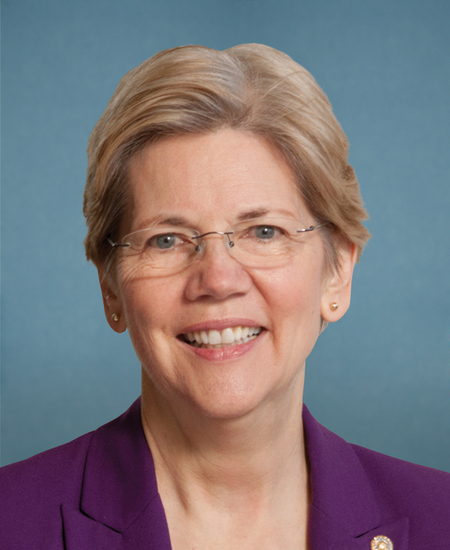
Sen. Elizabeth Warren
Sponsored bills
Maddy summaryS 2154, the Protecting Kids from Gun Marketing Act, prohibits gun manufacturers, dealers, and importers from marketing firearms or firearm-related products to minors (under 18) in ways designed to appeal to them. Key provisions ban marketing tactics like using cartoon characters, offering branded merchandise (e.g., hats, toys) to minors, or designing products specifically for children. The Federal Trade Commission (FTC) must create enforceable rules within one year, and violations will be treated as deceptive practices under existing law. Enforcement includes FTC actions, lawsuits by state attorneys general, and private lawsuits by affected individuals, with the FTC required to report enforcement plans and outcomes to Congress.
Maddy summaryThe Women’s Health Protection Act of 2025 (S 2150) prohibits state laws that impose unnecessary restrictions on abortion access before fetal viability. It directly affects patients seeking abortion care and health care providers (including clinics, hospitals, and medical professionals), banning requirements like mandatory in-person visits, location-based travel barriers, or restrictions on telemedicine that don’t apply to comparable medical procedures. The bill overrides conflicting state laws, requires courts to consider factors like cost and travel burden when evaluating restrictions, and establishes federal enforcement through lawsuits to stop violations. It focuses on ensuring access to abortion services without burdens that hinder care, while allowing post-viability abortions only when necessary to protect a patient’s life or health.
Maddy summaryThe MASS Act (S 2156) provides federal grants to states to implement or maintain state-level firearms and dealer licensing systems. It requires states to establish thorough background checks for all license applicants, safety training for first-time license holders, and dealer licensing for businesses selling more than 10 firearms annually. The bill also mandates processes for extreme risk protection orders (allowing family members to petition for temporary firearm removal) and requires surrender of firearms when licenses are revoked or under such orders. States must use grant funds for these specific requirements and submit annual reports on implementation.
Maddy summaryThis bill directs FinCEN (the Financial Crimes Enforcement Network) to request specific financial data from banks and other financial institutions within one year. The goal is to develop an advisory identifying how homegrown extremists and domestic terrorists obtain firearms, and how the gun market is exploited to fuel gun violence. FinCEN must consult with the FBI, ATF, and gun sellers before gathering data, and must issue the advisory within 540 days - or if insufficient data is collected, submit a detailed report to Congress explaining the gaps. The bill directly affects financial institutions (by requiring data sharing) and indirectly impacts gun sellers (through consultation).
Maddy summaryThis bill removes immigration status barriers to health care for lawfully present immigrants and those with Federally authorized presence (like deferred action). It requires states to cover all lawfully present individuals in Medicaid and CHIP, expands ACA exchange eligibility for undocumented people with authorized presence, and allows states to opt into covering undocumented children in CHIP. Key provisions amend the Social Security Act to eliminate citizenship requirements for Medicaid/CHIP and treat Federally authorized presence as equivalent to lawfully present for ACA subsidies. The bill does not automatically cover all undocumented people but creates a state option to extend coverage to undocumented individuals meeting income criteria.
Maddy summaryThe GUARD Veterans' Health Care Act (S 2145) requires Medicare Advantage plans and prescription drug plans to reimburse the Department of Veterans Affairs (VA) for health care services provided to veterans enrolled in those plans. The bill establishes a clear reimbursement process with a 45-day payment timeline, interest for late payments, and penalties for noncompliance, including triple damages for willful failures to pay. It also modifies VA's authority to recover costs for care provided to veterans with non-service-connected disabilities from third parties like insurance companies. These provisions apply to Medicare Advantage and prescription drug plan years beginning on or after January 1, 2026.
Maddy summaryThe SECURE Act creates a new pathway for certain foreign nationals to adjust to lawful permanent resident status without leaving the United States. It primarily affects individuals who have been continuously present in the U.S. for at least three years and qualify under Temporary Protected Status (TPS), including those who previously had TPS or were granted deferred enforced departure. The bill allows eligible applicants to apply for permanent residency, provides work authorization while applications are pending, and protects the confidentiality of application information. It also includes provisions for spouses and children of qualifying applicants to adjust their status, and requires new reporting for countries whose TPS designation is terminated. The law includes specific eligibility requirements related to criminal background checks and continuous physical presence.
Maddy summaryThis bill requires for-profit colleges receiving federal student aid to generate at least 15% of their revenue from non-government sources. It defines allowable revenue streams (like tuition, campus-based educational activities, and certain contracts) while excluding most federal aid, scholarships from affiliated sources, and book fees. Colleges must report their revenue sources annually to Congress, and failure to meet the 15% threshold would suspend federal aid eligibility for two years. The law amends the Higher Education Act's 85/15 rule to clarify eligibility for institutions seeking federal student aid.
Maddy summaryThe Wall Street Tax Act of 2025 imposes a new transaction tax on securities trading in the U.S. It applies to purchases on U.S. exchanges or involving U.S. persons, and to derivative contracts meeting specific criteria. The tax rate starts at 0.02% for transactions in 2026-2027, gradually rising to 0.1% after 2029, based on the fair market value of the security or derivative payment. Excluded are initial security issuances and short-term debt (under 100 days). The tax is paid by exchanges, brokers, or directly by U.S. traders depending on the transaction type, effective after December 31, 2025.