

Maddy summaryThe Nationwide Right To Unionize Act (S 2729) would repeal a federal law provision allowing states to enact "right-to-work" laws, which typically prevent unions from requiring workers to pay dues as a condition of employment. By removing this state-level exception, the bill would make it illegal for any state to have right-to-work laws, meaning workers in unionized workplaces across all 50 states could be required to pay union dues if their union and employer agree. This directly affects workers, unions, and employers in every state, particularly in the 27 states currently with right-to-work laws. The bill does not change existing union security agreements but eliminates state-level alternatives that restrict union dues collection.
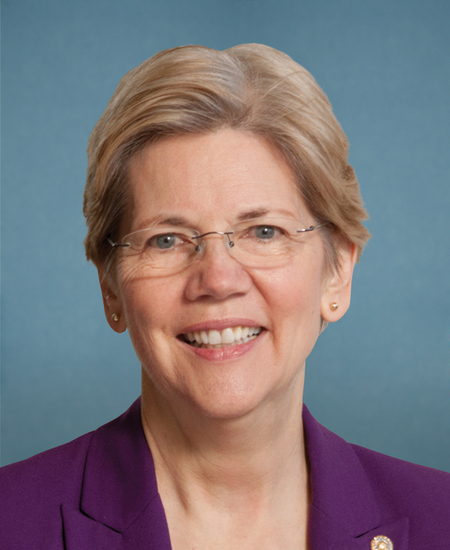
Sen. Elizabeth Warren
Sponsored bills
Maddy summaryThis bill (SJRES 75) terminates the President's emergency declaration from August 11, 2025, which had allowed federal use of the Metropolitan Police Department in Washington, D.C., under an "emergency" related to crime. It directly affects the District of Columbia's local governance by ending a federal emergency status that had been in place since 2025. The resolution cites declining violent crime (at a 30-year low) and the federal government's prevention of D.C. from spending $1 billion in locally raised funds for public safety and emergency services. It formally ends the emergency under Section 740(b) of the District of Columbia Home Rule Act, without creating new policies or altering funding mechanisms.
Maddy summaryThis bill repeals a provision allowing the President to assume emergency control of the District of Columbia's police force. It directly affects the District of Columbia government and its police department by removing the federal override power during emergencies. The key mechanism is eliminating Section 740 of the District of Columbia Home Rule Act, which previously permitted the President to take temporary control of DC police operations. The change shifts full emergency management authority over police to local DC leadership. This is a procedural adjustment to the existing Home Rule framework.
Maddy summaryS 2688, the District of Columbia National Guard Home Rule Act, transfers authority over the District of Columbia National Guard from federal officials to the Mayor of Washington D.C. It updates federal and local laws by replacing all references to "President of the United States" or "Commanding General of the District of Columbia National Guard" with "Mayor of the District of Columbia" in provisions governing command, appointments, and operations. This procedural bill directly affects the District's National Guard structure and the Mayor's role in its management. The changes align DC's National Guard governance with its home rule status under the District of Columbia Home Rule Act.
Maddy summaryS 1489, the Anti-Racism in Public Health Act of 2025, establishes a National Center on Antiracism and Health within the CDC to address racial health disparities. It directly affects the CDC, public health researchers, state/local health agencies, and communities of color by requiring systematic research on structural racism's health impacts and funding for community-based antiracism initiatives. Key mechanisms include declaring racism a public health crisis, creating regional centers of excellence in minority communities, collecting disaggregated health data by race, ethnicity, and other demographics, and developing interventions to dismantle racist systems in healthcare. The bill mandates the CDC to produce public reports, coordinate with tribal entities, and standardize data collection to advance racial equity in public health.
Maddy summaryThe Lowering Electric Bills Act extends federal tax credits for clean energy adoption through 2034, directly affecting homeowners installing solar panels or heat pumps and businesses producing clean electricity. It modifies three key tax provisions: (1) extends the residential clean energy credit deadline from 2025 to 2034, (2) adjusts the clean electricity production credit to expire based on U.S. emissions reaching 25% of 2022 levels or 2032 (whichever comes later), and (3) simplifies the clean electricity investment credit rules. These changes aim to maintain financial incentives for clean energy projects beyond current law, reducing administrative complexity. The bill does not create new programs but prolongs existing tax benefits to support ongoing adoption.
Maddy summaryThe West Bank Violence Prevention Act of 2025 imposes U.S. sanctions on foreign individuals or entities responsible for specific actions threatening peace in the West Bank. It targets those who commit violence against civilians, threaten violence to force relocation, destroy private property without consent, or engage in terrorism. Sanctions include freezing U.S. assets, banning visas, and restricting entry for designated individuals. Exceptions cover humanitarian aid (food, medicine, agricultural commodities) and activities required for U.S. intelligence or international obligations. The law requires regular reports to Congress on implementation and West Bank violence assessments.
Maddy summaryThe Drug Shortage Prevention Act of 2025 requires manufacturers of critical drugs - such as life-saving medications for emergencies, surgery, or serious conditions - to notify the federal government about potential supply disruptions. Manufacturers must report planned production halts at least six months in advance or sudden issues like demand spikes within 10 business days, including reasons and expected duration. The bill also mandates twice-yearly reports on drug supply chains, detailing active ingredient sources and suppliers. This aims to improve transparency and prevent shortages affecting patient access to essential medications.
Maddy summaryThe Access to Birth Control Act (S 2302) requires pharmacies to provide contraception without delay when available and to help customers obtain it if out of stock - either by referring to another pharmacy or expediting an order. It prohibits pharmacies from intimidating customers, misrepresenting availability, breaching confidentiality, or refusing to return valid prescriptions for contraception. Exceptions allow pharmacists to decline service only if a prescription is missing, the customer cannot pay, or they use professional clinical judgment. Violations may result in civil penalties of up to $1,000 per day or private lawsuits by affected individuals.
Maddy summaryThis resolution honors Dr. Paul Farmer's legacy by calling on the U.S. Federal Government to adopt a new global health strategy focused on ending preventable deaths in low-income countries. It proposes concrete actions including increasing annual health funding to $125 billion (to meet international aid targets), supporting health systems through Dr. Farmer's "Five S's" framework (staff, infrastructure, medical tools, governance, and community support), and addressing economic harms like unfair debt and tax evasion that hinder health financing. The resolution specifically targets low- and lower-middle-income countries where health systems face critical resource gaps, citing data showing decades-long delays in reducing mortality rates. It emphasizes aligning aid with national health plans and ensuring medical technologies become global public goods, without proposing binding legislation.