

Judiciary Accountability Act of 2021 This bill applies certain civil rights and employee protection laws to judicial branch employees. Specifically, the bill applies to judicial branch employees laws that prohibit discrimination based on race, color, religion, sex (including sexual orientation or gender identity), national origin, age, or disability. Further, the bill prohibits retaliation against whistleblowers within the judicial branch. Additionally, the bill establishes (1) the Commission on Judicial Integrity to oversee a program to prevent workplace misconduct; (2) the Office of Judicial Integrity to oversee confidential reporting systems regarding workplace misconduct, training programs on workplace behavior and bystander intervention, and other reporting initiatives regarding employee metrics and demographics; (3) the Special Counsel for Equal Employment Opportunity to investigate alleged workplace misconduct and complaints; and (4) the Office of Employee Advocacy to provide legal assistance, representation, and consultation to judicial employees. Finally, the bill establishes workplace discrimination, harassment, and retaliation as judicial misconduct.
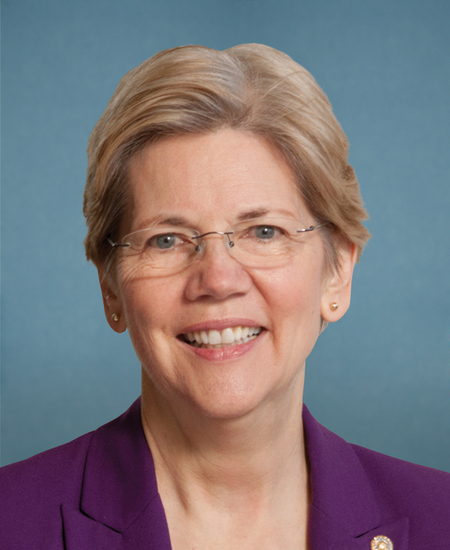
Sen. Elizabeth Warren
Sponsored bills
Domestic Workers Bill of Rights Act This bill provides rights and protections for domestic workers (e.g., housekeepers, nannies, caretakers, personal assistants, and chauffeurs), including pay and leave rights, and health and safety protections. Specifically, the bill repeals the exemption of domestic live-in employees from certain minimum wage and maximum hour requirements. Employers must provide written notice of termination and provide at least 30 days of lodging and two weeks of severance pay to terminated live-in employees. Live-in employees also must be provided with reasonable access to telephone and internet service during their employment. The bill requires employers to provide domestic workers with a written agreement covering wages, sick leave, benefits, and other matters. Further, domestic workers may request and be granted changes to work schedules due to personal events. The bill also provides domestic workers with certain privacy rights, extends to domestic workers protections against discrimination in employment, and increases the federal medical assistance percentage (FMAP) for certain Medicaid-funded medical services provided by domestic workers. The Department of Labor must (1) award grants for a domestic worker national hotline for reporting emergencies, training on hazards facing domestic workers, and workforce investment activities for domestic workers; and (2) establish a Domestic Worker Wage and Standards Board to investigate standards in the domestic workers industry. Labor must publish online a document that describes the rights and protections for domestic workers under this bill.
Nondebtor Release Prohibition Act of 2021 This bill addresses the release by bankruptcy courts of creditor or other third-party claims against non-debtors. Complex bankruptcies may involve third-party claims against non-debtors associated with the debtor, such as the debtor's officers, directors, or employees. Currently, in carrying out a bankruptcy plan, bankruptcy courts may release non-debtors from liability (there is a split in the judicial circuits regarding this practice). The bill generally prohibits a bankruptcy court from (1) releasing or modifying a non-debtor's liability through the approval of a bankruptcy plan or through an order, or (2) enjoining a judicial proceeding or other act to collect or otherwise enforce such a claim or cause of action against a non-debtor. However, the bill provides for the release of such liability if express consent is given by the third party. The bill also generally limits an order or decree to temporarily enjoin a proceeding against a non-debtor to 90 days. Additionally, the bill gives appellate jurisdiction to the appropriate U.S. court of appeals regarding an order or decree to temporarily enjoin or stay a proceeding against a non-debtor in a Chapter 11 reorganization bankruptcy case. Currently, U.S. district courts have appellate jurisdiction for these matters. Upon request of an interested party, and after notice and a hearing, the court shall dismiss a Chapter 11 reorganization bankruptcy case if the debtor was involved in certain restructuring activity that (1) had the intent or foreseeable effect of separating a debtor's assets from a debtor's liabilities and the debtor assuming or retaining such liabilities, and (2) occurred in the 10-year period prior to the filing of the bankruptcy petition.
Safeguard Tribal Objects of Patrimony Act of 2021 This bill prohibits the exportation of Native American cultural items and archaeological resources that were illegally obtained; provides for the return of such items, including voluntary returns; and establishes and increases related criminal penalties. The bill requires the Department of the Interior and the Department of State to each designate a liaison to facilitate and hold trainings and workshops on the voluntary return of human remains and cultural items. Additionally, Interior must refer individuals and organizations to Indian tribes and Native Hawaiian organizations to facilitate the voluntary return of human remains and cultural items; convene an interagency working group; and convene a Native working group consisting of representatives of Indian tribes and Native Hawaiian organizations to provide advice on issues concerning the return of, and illegal trade in, human remains and cultural items. The bill also increases from 5 years to 10 years the maximum prison term for an individual convicted of selling, purchasing, using for profit, or transporting for sale or profit human remains or cultural items that were illegally obtained.
United States Cadet Nurse Corps Service Recognition Act of 2021 This bill recognizes service as a member of the U.S. Cadet Nurse Corps between July 1, 1943, and December 31, 1948, as active duty service. The active duty designation entitles qualifying individuals to certain benefits afforded to veterans, such as burial benefits (not including interment at Arlington National Cemetery) and honorary veteran status. Under the bill, the Department of Defense (DOD) must issue individuals who served in the corps during the specified period a discharge from their service under honorable conditions if such a discharge is warranted based on the duration and nature of the service. Such individuals are not entitled to Department of Veterans Affairs benefits aside from those related to burials and memorials. The bill also authorizes DOD to produce a service medal or other commendation, memorial plaque, or grave marker to honor the individuals.
Improving Housing Outcomes for Veterans Act of 2021 This bill requires the Veterans Health Administration (VHA) to provide medical center staff and homelessness service providers of the Department of Veterans Affairs (VA) with information related to best practices for the collaboration on centralized or coordinated assessment systems established and operated by Continuums of Care. The VA must also ensure that the information and related resources are accessible to VA medical center staff and homelessness service providers. Additionally, the bill requires the VHA to communicate with VA employees who have responsibilities related to homelessness assistance programs regarding (1) the measurement of performance by the VA's Homeless Program Office, and (2) how to obtain and provide feedback about the performance measures.
Make Taxpayer-Funded Department of Defense Medical Interventions Affordable Act This bill requires the Department of Defense (DOD) to report on its efforts to comply with provisions of a report related to the licensing of federally owned medical interventions. DOD must also compile into a searchable database information relating to federal support provided by DOD for biomedical research and development.
Strengthening Loan Forgiveness for Public Servants Act This bill revises the Public Service Loan Forgiveness (PSLF) program to provide for partial loan cancellation based on the length of public service employment. Specifically, the bill directs the Department of Education (ED) to cancel 15%, 15%, 20%, 20%, and 30% of the amount a borrower owes after 2, 4, 6, 8, and 10 years of public service employment, respectively, on Federal Direct Loans made after the bill's enactment. Under the current PSLF program, ED must cancel the balance of interest and principal due on a borrower's Federal Direct Loans after the borrower makes 120 monthly loan payments while employed in a public service job.
Stop shielding Assets from Corporate Known Liability by Eliminating non-debtor Releases Act or the SACKLER Act This bill prohibits a bankruptcy court from releasing claims against non-debtors brought by states, tribes, municipalities, or the federal government. However, the bankruptcy court may issue a stay not exceeding 90 days regarding such a claim. Complex bankruptcies may involve creditor claims against non-debtors associated with the debtor, such as the debtor's officers, directors, or employees. Currently, in carrying out a bankruptcy plan, certain courts may release non-debtors from liability (there is a circuit split regarding this practice).
Fair Sugar Policy Act of 20 21 This bill makes several modifications to the Department of Agriculture's sugar program. Among other modifications, the bill decreases the rate for price support loans, repeals the marketing allotments, revises the administration of import quotas, and repeals the Feedstock Flexibility Program.