

Maddy summarySRES 148 is a ceremonial resolution passed by the U.S. Senate to honor the late Senator Alan K. Simpson of Wyoming, who died in 2022. The resolution expresses the Senate's "profound sorrow and deep regret" over his passing and formally requests the Secretary of the Senate to transmit an enrolled copy to his family. It also directs the Senate to adjourn as a mark of respect during its final session following the resolution's adoption. This resolution has no policy impact or direct effect on constituents - it solely serves as a formal tribute to Simpson's legacy.
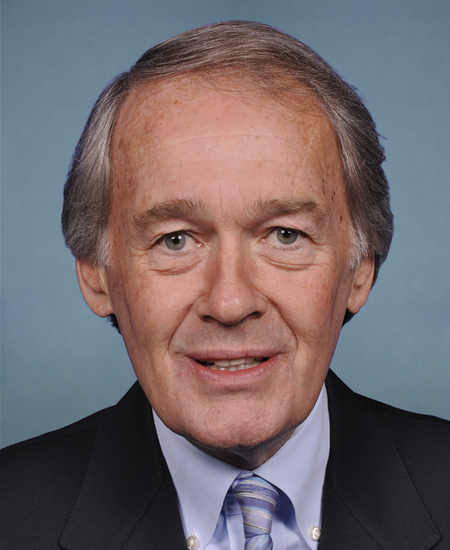
Sen. Edward J. Markey
Sponsored bills
Maddy summaryThe Hot Foods Act of 2025 amends the Food and Nutrition Act of 2008 to explicitly allow Supplemental Nutrition Assistance Program (SNAP) benefits to be used for hot foods or hot food products ready for immediate consumption. This change removes previous restrictions that excluded such items, directly affecting SNAP recipients who purchase ready-to-eat hot meals from authorized vendors. The bill modifies key sections of the law to clarify that hot foods are permitted, while maintaining a 50% sales limit for hot foods in participating stores. This policy change updates the program's rules to align with current food retail practices without altering benefit amounts or eligibility.
Maddy summaryThis bill modernizes the 1974 Privacy Act by updating definitions of key terms like "personally identifiable information" and "system of records" to better reflect current data practices. It strengthens protections by requiring agencies to use only the minimum necessary personal data for disclosures, disclose legal authorities for data uses, and prohibit adverse actions based on automated matching. The bill adds civil remedies including minimum $1,000 damages for violations and increases criminal penalties for misuse (e.g., up to $250,000 fines or 10 years imprisonment for commercial misuse). These changes directly affect federal agencies handling personal data and apply to all data collection, use, and disclosure activities governed by the Privacy Act.
Maddy summaryThis bill would substantially expand the Low-Income Home Energy Assistance Program (LIHEAP) to help low-income households afford heating and cooling costs. It increases funding for the program, sets new eligibility criteria (250% of poverty level or 80% of state median income), and requires states to implement year-round assistance programs. Key provisions include protections against utility shutoffs and late fees for eligible households, mandates for data collection on energy arrears, and requirements for weatherization using renewable energy solutions. The bill directly affects over 21 million households behind on utility payments, aiming to reduce energy burdens for families spending more than 3% of their income on home energy costs.
Maddy summarySJRES 43 proposes a constitutional amendment allowing Congress and state governments to set reasonable limits on campaign contributions and expenditures intended to influence elections. It would permit distinctions between individuals and corporations, including the potential prohibition of corporate spending in political campaigns. The amendment explicitly protects the freedom of the press from being restricted by these regulations. If ratified by three-fourths of state legislatures, this change would directly affect candidates, political committees, and organizations that spend money to influence elections.
Maddy summarySRES 145 is a non-binding Senate resolution expressing support for Iranian political refugees residing in Ashraf-3, Albania. It calls on the U.S. government to condemn Iran’s threats (including cyberattacks and sham legal proceedings) against these refugees and to urge Albania to uphold their rights under international law, including freedom of expression and protection from extradition. The resolution specifically highlights the community’s status as former political prisoners and witnesses to Iran’s human rights abuses, such as the 1988 massacre. It does not create new laws but formally advocates for diplomatic action to safeguard this group.
Maddy summarySRES 144 is a non-binding Senate resolution recognizing the heritage, culture, and contributions of Latinas in the United States. It highlights their impact across diverse fields - including science, arts, military service, and the economy - while noting ongoing challenges like the 58-cent pay gap for Latinas compared to White, non-Hispanic men. The resolution honors their historical and contemporary achievements without creating new policies or funding. It was introduced by 28 Senators and serves as a symbolic acknowledgment of Latinas' role in shaping U.S. society.
Maddy summaryS 1166, the Excess Urban Heat Mitigation Act of 2025, creates a federal grant program to fund heat-mitigation projects in high-risk urban areas. It directs at least 75% of annual $30 million funding toward "covered census tracts" (areas with poverty rates ≥20%) and prioritizes projects like tree planting, cool roofs, and community cooling centers. Eligible entities must include community engagement plans and address health/environmental connections in their proposals. The program requires annual reporting on grant recipients and sets a federal cost-share cap of 80% (with 100% possible for economic hardship cases).
Maddy summaryS 1172, the Honor Farmer Contracts Act of 2025, requires the Department of Agriculture to immediately reinstate funding for all pre-enactment contracts with farmers and agricultural service providers. It mandates rapid payment of all overdue amounts owed under these agreements and prohibits canceling signed contracts unless a farmer or provider violates terms. The bill also prevents the closure of key local offices (like Farm Service Agency or NRCS offices) without 60 days' written notice to Congress. This directly affects farmers, agricultural businesses, and rural service offices by securing existing financial commitments and operational access.
Maddy summaryThis bill designates the Deerfield River (including all its branches and major tributaries in Massachusetts and Vermont) for a study under the Wild and Scenic Rivers Act. It requires the Secretary of the Interior to complete this study within three years of funding and submit a report to Congress detailing the river's natural, recreational, and scenic value. The study will determine if the river qualifies for formal Wild and Scenic River protection, which would limit development and damming in the area. This bill affects the Deerfield River watershed and its communities but does not change current protections or management.