

Maddy summaryThis non-binding resolution recognizes climate change as a growing public health threat and urges the Department of Health and Human Services (HHS) to prioritize climate resilience in healthcare. It recommends specific actions, including reinstating the Office of Climate Change and Health Equity, directing funding toward underserved communities for infrastructure upgrades, establishing worker heat protection standards, and requiring annual progress reports on health equity outcomes. The resolution directly affects HHS agencies, healthcare providers (especially in rural, Tribal, and low-income areas), and workers facing climate-related health risks. It does not create new laws but calls for coordinated federal action to address climate-driven health impacts like heat-related illnesses, mental health strain, and disease spread.
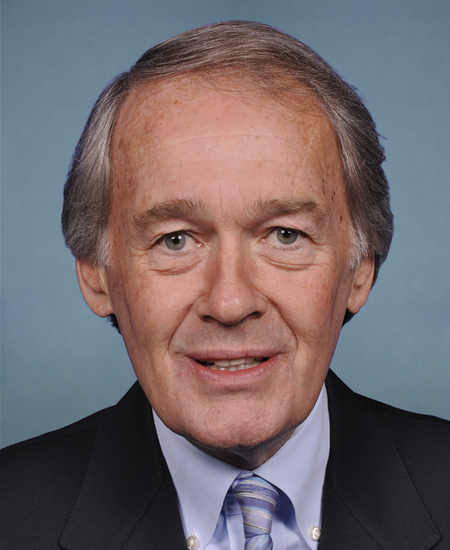
Sen. Edward J. Markey
Sponsored bills
Maddy summaryThis resolution expresses the U.S. Senate's support for designating July 10, 2025, as Journeyman Lineworkers Recognition Day. It honors journeyman lineworkers who maintain the nation’s power grid 24/7, restore electricity during disasters, and work in hazardous conditions. The resolution specifically recognizes the 129th anniversary of Henry Miller, the first president of the International Brotherhood of Electrical Workers, who died while restoring power in 1901. The Senate encourages the public to observe this day to reflect on lineworkers’ contributions and sacrifices. (Note: This is a symbolic resolution with no legal force or funding impact.)
Maddy summaryThis bill prohibits the Small Business Administration (SBA) from implementing staff reductions at offices providing critical services like business counseling, loan oversight, disaster relief, or small business contracting certifications. It directly affects SBA employees in these specific offices and requires the SBA Administrator to re-employ all staff removed during layoffs between January 20, 2025, and the bill’s enactment date. The bill mandates re-employment within 60 days, restoring employees to their previous positions with identical pay and back pay for the period they were removed. These provisions apply to all covered SBA offices and aim to reverse recent staffing cuts affecting core small business support functions.
Maddy summarySRES 312 is a non-binding Senate resolution designating June 2025 as "LGBTQ Pride Month" to honor the LGBTQ community's historical struggles and contributions to U.S. society. The resolution expresses symbolic support for LGBTQ rights and highlights ongoing challenges like discrimination in housing, employment, and healthcare, without creating new laws or policies. It serves as a formal acknowledgment by the Senate to promote awareness of LGBTQ history and advocacy, but has no legal effect on government actions or individual rights. The resolution was introduced by multiple senators and includes a preamble detailing key milestones in LGBTQ equality efforts.
Maddy summaryThe GLOBE Act of 2025 is a comprehensive bill aimed at advancing LGBTQI rights globally through several key mechanisms. It requires U.S. diplomatic posts to document and respond to violence against LGBTQI people abroad, establishes sanctions against individuals responsible for human rights violations against LGBTQI people, and creates a Special Envoy for LGBTQI rights. The bill also reforms immigration policies to better protect LGBTQI refugees and asylum seekers, and expands U.S. foreign assistance to support LGBTQI rights organizations globally. These provisions directly affect LGBTQI individuals worldwide, U.S. diplomatic personnel, and organizations receiving U.S. foreign assistance.
Maddy summaryS 2212, the VISIBLE Act, requires immigration enforcement officers to visibly display their agency name and either their last name or unique badge number during all public-facing immigration enforcement activities in the United States. This applies to officers from U.S. Customs and Border Protection, U.S. Immigration and Customs Enforcement, and other authorized personnel during actions like stops, arrests, raids, or warrant service. The bill mandates that this identification be clearly legible from 25 feet away on outermost clothing, prohibits non-medical face coverings that obscure it (except in covert operations or hazardous conditions), and requires annual reports to Congress on compliance and disciplinary actions. It aims to increase transparency during immigration enforcement interactions where the public may be present.
Maddy summaryThe Break the Cycle of Violence Act establishes federal grants to fund community-based violence intervention programs that aim to reduce gun violence through evidence-based strategies. It creates a National Community Violence Response Center to coordinate efforts and provide technical assistance, while directing funding to communities disproportionately affected by violence, particularly those with high homicide rates. The bill includes provisions for hospital-based violence intervention programs, trauma-informed services, and job training programs for opportunity youth (ages 16-25 not in education or employment) to address root causes of violence. Funding for these programs totals $300 million in 2026, increasing to $700 million annually through 2033 for the Department of Health and Human Services, plus $1.5 billion for job training programs through the Department of Labor.
Maddy summaryThis bill prohibits defendants in federal criminal cases from using a victim's LGBTQ+ sexual orientation, gender identity, or expression as a legal excuse for violent crimes like assault or murder. It directly affects defendants who attempt to justify violence by claiming the victim's identity provoked them, and it protects LGBTQ+ victims by preventing their identities from being used to reduce sentences. The law bans such defenses entirely, except when evidence of the defendant's past trauma is admitted under standard federal evidence rules. It also requires the Attorney General to annually report on federal prosecutions involving violence against LGBTQ+ individuals motivated by bias. This is a concrete policy change to end the use of discriminatory defenses in federal court.
Maddy summaryThe Senate resolution SRES 306 supports designating June 26 as "LGBTQI+ Equality Day" to commemorate three landmark Supreme Court rulings on that date: *Lawrence v. Texas* (2003, ending criminalization of same-sex intimacy), *United States v. Windsor* (2013, striking down DOMA), and *Obergefell v. Hodges* (2015, guaranteeing same-sex marriage). It encourages public celebrations to educate about ongoing LGBTQI+ discrimination while acknowledging these court victories were not enough to eliminate barriers. The resolution is symbolic - non-binding and non-enforceable - focusing on raising awareness rather than creating new laws. It explicitly calls for future legislation to address discrimination in areas like employment, housing, and public accommodations.
Maddy summaryThe Global Respect Act of 2025 requires the U.S. President to publicly list foreign government officials or entities responsible for human rights abuses against LGBTQI individuals based on sexual orientation, gender identity, or sex characteristics. This list - updated every 180 days - makes those individuals ineligible for U.S. visas or entry, and could lead to removal from the U.S. if already present. The bill mandates tracking of violence and discrimination in foreign countries and annual reports to Congress on implementation. It directly affects foreign officials involved in torture, arbitrary detention, or inciting violence against LGBTQI people, with limited waivers possible for national security or international obligations. The law focuses on accountability through visa restrictions, not new U.S. rights or domestic policy changes.