

Maddy summaryThe ICBM Act (S 2422) pauses the Sentinel intercontinental ballistic missile program and redirects its funding to the Department of Education. It mandates the transfer of funds from the Sentinel program and the W87-1 warhead program to education under the Elementary and Secondary Education Act, while prohibiting future funding for these defense initiatives. The bill also requires an independent study by the National Academy of Sciences to assess extending the Minuteman III missile's operational life until at least 2050. This reallocation shifts billions in defense spending toward education, with the study aiming to inform future nuclear modernization decisions.
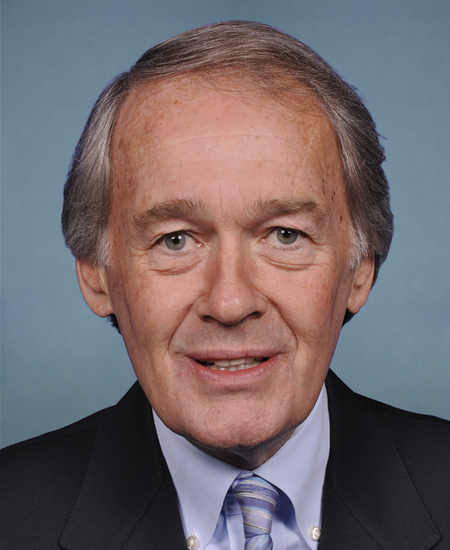
Sen. Edward J. Markey
Sponsored bills
Maddy summaryThis bill requires each state to appoint a dedicated coordinator for the Safe Routes to School program, serving as the main state contact for the initiative. The coordinator must not be assigned additional duties beyond this role without congressional approval, and states may use existing program funds for their salary. States must list the coordinator's contact information on their transportation department website and fill any vacancy within 180 days. The bill directly affects state transportation departments and their implementation of school route safety programs under federal law.
Maddy summaryS 2383, the CANADA Act, exempts small businesses from import duties imposed under a national emergency declaration (Executive Order 14193, as amended). Specifically, it removes duties on goods imported by or for small business concerns, as defined in the Small Business Act (15 U.S.C. 632). This applies to the emergency declared on February 1, 2025, covering duties from the referenced executive orders. The bill directly affects small businesses importing goods during this specific emergency period by reducing their import costs.
Maddy summaryS 2377, the EACH Act of 2025, requires all federal health programs - including Medicaid, Medicare, the Children’s Health Insurance Program (CHIP), and the Indian Health Service - to cover abortion services without restrictions based on income or insurance type. It repeals the Hyde Amendment (Section 1303 of the ACA), which previously barred federal funds from covering most abortions, and prohibits state or private insurance plans from restricting abortion coverage. This directly affects millions enrolled in federal health programs, particularly low-income individuals, women of color, and young people, who face barriers to abortion access under current laws. The bill mandates that all federally funded health programs provide comprehensive abortion coverage as a standard benefit.
Maddy summaryThe Price Gouging Prevention Act of 2025 makes it unlawful for businesses to sell goods or services at grossly excessive prices during exceptional market shocks like natural disasters, public health emergencies, or other major disruptions. The bill establishes specific thresholds (such as $100 million in annual revenue for small businesses) and requires businesses to demonstrate that price increases were due to uncontrollable costs, rather than exploiting market conditions. It creates a presumption of violation for businesses with "unfair leverage" (defined as having significant market dominance or revenue), and requires companies to disclose pricing strategies in SEC filings during market shocks. The Federal Trade Commission and state attorneys general would enforce the law, with civil penalties up to 5% of a company's revenue. The law includes annual inflation adjustments for certain financial thresholds starting in 2026.
Maddy summaryThis bill establishes new requirements for food additives to be deemed "generally recognized as safe" (GRAS) under FDA oversight. Manufacturers must now submit detailed safety data - including evidence showing no carcinogenicity, reproductive toxicity, or developmental toxicity - to the FDA for review, replacing the previous reliance on historical use. The FDA must publicly post submissions, allow 60 days for public comment, and issue written determinations within a set timeline. Additionally, the bill mandates the FDA to reassess the safety of at least 10 food substances every three years, prioritizing those under existing petitions or regulations. It directly affects food manufacturers and the FDA, creating a more rigorous, evidence-based process for food additive safety.
Maddy summaryThis bill requires the Department of Homeland Security (DHS) to keep all personal information from DACA applications confidential. It prohibits sharing this data with U.S. Immigration and Customs Enforcement (ICE), U.S. Customs and Border Protection (CBP), or state/local law enforcement for any purpose other than administering the DACA program. Limited exceptions allow sharing only to prevent fraud, address specific national security threats, or investigate felonies unrelated to immigration status. The law directly protects DACA applicants and recipients by preventing their personal details from being used against them by law enforcement.
Maddy summaryThis bill creates the Office of Climate Change and Health Equity within the Department of Health and Human Services to coordinate federal efforts addressing climate change's health impacts, with special focus on environmental justice communities and medically underserved populations. It requires the development of a National Strategic Action Plan within one year of enactment, to be updated annually, that identifies climate-related health risks and outlines strategies to protect vulnerable communities. The bill also establishes a science advisory board of experts and authorizes $10 million annually for the Office through fiscal year 2031 to support activities including tracking climate health risks, developing preparedness plans, and reducing greenhouse gas emissions in the health sector.
Maddy summaryThis bill creates a new legal pathway for individuals injured by pesticides. It allows people harmed by pesticide use - whether to their person or property - to sue the company that registered the pesticide in federal court for monetary damages. The law specifies that recovered damages can include both compensatory and punitive amounts (at the court's discretion), but excludes attorney fees or court costs. Crucially, it clarifies that this federal right of action does not override existing state laws, meaning affected individuals can also pursue claims under state regulations. The bill directly impacts pesticide registrants (companies) and anyone suffering pesticide-related harm.
Maddy summaryThis bill creates a federal grant program to help schools recruit and retain paraprofessionals - school support staff like teaching assistants - who work directly with students but lack full teaching credentials. It allocates funds to states based on prior Title I education funding, requiring states to prioritize schools serving high numbers of low-income students or designated "high-need" schools. Funds can be used for mentoring programs, professional development, credentialing (like special education or English learner certificates), and wage increases or bonuses for paraprofessionals. The program mandates annual reporting on wage baselines, paraprofessional numbers, and how funds were used to address shortages.