

Maddy summaryThe Sustaining Our Democracy Act establishes a federal program to provide funding to states for election-related activities. The Democracy Advancement and Innovation Program allocates funds to states for improving election administration, recruiting and protecting election workers, and increasing voting access for underserved communities including racial minorities, individuals with disabilities, and voters in Indian lands. States must submit approved plans detailing how funds will be used before receiving payments, and the bill prohibits using funds for activities that could diminish voter participation. The legislation creates an Office of Democracy Advancement and Innovation to administer the program and establishes a $2.5 billion annual Trust Fund for fiscal years 2026-2035 to support these election-related activities.
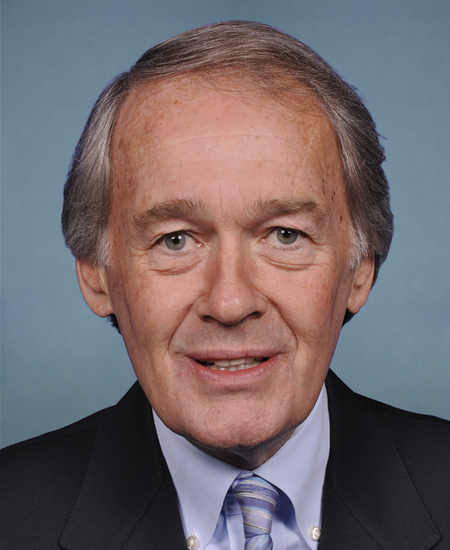
Sen. Edward J. Markey
Sponsored bills
Maddy summaryThe Truth and Healing Commission on Indian Boarding School Policies Act of 2025 establishes a federal commission to investigate the history, impacts, and lasting effects of Indian Boarding Schools on Native American communities, including physical, cultural, and emotional consequences. The commission will document these impacts through research, hold meetings across the country to gather testimony from survivors and tribal representatives, and collaborate with a Survivors Truth and Healing Subcommittee and two advisory committees. The commission will produce an initial report within four years and a final report before terminating six years after enactment, with recommendations for Federal action to address the legacy of these policies. This legislation aims to formally acknowledge historical trauma caused by Indian Boarding Schools and guide future Federal efforts toward healing and reconciliation.
Maddy summaryThis bill permanently extends the enhanced premium tax credit for Affordable Care Act marketplace insurance plans, directly affecting millions of lower-income households (earning 150%-400% of the federal poverty level) who purchase coverage through state or federal marketplaces. It establishes a sliding-scale percentage system where the tax credit reduces monthly premiums based on income, starting at 0% for households earning up to 150% of poverty and increasing to 8.5% for those earning 300%-400% of poverty. The bill replaces temporary provisions with permanent rules, ensuring consistent cost-sharing support for eligible buyers. The changes apply to tax years beginning after December 31, 2025.
Maddy summaryThe Food Date Labeling Act of 2025 establishes uniform phrases for food date labels to reduce consumer confusion: "BEST If Used By" (or "BB" for small packages) for quality dates (when food quality may decline but it remains safe) and "USE By" (or "UB") for discard dates (when food should not be consumed). Food manufacturers must display these labels prominently in clear type on packaging, with optional use of technologies like QR codes. The bill preempts state laws requiring different labeling standards but allows states to enforce the uniform phrases, while excluding infant formula from its requirements. It mandates consumer education on label meanings within two years and takes effect for labels on products two years after enactment.
Maddy summaryThis resolution (SRES 343) is a non-binding Senate recognition of the U.S. Preventive Services Task Force (USPSTF), which develops evidence-based recommendations for preventive health services. It specifically calls on the Department of Health and Human Services to reconvene the Task Force after a scheduled meeting was canceled, emphasizing that its work - covering preventive services like cancer screenings and chronic disease prevention - must continue without interruption or funding disruption. The resolution affirms the Task Force’s role in guiding insurance coverage of recommended preventive care under the Affordable Care Act. As a procedural resolution, it does not create new laws or alter policies.
Maddy summaryThis bill requires gas pipeline operators to immediately implement a federal safety rule mandating regular leak detection and prompt repair of gas leaks. The rule, finalized by the Pipeline and Hazardous Materials Safety Administration in January 2025, sets specific standards for identifying and fixing leaks in gas pipelines. By making this rule effective upon enactment, the bill removes any delays in its implementation. Pipeline companies operating under federal jurisdiction will be directly affected by these requirements.
Maddy summaryThe All Aboard Act of 2025 provides $83.5 billion over five years to accelerate rail electrification and transition to zero-emission rail systems. It establishes new funding programs for states, Amtrak, and rail carriers to electrify rail corridors, improve rail infrastructure, and support workforce transition plans. The bill sets specific targets including achieving zero emissions for 50% of trains by 2030 and all locomotives by 2047, with priority for projects in environmental justice communities. It requires applicants for rail electrification funding to include community engagement plans, environmental protection measures, and detailed workforce transition plans. The legislation aims to modernize rail infrastructure while addressing environmental justice concerns and supporting rail workers through training and job transition programs.
Maddy summaryThe John R. Lewis Voting Rights Advancement Act of 2025 strengthens voting rights protections by requiring preclearance for certain voting changes in jurisdictions with a history of discrimination. It establishes new preclearance requirements for changes to election methods, district boundaries, voter ID rules, and polling locations. The bill updates standards for determining when voting practices deny or abridge rights, particularly for racial, ethnic, and language minority groups. It also requires transparency about voting changes through public notices and strengthens enforcement mechanisms for voting rights violations. The bill directly affects states and localities with documented histories of voting discrimination, aiming to protect minority voters' rights.
Maddy summaryThis bill authorizes $50 million annually from 2026 through 2031 for the Centers for Disease Control and Prevention (CDC) to fund research on firearms safety and gun violence prevention. It directly affects the CDC and researchers by providing dedicated funding to study these topics under the Public Health Service Act. The key mechanism is a specific annual funding allocation, added to existing resources, to support new or ongoing research initiatives. The bill does not create new regulations or restrict gun ownership but focuses solely on enabling evidence-based research. This is a funding measure, not a policy change affecting the public directly.
Maddy summaryThe Restoring Essential Healthcare Act repeals a provision that blocked Medicaid payments to certain healthcare providers. Specifically, it removes a restriction from Public Law 119-21 that prevented Medicaid from paying "prohibited entities" for services provided between the law's enactment and this bill's effective date. Payments for those services will now be made retroactively, as if the restriction had never existed. This directly affects Medicaid programs and the healthcare providers previously excluded from receiving these payments.