Jury Access for Capable Citizens and Equality in Service Selection Act of 2021 or the Jury ACCESS Act This bill prohibits the exclusion of individuals from jury service on the basis of their sexual orientation or gender identity.
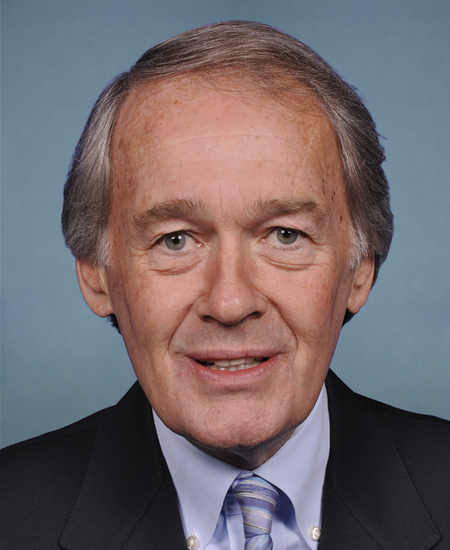
Sen. Edward J. Markey
Sponsored bills
Stop Shackling and Detaining Pregnant Women Act This bill prohibits the Department of Homeland Security (DHS) from detaining an individual during pregnancy or postpartum recovery and addresses related issues. DHS must immediately release any detainee found to be pregnant, unless the detainee presents an immediate and serious threat of hurting themselves or others. A DHS detention facility may not use a restraint on a detainee who is known to be pregnant, including during labor, transport to a medical facility or birthing center, and delivery, or during postpartum recovery, except for medical or safety purposes. The bill requires DHS to use the least restrictive restraint necessary and prohibits certain specified restraint types, including four-point restraints and binding hands behind the detainee's back. The bill prohibits DHS detention officers from being present during a detainee's pelvic exam, labor, delivery, or treatment relating to a pregnancy, unless specifically requested by medical personnel. If a detention officer is requested by medical personnel, such officer shall be female, if practicable, and remain at a reasonable distance from the detainee. A pregnant detainee must have access to health care services, including comprehensive services relating to reproductive health care and pregnancy. DHS must provide annual training about this bill's requirements to each employee who has a role in the detention or care of a pregnant detainee or a postpartum parent of a newborn. DHS must also provide each detainee notice of their rights under this bill in the detainee's native language.
Counseling Not Criminalization in Schools Act This bill prohibits the use of federal funds for law enforcement officers in schools. It also establishes a grant program to replace law enforcement officers in schools with personnel and services that support mental health and trauma-informed services. Specifically, the bill prohibits the use of federal funds to hire, maintain, or train law enforcement officers in elementary or secondary schools. Further, it prohibits the use of public safety and community policing grants for law enforcement officers in schools. Additionally, the bill directs the Department of Education to award grants to local educational agencies to (1) replace law enforcement officers in elementary and secondary schools with personnel and services that support mental health and trauma-informed services, and (2) reform school safety and disciplinary policies to reflect evidence-based practices that do not rely on the criminal justice system. A recipient must use grants funds to hire or train specified staff. The bill prohibits the use of grant funds for (1) establishing or enforcing zero-tolerance school discipline policies, (2) purchasing or installing surveillance equipment (e.g., metal detectors), or (3) arming teachers or other school personnel.
Work Without Worry Act This bill modifies eligibility for Social Security Disability Insurance (SSDI) benefits for individuals who have a disability that began before age 22. Under current law, these individuals may obtain SSDI benefits based on the work record of a retired, disabled, or deceased parent. However, an individual with earnings after age 22 that exceed a specified monetary limit (i.e., constitute substantial gainful activity) permanently loses eligibility for such benefits. This bill allows individuals to retain eligibility for such benefits regardless of the amount of earnings after age 22. Additionally, individuals who apply for SSDI benefits on a parent's record and also independently qualify for Social Security benefits on their own record will receive the larger of the two benefit amounts.

Juneteenth National Independence Day Act This bill establishes Juneteenth National Independence Day, June 19, as a legal public holiday.
Pell Grant Preservation and Expansion Act of 2021 This bill makes various changes to the Federal Pell Grant program, including by expanding student eligibility for Pell Grants. The bill also revises student eligibility for federal student-aid programs. Specifically, the bill provides funding to increase the maximum Pell Grant award for each eligible student. Further, the bill requires the award amount to be adjusted for inflation. Next, the bill allows students who receive means-tested federal benefits (e.g., Medicaid) to automatically qualify for the maximum Pell Grant award plus an additional award amount. In addition, the bill moves the Iraq and Afghanistan Service Grant program into the Pell Grant program. Next, the bill raises from 12 to 18 the total number of semesters during which a student may receive a Pell Grant. The bill makes Dreamer students (i.e., students who have been granted Deferred Action for Childhood Arrivals status) who entered the United States before the age of 18 and who meet certain educational criteria eligible for federal financial aid. The bill also revises satisfactory academic progress requirements for federal student-aid programs, including by allowing a student who has not been enrolled in an institution of higher education for two years to regain eligibility for federal student aid.
Restaurant Revitalization Fund Replenishment Act of 2021 This bill provides an additional $60 billion in FY2021 for the Restaurant Revitalization Fund, which was established to support restaurants and other food and beverage purveyors in response to COVID-19.
Disarm Hate Act The bill expands the categories of persons who are prohibited from receiving or possessing a firearm. Specifically, it prohibits firearm sale or transfer to and receipt, possession, shipment, or transport by a person (1) who has been convicted of a misdemeanor hate crime, or (2) who has received an enhanced hate crime misdemeanor sentence.
This resolution designates June 19, 2021, as Juneteenth Independence Day to commemorate the end of slavery in the United States.
Facial Recognition and Biometric Technology Moratorium Act of 2021 This bill imposes limits on the use of biometric surveillance systems, such as facial recognition systems, by federal and state government entities. A federal agency or official may not in an official capacity acquire, possess, or use in the United States any such system or information obtained by such a system unless Congress passes an act that specifically authorizes such a use. Such an act of Congress must contain certain provisions, such as provisions naming the specific authorized entity and auditing requirements relating to the system. Information obtained in violation of this bill shall not be admissible by the federal government in any proceeding or investigation, except in a proceeding alleging a violation of this bill. An individual aggrieved by a violation of these restrictions shall have the right to sue. Any state officer authorized to sue on behalf of the state's residents shall also have the right to sue on behalf of the state's aggrieved residents. A state or local government unit shall not receive certain federal law enforcement grants unless the government unit complies with a law or policy that is substantially similar to this bill's restrictions on acquiring and using biometric surveillance systems.