This resolution expresses the condolences of the Senate regarding the death of the Honorable Carl Levin, former Senator for Michigan.
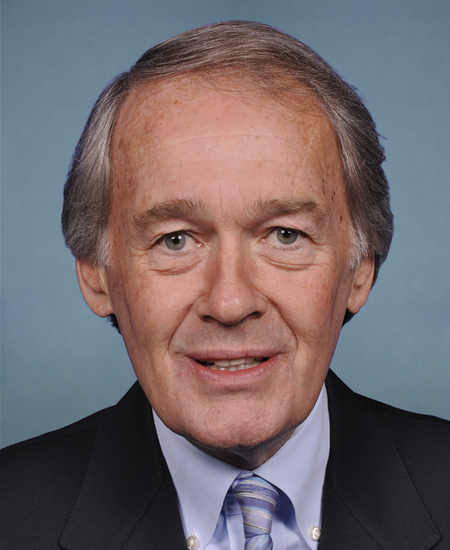
Sen. Edward J. Markey
Sponsored bills
This bill extends through October 18, 2021, the order issued by the Centers for Disease Control and Prevention (CDC) titled Temporary Halt in Residential Evictions To Prevent the Further Spread of COVID-19 and published on September 4, 2020. The bill also permits the CDC to further extend the order as it determines necessary.
This resolution expresses the condolences of the Senate regarding the death of the Honorable Mike Enzi, former Senator for Wyoming.
Local Infrastructure Funding & Technical Assistance Act or the LIFT Act This bill authorizes the Department of Commerce to provide grants under the Public Works and Economic Development Act of 1965 for predevelopment projects—measures required to be completed before construction of resilient climate infrastructure occurs—and related technical assistance. Grants may be provided to economic development districts, states, Indian tribes, local governments, institutions of higher education, individuals, and other organizations as specified by the bill.
Respond, Innovate, Succeed, and Empower Act of 2021 or the RISE Act of 2021 This bill establishes requirements for institutions of higher education (IHEs) concerning students with disabilities. Specifically, the bill requires IHEs to allow students to use certain documents, such as individualized education programs, to establish their disabilities. In addition, IHEs must make the process for determining the eligibility for accommodations transparent. Finally, IHEs must submit key data related to their undergraduate students with disabilities for inclusion in federal postsecondary institution data collection efforts.
Domestic Workers Bill of Rights Act This bill provides rights and protections for domestic workers (e.g., housekeepers, nannies, caretakers, personal assistants, and chauffeurs), including pay and leave rights, and health and safety protections. Specifically, the bill repeals the exemption of domestic live-in employees from certain minimum wage and maximum hour requirements. Employers must provide written notice of termination and provide at least 30 days of lodging and two weeks of severance pay to terminated live-in employees. Live-in employees also must be provided with reasonable access to telephone and internet service during their employment. The bill requires employers to provide domestic workers with a written agreement covering wages, sick leave, benefits, and other matters. Further, domestic workers may request and be granted changes to work schedules due to personal events. The bill also provides domestic workers with certain privacy rights, extends to domestic workers protections against discrimination in employment, and increases the federal medical assistance percentage (FMAP) for certain Medicaid-funded medical services provided by domestic workers. The Department of Labor must (1) award grants for a domestic worker national hotline for reporting emergencies, training on hazards facing domestic workers, and workforce investment activities for domestic workers; and (2) establish a Domestic Worker Wage and Standards Board to investigate standards in the domestic workers industry. Labor must publish online a document that describes the rights and protections for domestic workers under this bill.

Improving Justice Programs through Science Act of 2021 This bill reestablishes the Science Advisory Board within the Department of Justice (DOJ). Specifically, it provides statutory authority for the board. Previously, the board was created in 2010 by DOJ and terminated in 2018.
Congressional Whistleblower Protection Act of 2021 This bill creates certain administrative and judicial remedies for federal employees whose right to provide information to Congress is interfered with or denied. Under current law, federal employees have the right to petition or furnish information to Congress or to individual Members of Congress, and this right may not be interfered with or denied. The bill explicitly allows employees who are aggrieved by a violation of this right to seek administrative remedies that are currently available to whistleblowers who are fired or experience other forms of retaliation. The bill also establishes a private right of action for aggrieved employees, including the option of a jury trial, if an administrative remedy is not issued within 210 days of a complaint being made. The bill applies to employees and contractors of the executive, legislative, and judicial branches of government, including members of the intelligence community.
Supreme Court Ethics Act This bill establishes a new statutory requirement for the Judicial Conference of the United States to issue a judicial code of conduct for judges and justices of U.S. courts, including Justices of the Supreme Court. Currently, the Judicial Conference issues a code of conduct for judges of U.S. courts (but not for Justices of the Supreme Court).
Offshore Wind Jobs and Opportunity Act This bill authorizes the Department of Energy to award offshore wind career training grants to institutions of higher education or labor organizations to develop, offer, or improve educational or career training programs that provide skills necessary for employment in the offshore wind industry.