

Maddy summarySRES 513 is a non-binding Senate resolution designating November 22, 2025, as National Adoption Day and all of November 2025 as National Adoption Month. It aims to promote public awareness of adoption, particularly for children in foster care awaiting permanent families, and encourages Americans to support adoption efforts. The resolution directly affects the public, adoption agencies, and foster care systems by formally recognizing these dates for nationwide awareness campaigns. It does not create new laws or policies but seeks to highlight existing adoption opportunities and the need for stable homes for children.
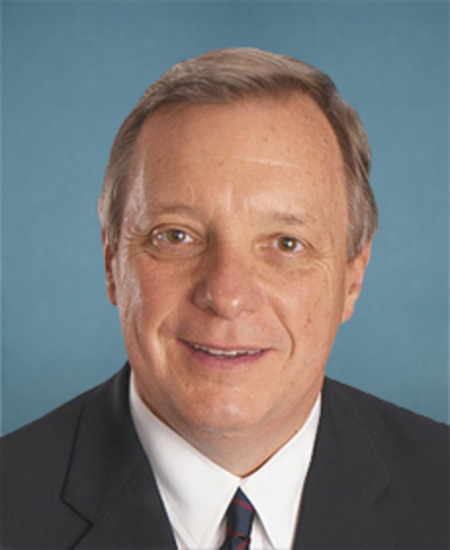
Sen. Richard J. Durbin
Sponsored bills
Maddy summaryThis resolution (SRES 511) is a symbolic Senate measure supporting Transgender Day of Remembrance. It recognizes the epidemic of violence against transgender people in the U.S., specifically memorializing 27 transgender or gender nonconforming individuals killed between October 2024 and September 2025. The resolution emphasizes the disproportionate impact of violence on transgender women of color and calls for addressing this crisis, though it does not create new laws or policies. It directly affects the transgender community by affirming their lives and safety as a national priority.
Maddy summaryThis bill caps interest rates at 6% for servicemembers who consolidate or refinance student loans they took out *before* joining the military, during their active duty service. It directly affects active-duty service members (and their spouses jointly) who use consolidation or refinancing to manage pre-service student debt. The key provision limits interest rates on these specific consolidation/refinancing actions to 6% for the duration of military service, while excluding other debts. The bill defines "student loan" to include both federal loans under the Higher Education Act and private loans meeting Truth in Lending Act standards. This is a concrete interest rate change for a specific type of military-related debt consolidation.
Maddy summaryThis bill amends fee structures under the Food Safety Modernization Act (FSMA) for food facilities and importers. It establishes a $15,000 base fee for 2026 and subsequent years (adjusted annually), provides a 1/3 fee reduction for qualifying small businesses (defined as facilities with <500 employees or importers meeting specific sales thresholds), and clarifies that fees fund facility oversight and the Voluntary Qualified Importer Program. The bill also increases funding caps for oversight activities and updates definitions to reduce ambiguity. It directly affects domestic/foreign food facilities, human/animal food importers, and small businesses meeting the defined criteria.
Maddy summaryThis bill prohibits child welfare agencies receiving federal funding from discriminating against children, youth, or prospective foster and adoptive parents based on religion, sex (including sexual orientation and gender identity), or marital status. It requires agencies to collect data on sexual orientation and gender identity of children in foster care and their prospective parents, and establishes a National Resource Center to improve services for LGBTQ youth. The bill also provides a private right to sue for individuals who experience discrimination and mandates cultural competency training for agency staff. It affects all state child welfare systems receiving federal funds, requiring compliance within one year of enactment. The legislation specifically aims to address the overrepresentation of LGBTQ youth in foster care and improve outcomes for this population.
Maddy summaryThis bill repeals sections 10101 through 10108 of the 2025 Farm Bill (Public Law 119-21) and restores the previous law that existed before those sections were enacted. It directly affects food security programs for American families and farmers by reverting to the prior provisions of the Farm Bill. The key mechanism is a simple repeal and restoration of pre-existing law, without creating new programs or altering current funding structures.
Maddy summaryThis bill prohibits employers from requiring employees to use forced arbitration for race discrimination claims. It directly affects workers who face discrimination based on race, color, or national origin in employment, making pre-dispute arbitration agreements unenforceable for such cases. The key mechanism requires courts - not arbitrators - to decide if an arbitration clause applies, ensuring employees can choose to pursue claims in court under federal, tribal, state, or local law. The law applies to all new or ongoing claims arising after its enactment.
Maddy summaryThis resolution (SRES 506) symbolically honors Wadee Alfayoumi, a 6-year-old Palestinian-American boy murdered in a hate crime on October 14, 2023, after being stabbed 26 times by a perpetrator convicted of hate crimes. It recognizes his death as a result of anti-Palestinian and anti-Muslim bias, condemns dehumanizing rhetoric that fuels hate violence, and affirms the Senate's stance against hate crimes, Islamophobia, and anti-Palestinian discrimination. The resolution has no binding policy or funding provisions - it serves solely as a commemorative statement acknowledging the victim and condemning the hate-driven violence.
Maddy summaryThe Background Check Expansion Act requires most private firearm transfers between unlicensed individuals to go through a licensed dealer, who must conduct a background check as if the dealer were selling the firearm. Exceptions include transfers between close family members (like parents and children), law enforcement, temporary safety-related transfers (e.g., preventing domestic violence), and transfers for hunting or target shooting with specific safeguards. Licensed dealers must provide a notice about the background check requirement and have the buyer sign a certification form. The bill does not create a national gun registry and preserves states' authority to enact stricter firearm laws. It takes effect 180 days after enactment.
Maddy summarySRES 501 is a ceremonial Senate resolution recognizing November 2025 as National Native American Heritage Month. It encourages the American public to observe the month through programs and activities that celebrate Native American cultural contributions, heritage, and history. The resolution does not create new legal obligations or funding, serving solely as a symbolic acknowledgment of Native American communities' enduring impact on U.S. society.