

Maddy summaryS.3569, the S.T.O.P. Illicit Vapes Act, creates a federal multi-agency task force to combat the illegal importation, distribution, and sale of unauthorized e-cigarettes. The task force, co-chaired by the Attorney General and Secretary of Health and Human Services, includes representatives from agencies like the FDA, CBP, ATF, FBI, and FTC to coordinate enforcement actions against illegal manufacturers, importers, and distributors. It requires the task force to meet monthly and submit semiannual reports to Congress detailing enforcement actions, agency authorities, and recommendations for improving efforts. The task force will operate for 10 years, ending 10 years after its establishment. This bill directly affects the illegal e-cigarette market by enhancing federal coordination to reduce unauthorized products in circulation.
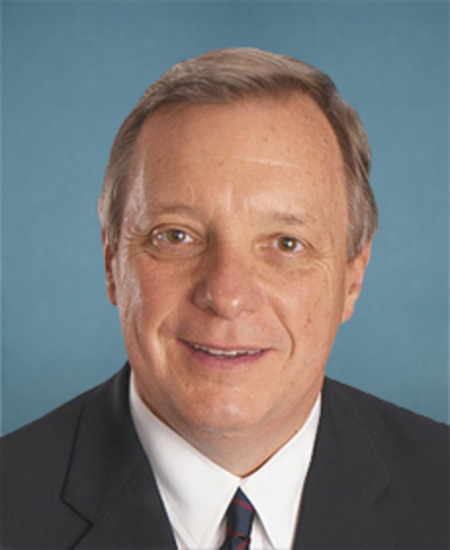
Sen. Richard J. Durbin
Sponsored bills
Maddy summaryThis bill repeals Section 230 of the Communications Act of 1934, which currently shields online platforms from most liability for user-generated content. It would remove this legal protection, potentially making platforms more liable for content posted by users. The bill also updates references to Section 230 in other federal laws (like the Trademark Act and criminal codes) to instead reference Section 223 of the Communications Act. The changes would take effect two years after the bill is enacted.
Maddy summaryThe Public Health Air Quality Act of 2025 requires the Environmental Protection Agency to implement comprehensive monitoring of hazardous air pollutants at specific facilities posing the greatest health risks. It mandates fenceline monitoring for pollutants like benzene, formaldehyde, and ethylene oxide at facilities in census tracts with elevated cancer risks or other health impacts, and requires deployment of 80 additional air quality monitoring stations in communities disproportionately affected by pollution. The EPA must publish all monitoring data publicly within 7 days of collection in accessible formats and multiple languages, with data maintained for at least 10 years. The bill allocates $146 million for implementation in fiscal years 2026-2027 to support this monitoring network.
Maddy summaryThis bill amends the Clayton Act to add a reference to itself within existing antitrust enforcement language. Specifically, it modifies Section 4C(a)(1) to include the phrase "or section 2 of this Act" after "any violation of the Sherman Act." The change directly affects how antitrust enforcement actions under the Clayton Act are referenced in legal proceedings. The bill does not introduce new substantive policy requirements but alters the statutory citation structure for consistency with its own provisions. (1 sentence summary: This procedural bill updates the Clayton Act's reference to itself in antitrust enforcement language.)
Maddy summaryThe GRACE Act (S 3535) sets a minimum annual refugee admission target of 125,000 for the U.S., requiring the President to determine this number based on humanitarian needs and national interest. It introduces community/private sponsorship for refugees, allowing groups to provide initial resettlement services instead of traditional agency support. The bill mandates quarterly public reports to Congress on admissions numbers, regional allocations aligned with UN resettlement needs, processing times, security checks, and any shortfall in meeting targets. This directly affects refugees seeking admission, the Department of Homeland Security (which administers processing), and Congress (through transparency requirements).
Maddy summaryThe Shadow Docket Sunlight Act of 2025 would require the U.S. Supreme Court to publish written explanations and disclose each justice's vote when issuing emergency orders about temporary court orders that block government actions (preliminary injunctions) or stays of such orders. The written explanation must address specific factors, such as whether the applicant is likely to succeed on the merits and whether the order serves the public interest. This rule does not apply to routine administrative decisions or requests to hear full cases. The bill also mandates biennial reports to Congress on how well the Court follows these transparency requirements.
Maddy summaryThe Schedules That Work Act would require employers in retail, food service, cleaning, hospitality, and warehouse sectors to provide workers with at least 14 days' advance notice of their schedules and pay predictability pay for last-minute changes. It gives employees the right to request schedule changes for reasons including health conditions, caregiving responsibilities, or enrollment in career training programs. Employers must engage in a good-faith process to address these requests unless they have a legitimate business reason to deny them. The bill aims to address widespread problems with unpredictable schedules that make it difficult for low-wage workers to manage family responsibilities, access healthcare, and secure stable housing and child care.
Maddy summaryThis bill prohibits the use of federal funds to implement, administer, or enforce the December 11, 2025, executive order on national AI policy. It directly affects federal agencies that would otherwise carry out the executive order's requirements using taxpayer money. The key mechanism is a funding restriction, preventing federal resources from supporting the national AI policy framework outlined in the executive order.
Maddy summaryThe Disclosing Foreign Influence in Lobbying Act amends the Lobbying Disclosure Act of 1995 to require lobbyists to disclose the names and addresses of foreign governments or political parties (other than the client) that direct, plan, supervise, or control their lobbying activities. This affects lobbyists representing clients with foreign influence, mandating new transparency in their registration filings. The bill adds a specific disclosure requirement to the existing registration process, ensuring foreign entities beyond the client are identified. This change increases public visibility into foreign involvement in U.S. lobbying efforts.
Maddy summaryThe ARMAS Act of 2025 transfers control of certain firearms export licensing from the Department of Commerce to the Department of State to better address illegal firearm trafficking. It designates Mexico, Central American nations, and Caribbean countries as "covered countries" subject to stricter export controls, requiring certification before exports and establishing reporting requirements to track and disrupt illegal firearms flows. The bill mandates an interagency strategy to address U.S. firearms contributing to violence in these regions and increases participation in the eTrace program for tracking firearms. It also modifies the Caribbean Basin Security Initiative to better address firearms trafficking and human rights concerns.