

Maddy summaryS 3768 (ABODE Act) creates a HUD grant program for developers to build or rehabilitate affordable homes for households earning no more than 50% of area median income. Grants require projects to reduce development costs while meeting specific energy efficiency, resiliency, and accessibility standards - particularly for people with disabilities. Priority is given to projects in areas with severe housing shortages or using universal design. HUD must report to Congress within two years on funded projects, home pricing, and cost savings from the efficiency measures.
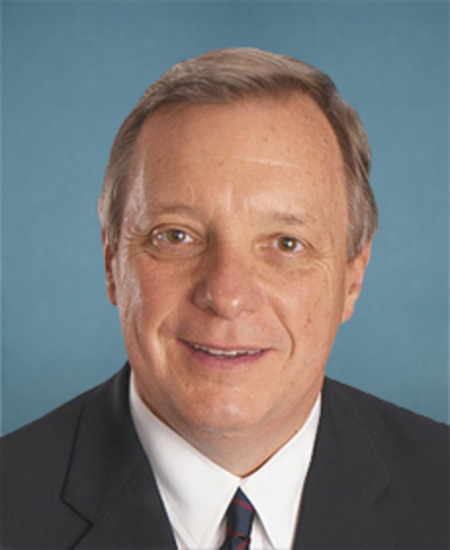
Sen. Richard J. Durbin
Sponsored bills
Maddy summaryThis bill establishes uniform eligibility requirements for foreign graduate medical schools seeking U.S. federal student aid under the Higher Education Act. It requires schools outside the U.S. and Canada to meet specific standards, including having at least 60% of students not classified as non-U.S. citizens and a 75% passing rate on licensing exams, to qualify for federal loans. The bill repeals special exemptions allowing certain Caribbean for-profit schools to bypass these rules, aiming to increase accountability. Current students enrolled at affected schools before the law's enactment will retain loan eligibility for up to four years after the school loses eligibility, but new students will face the new requirements starting July 2026.
This resolution supports the designation of 2026 as the International Year of the Woman Farmer and recognizes the critical role of women in agriculture. The resolution also encourages citizens to celebrate the impact these women have on the food systems and agricultural workforce of the United States by encouraging and empowering women to pursue careers in agriculture and cultivate leadership opportunities.
Maddy summaryThe Nurse Faculty Shortage Reduction Act of 2026 creates a federal grant program to help nursing schools address faculty shortages by supplementing salaries. Nursing schools applying for grants must submit detailed salary data comparing clinical nurse pay to current faculty pay (adjusted for inflation), then receive funding to cover the difference for eligible faculty - those who previously worked in clinical practice or are new hires. Grants last up to three years ($15 million annually from 2027-2031) and require schools to maintain the salary supplement level throughout the grant period. Priority is given to schools in health professional shortage areas, serving vulnerable populations, or focusing on underrepresented faculty. The program requires schools to demonstrate plans for sustaining salary support after the grant ends.
Maddy summarySRES 585 is a commemorative resolution honoring Ben Nighthorse Campbell, a former U.S. Senator from Colorado and the first Native American to chair the Senate Committee on Indian Affairs. It recognizes his military service, Olympic judo career, legislative work (including authoring the National Museum of the American Indian Act), and advocacy for tribal communities. The resolution has no policy impact - it formally expresses the Senate’s respect for his legacy, requests transmission to his family, and directs a moment of silence. It directly affects Campbell’s legacy and family, not any current policy or population. (Note: This is a procedural resolution, not a bill with legislative provisions.)
Maddy summaryThis bill amends federal law to prevent the President from nominating current or former political appointees as Inspectors General (IGs). It directly affects the appointment process for all federal agency IG positions by barring nominations of individuals serving as political appointees under the current President or who previously held such roles. The key provision states that the IG position itself cannot be considered a political appointee, ensuring the role remains non-partisan. This change aims to strengthen IG independence by removing potential political influence in their selection.
Maddy summaryThe NDO Fairness Act of 2026 amends federal law to regulate when law enforcement can delay notifying individuals whose electronic communications data is accessed via warrants or subpoenas. It requires courts to issue written findings before granting "preclusion of notice" orders, limiting delays to 1 year for child exploitation cases or 90 days for other investigations, and mandates that such orders must be narrowly tailored to avoid unnecessary secrecy. After the delay period ends, law enforcement must notify the affected person within 5 business days and provide a copy of the warrant, along with details about the investigation and the data accessed (with redactions for sensitive materials like child exploitation evidence). This bill directly affects law enforcement agencies, technology providers (like internet or phone companies), and customers whose data is accessed under these orders, while requiring annual public reports on how often these orders are used.
Maddy summaryThe Power for the People Act of 2026 requires data center owners and operators to pay for the grid upgrades they necessitate, rather than passing these costs to residential and business ratepayers. The bill establishes data center-specific load queues that prioritize facilities implementing low-carbon energy solutions, labor standards, and grid-friendly practices, while delaying or denying interconnection for those that don't meet these requirements. It also mandates that states create data center-specific rate classes to ensure these facilities pay for the full cost of grid upgrades, including transmission and distribution costs. The legislation includes provisions for transparency in forecasting data center energy demands and encourages the use of battery storage and renewable energy to reduce grid strain. The bill aims to protect grid reliability, ensure electricity affordability, and minimize environmental impacts of data center development.
Maddy summaryThis bill requires manufacturers, packers, or distributors of dietary supplements sold in the U.S. to submit detailed product information to the FDA starting in 2027. It mandates listing details like ingredient amounts, labeling, safety warnings, and product form, with existing products needing submission within 18 months of enactment and new products at time of market entry. The FDA will create a public online database of this information (excluding certain confidential details like proprietary blends), and non-compliance will be considered misbranding. The law also establishes a product listing number system and sets funding for implementation.
Maddy summarySJRES 84 is a joint resolution seeking to block a rule issued by the Centers for Medicare & Medicaid Services (CMS) under the Affordable Care Act. The rule, published in the Federal Register on June 25, 2025, aimed to improve affordability and integrity in health insurance marketplaces. If approved, this resolution would invalidate the rule under a federal disapproval process, preventing its implementation. This directly affects how health insurance plans are structured and priced for consumers using ACA marketplaces.