

Maddy summaryThe Fairness in Federal Disaster Declarations Act of 2026 requires FEMA to revise its rules for evaluating disaster assistance requests by establishing specific weighted criteria. For public assistance, localized impacts receive 40% weight, while economic factors (like local tax base, median income, and poverty rate compared to the state) receive 10%. For individual assistance, damage concentration and trauma each get 20% weight, with economic factors (same local indicators) receiving 5%. These changes apply to disaster declarations denied on or after January 1, 2012, directly affecting communities that previously had requests rejected due to insufficient economic consideration.
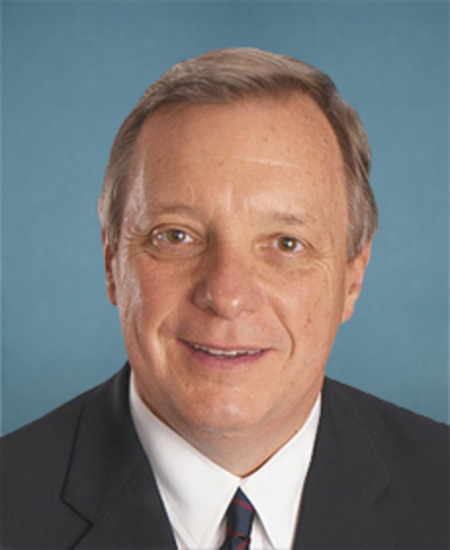
Sen. Richard J. Durbin
Sponsored bills
Maddy summaryS 3905, the Tariff Refund Act of 2026, requires U.S. Customs and Border Protection (CBP) to refund all duties unlawfully collected under the International Emergency Economic Powers Act (IEEPA) to importers within 180 days of the bill's enactment, including interest. It mandates CBP to reliquidate previously processed imports to calculate refunds and prioritizes small businesses for faster processing, with coordinated outreach to them via the Small Business Administration. The bill also requires CBP to submit regular reports to Congress detailing refund progress and timelines. This directly affects importers who paid IEEPA duties, with specific provisions to streamline refunds for small business importers.
Maddy summaryThe American Homeownership Act restricts tax deductions for interest and depreciation on residential properties owned by institutional investment entities or "large owners" (defined as those holding 50+ single-family units). It creates exceptions for new construction, rehabilitation of uninhabitable properties, sales to individuals for primary residence, and properties serving affordable housing through tax credit programs. The bill also prohibits federal housing agencies from selling properties or providing mortgage loans to these large investors and allocates savings from these tax changes to fund affordable housing programs. These provisions aim to encourage homeownership by limiting tax benefits for large-scale rental property ownership while directing resources toward affordable housing development.
Maddy summaryThe SAVES Act of 2025 establishes a five-year pilot program at the Department of Veterans Affairs (VA) to fund nonprofit organizations that provide service dogs to eligible veterans with specific disabilities, such as blindness, mobility issues, PTSD, or traumatic brain injury. Nonprofits must apply competitively, meet training and animal welfare standards (including ADA compliance), and provide service dogs at no cost to veterans, with the VA covering all program expenses. The VA will also provide ongoing veterinary insurance for the dogs, which continues even after the pilot ends. This program is funded with $10 million annually for five years, targeting veterans as defined by VA medical criteria.
Maddy summaryThis bill, titled the Security and Freedom Enhancement Act of 2026, amends the Foreign Intelligence Surveillance Act to reform how intelligence agencies collect and use information about Americans. It directly affects the FBI, intelligence agencies, and the Foreign Intelligence Surveillance Court by requiring stricter rules on searching communications of U.S. persons and limiting access to data about Americans located in the United States. Key provisions include mandatory audits of FBI queries, new approval requirements for searching sensitive individuals like elected officials, expanded reporting to Congress, and restrictions on purchasing personal data from data brokers. The bill also strengthens oversight by requiring the Inspector General to conduct periodic audits and mandates greater transparency through public reporting of surveillance activities.
Maddy summaryThe Healthy Families Act would require most private employers and certain government entities to provide employees with earned paid sick time, allowing workers to take up to 56 hours per year for their own health needs, caring for family members, or addressing domestic violence, sexual assault, or stalking. Employees would earn 1 hour of paid sick time for every 30 hours worked, with the ability to use it for medical appointments, caring for family members with health needs, or seeking safety from violence. The bill prohibits employers from retaliating against workers who use this time and requires employers to post clear notices about the policy. It applies to most private employers, with specific provisions for government entities like the Library of Congress and Government Accountability Office.
Maddy summaryS 3868, the Count the Crimes to Cut Act, requires the Attorney General and specific federal agencies to compile detailed reports on federal criminal offenses. The bill mandates that agencies submit lists of all criminal statutory offenses (under federal law) and criminal regulatory offenses (enforceable via regulations), including their penalties, annual prosecution numbers over 15 years, and mental state requirements. These reports will be made publicly accessible via online indexes on government websites within two years. The bill directly affects agencies like the DOJ, EPA, FTC, and others listed, aiming to increase transparency about the scope of federal criminal law without changing existing penalties or enforcement.
Maddy summaryThis bill requires the Federal Trade Commission (FTC) to study firearm advertising and marketing for unfair or deceptive practices, such as ads targeting people under 18, implying illegal use, or promoting semiautomatic assault weapons. Within two years, the FTC must report findings to Congress and then create regulations to ban these practices within 18 months of the report. These regulations would apply to firearm manufacturers, dealers, and importers, prohibiting specific deceptive marketing tactics. Violations would be enforced under existing FTC authority, with penalties matching current unfair business practice violations.
Maddy summary# Summary of Workplace Discrimination and Harassment Legislation This comprehensive bill expands protections against workplace discrimination and harassment while strengthening enforcement mechanisms for workers. Key provisions include: 1. **Expanded Protections (Section 301)**: - Extends anti-discrimination protections to independent contractors, interns, fellows, volunteers, and trainees under major civil rights laws - Creates "covered establishment" definition for entities engaging these workers 2. **Nondisclosure/Nondisparagement Clause Ban (Section 302)**: - Prohibits employers from requiring workers to sign nondisclosure or nondisparagement clauses covering harassment or discrimination - Establishes strict requirements for settlement agreements (including 21-day consideration period, 7-day revocation period, and clear written disclosure) - Protects workers' right to report harassment to the EEOC without penalty 3. **Arbitration Restrictions (Section 303)**: - Bans mandatory pre-dispute arbitration agreements that prevent class or collective actions - Establishes new requirements for post-dispute arbitration agreements - Allows workers to sue employers who violate these provisions 4. **Federal Contractor Compliance (Section 304)**: - Requires federal contractors to disclose past violations of labor and civil rights laws - Establishes Labor Compliance Advisors at executive agencies - Creates a system for monitoring contractor compliance with labor laws 5. **Grant Programs (Sections 401-436)**: - Creates national grants to prevent and address employment discrimination - Establishes grants for legal assistance for low-income workers facing discrimination - Creates a system of state advocacy for workers' rights through state-level systems The bill aims to strengthen worker protections against discrimination and harassment while expanding access to legal remedies and creating new mechanisms for enforcement and prevention. It also includes provisions to ensure federal contractors comply with labor and civil rights laws and establishes new reporting requirements for contractors with past violations.
Maddy summaryThe Investing in Tomorrow's Workforce Act of 2026 provides federal grants to support training programs for workers at risk of losing jobs due to automation, with priority given to women, people of color, and lower-wage workers (those earning less than $40,000 annually). The bill authorizes funding for eligible partnerships to develop demonstration projects that help dislocated workers transition into in-demand technology sectors through skills training, job placement assistance, and employer partnerships. It expands existing workforce training programs under the Workforce Innovation and Opportunity Act to specifically address automation-related job displacement and requires grantees to report on outcomes including job placements, earnings data, and demographic breakdowns. The legislation is authorized for fiscal years 2026 through 2030 with funding for both new demonstration projects and expanded existing training services.