

Maddy summaryThe Pandemic Unemployment Fraud Recoupment Act (S 1018) extends the time period for states to recover overpayments and pursue fraud charges in pandemic unemployment programs from 3 years to 10 years. It requires individuals who received pandemic unemployment benefits they were not entitled to due to fraud to repay the amounts, though states may waive repayment if the individual was not at fault and repayment would be unjust. States must recover these overpayments through deductions from future unemployment benefits over a 10-year period and provide a fair hearing before requiring repayment. This law directly affects individuals who received fraudulent pandemic unemployment benefits and state agencies administering unemployment programs.
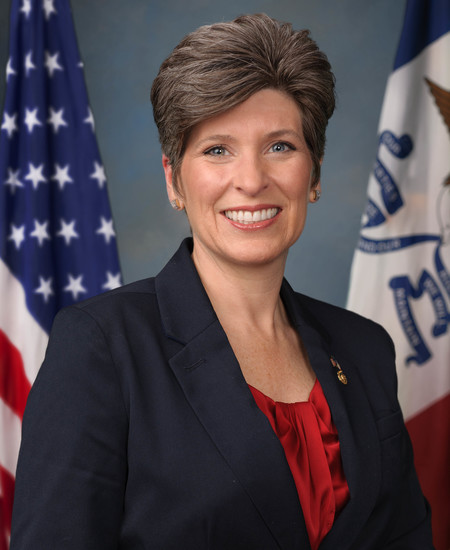
Sponsored bills
Maddy summaryThis bill (SJRES 22) seeks to block a specific rule issued by the Department of Education regarding federal student loan modifications. It targets the rule titled "Waivers and Modifications of Federal Student Loans," which included a one-time debt relief program announced in October 2022. The resolution requests Congress disapprove the rule under the Congressional Review Act, preventing the Department from implementing it. If approved, the rule would have no legal effect, directly affecting how student loan borrowers could access modifications or debt relief under that specific policy.
Maddy summaryThis bill prohibits public colleges and universities from denying religious student groups access to campus facilities or official recognition that is available to other student organizations. It directly affects public institutions of higher education and religious student organizations by requiring equal treatment based on the institution's policies for non-religious groups. The key provision states that no federal funds can be withheld from an institution that denies a religious group access to facilities or recognition due to its religious beliefs, practices, speech, leadership standards, or conduct codes. The law applies to all public colleges receiving funds under the Higher Education Act of 1965.
Maddy summaryThis bill prohibits the Environmental Protection Agency (EPA) from using federal funds to monitor methane emissions specifically from livestock operations. It amends existing law by adding a clear restriction that funds allocated under Section 60105(e) cannot be spent on tracking methane emissions from animal agriculture. The policy directly affects the EPA’s methane monitoring program, limiting its scope to exclude livestock sources. This is a funding restriction, not a ban on monitoring livestock emissions overall.
Maddy summaryThe Next Generation Fuels Act of 2023 requires automotive manufacturers to design vehicles (starting with 2028 models) to operate with gasoline containing 10-25% ethanol (with 95+ research octane) and later 10-30% ethanol (with 98+ octane). It mandates fuel retailers to offer 95+ octane gasoline at certain outlets by 2027 and 98+ by 2032, with specific availability requirements for different retail outlet sizes. The bill also requires clear labeling at fuel pumps and on vehicles to inform consumers about fuel requirements and consequences of using lower-octane fuels. Additionally, it establishes new standards for gasoline composition, including limits on aromatic content and requirements for low-carbon octane additives.
Maddy summaryS 875 prohibits federal funding for individuals or entities that have agreements, partnerships, or advertising relationships with social media companies headquartered in China, Russia, Iran, North Korea, Cuba, or Venezuela. It directly affects organizations receiving federal funds (like schools, nonprofits, or local governments) that do business with platforms from these countries. The law blocks funding if the social media company meets specific criteria, such as having over 1 million monthly active users and enabling user-generated content sharing. Exceptions include platforms focused solely on product reviews or emergency alerts. This bill imposes a concrete funding restriction based on the country of origin of the social media company involved.
Maddy summaryThis joint resolution (SJRES 20) seeks to block a 2023 rule from the Department of Justice and Bureau of Alcohol, Tobacco, Firearms and Explosives (ATF) that classified certain firearms with stabilizing braces as rifles under federal law. If passed, it would nullify the rule, meaning firearms equipped with these braces would no longer be subject to the rule’s classification requirements. The resolution uses the congressional disapproval process under Title 5, U.S. Code, to stop the rule from taking effect, directly affecting firearm manufacturers and owners who use stabilizing braces on weapons.
Maddy summaryThis is a ceremonial Senate resolution (SRES 110) honoring the late James George Abourezk, the first Arab American to serve in the U.S. Senate (1973-1979) from South Dakota. It commemorates his legacy, including his work re-establishing the Senate Committee on Indian Affairs and co-authoring key Native American rights legislation like the Indian Child Welfare Act. The resolution directs the Senate to adjourn in his memory and send a copy to his family, acknowledging his service as a representative and advocate for Native American communities. As a procedural resolution, it has no legislative effect beyond commemoration.
Maddy summaryThis bill revises a federal regulation to allow small meat processors to own local market agencies. It directly affects small-scale meat packers with annual slaughter volumes below specific limits: fewer than 700,000 cattle/sheep or 3 million hogs per year. The key change requires the Agriculture Secretary to exempt qualifying packers from existing ownership restrictions in federal regulations. This would enable smaller processors to more easily operate or own local meat marketing facilities without violating current rules. The policy change is purely procedural, modifying an existing regulation rather than creating new programs or funding.
Maddy summaryS 778, the COST Act of 2023, requires federal agencies and recipients of federal funds (including states, universities, and contractors) to publicly disclose funding sources for any program, project, or activity using federal money. Specifically, they must state the percentage and dollar amount of federal funding, plus the percentage and dollar amount from non-government sources in all communications (except short social media posts). Recipients must certify compliance in progress reports, and the Office of Management and Budget must annually review compliance and publish results. The bill also creates a public mechanism for anonymous reporting of non-compliant communications.