

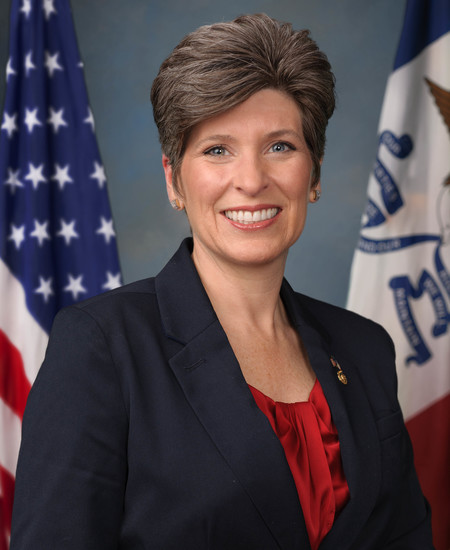
Maddy summaryS 177, the Protect Funding for Women's Health Care Act, prohibits federal funding from being provided to Planned Parenthood Federation of America or its affiliates, clinics, subsidiaries, or successors. This directly affects Planned Parenthood as a recipient of federal funds for women's health services. The bill ensures that funds previously allocated to Planned Parenthood will instead be made available to other eligible providers like community health centers, hospitals, and clinics serving women. It explicitly states this prohibition does not reduce overall federal funding for women’s health care or affect existing abortion-related funding restrictions in appropriations acts.
Sponsored bills
Maddy summaryS 6, the Born-Alive Abortion Survivors Protection Act, requires healthcare providers at facilities performing abortions to provide the same medical care to infants born alive during or after an abortion as they would to any newborn, including immediate hospital admission. The bill mandates that any provider or facility employee who witnesses a failure to provide this care must report it to law enforcement, with violations punishable by fines up to $5,000 or up to 5 years in prison. It also allows women who undergo abortions to pursue civil lawsuits for damages if providers fail to comply, including three times the abortion cost plus punitive damages. The bill defines "abortion" as procedures intended to kill the unborn child or terminate pregnancy without preserving the child's life after viability.
Maddy summaryThis bill would require the U.S. Secretary of State to re-designate Yemen's Houthi group (Ansarallah) as a foreign terrorist organization within 90 days of enactment. It mandates the President to impose existing sanctions under two executive orders - blocking property under E.O. 13224 and restricting travel under E.O. 13780 - on Ansarallah and its members, agents, affiliates, or entities they own or control. These sanctions would apply to the group and its associated individuals or organizations, directly affecting the Houthi leadership and their operational networks. The bill does not create new sanctions but directs the re-imposition of existing measures previously revoked by the Biden administration.
Maddy summaryThis bill extends the time limit for prosecuting fraud involving pandemic relief funds from 5 years to 10 years. It applies specifically to violations related to major COVID-19 programs like the CARES Act, American Rescue Plan, and Paycheck Protection Program. The key provision allows criminal prosecutions, customs forfeitures, and false claims lawsuits to proceed within 10 years of the fraud occurring, rather than the standard shorter timeframe. This change aims to give prosecutors more time to investigate and pursue cases involving misused pandemic funding. It directly affects federal prosecutors, law enforcement, and individuals or entities accused of fraudulently obtaining pandemic relief money.
Safeguard American Voter Eligibility Act or the SAVE Act This bill requires individuals to provide documentary proof of U.S. citizenship when registering to vote in federal elections. Specifically, the bill prohibits states from accepting and processing an application to register to vote in a federal election unless the applicant presents documentary proof of U.S. citizenship. The bill specifies what documents are considered acceptable proof of U.S. citizenship, such as identification that complies with the REAL ID Act of 2005 that indicates U.S. citizenship. Further, the bill (1) prohibits states from registering an individual to vote in a federal election unless, at the time the individual applies to register to vote, the individual provides documentary proof of U.S. citizenship; and (2) requires states to establish an alternative process under which an applicant may submit other evidence to demonstrate U.S. citizenship. Each state must take affirmative steps on an ongoing basis to ensure that only U.S. citizens are registered to vote, which shall include establishing a program to identify individuals who are not U.S. citizens using information supplied by certain sources. Additionally, states must remove noncitizens from their official lists of eligible voters. The bill allows for a private right of action against an election official who registers an applicant to vote in a federal election who fails to present documentary proof of U.S. citizenship. The bill establishes criminal penalties for certain offenses, including registering an applicant to vote in a federal election who fails to present documentary proof of U.S. citizenship.
Firearm Industry Non-Discrimination Act or the FIND Act This bill prohibits the federal government from entering into contracts with an entity that discriminates against firearm trade associations or businesses that deal in firearms, ammunition, or related products. Specifically, the bill requires a federal agency to include in each contract for the procurement of goods or services awarded by the agency a clause requiring the prime contractor to certify that it (1) has no policy, practice, guidance, or directive that discriminates against a firearm entity or firearm trade association; and (2) will not adopt a policy, practice, guidance, or directive that discriminates against a firearm entity or firearm trade association during the term of the contract. The bill establishes (1) a similar requirement with respect to subcontracts, and (2) penalties for violations. The bill makes such prohibition inapplicable to a contract for the procurement of goods or services that is a sole-source contract.
Maddy summaryS 144, the Farm to Fly Act of 2025, directs the U.S. Department of Agriculture (USDA) to integrate sustainable aviation fuel (SAF) into existing bioenergy programs. It defines SAF as clean jet fuel meeting strict environmental standards - requiring at least a 50% reduction in lifecycle greenhouse gas emissions compared to petroleum jet fuel - and explicitly includes SAF in USDA manufacturing assistance programs for biorefineries. The bill mandates a new USDA collaboration initiative to coordinate across agencies, leverage farmers' resources, and advance SAF development through public-private partnerships. This policy change directly affects U.S. farmers (by creating new markets for feedstocks) and the aviation sector (by expanding clean fuel supply), while advancing the Sustainable Aviation Fuel Grand Challenge goals.
Maddy summaryThis bill requires the President to designate Ansarallah (the Houthi movement in Yemen) as a foreign terrorist organization within 30 days, imposing sanctions on the group and its officials or affiliates. It mandates a 180-day strategy to restore Red Sea navigation and degrade Ansarallah's military capabilities, including targeting their command structure and support networks. The bill also requires a report on humanitarian aid obstacles in Yemen under Ansarallah's control, detailing bureaucratic barriers, interference with aid delivery, and threats to aid workers. The provisions directly affect Ansarallah, its leadership (including key figures like Abdul Malik al-Houthi), and U.S. efforts to support humanitarian access in Yemen.
Maddy summaryS 94, the "Miracle on Ice Congressional Gold Medal Act," authorizes three congressional gold medals for the 1980 U.S. Olympic Men's Ice Hockey Team members. The bill directs the Secretary of the Treasury to strike the medals, with one medal displayed at each of three locations: the Lake Placid Olympic Center, the U.S. Hockey Hall of Fame Museum in Minnesota, and the U.S. Olympic & Paralympic Museum in Colorado Springs. The legislation also permits the sale of bronze duplicates to cover costs, with proceeds going to the U.S. Mint. This is a commemorative measure recognizing the team's 1980 Olympic victory, not a policy change affecting current legislation or constituents.
Maddy summaryThis bill requires mandatory detention for certain noncitizens (aliens) charged with crimes resulting in death or serious bodily injury, specifically those who entered without inspection, had a revoked temporary visa, or fall under specific immigration categories. It directly affects noncitizens facing such criminal charges and crime victims or their families. Key provisions mandate U.S. Immigration and Customs Enforcement (ICE) to notify victims (or their families if deceased) about the alien’s identity, immigration status, custody details, and removal efforts. The bill also clarifies that these requirements do not override existing victim rights under other laws.