

Unemployment Insurance Technology Modernization Act of 2021 This bill requires the Department of Labor to study and report on the technology needs of federal and state unemployment compensation programs. Based on this study, Labor must develop, operate, and maintain a modular set of technology capabilities to modernize the delivery of unemployment compensation. Before the deployment of the technology capabilities to all states, Labor must select at least four states to participate in a pilot program to test the technology capabilities and demonstrate that they meet requirements. The bill establishes accessibility requirements for filing online unemployment compensation claims. In addition, it prohibits the technology capabilities from relying solely on a high-risk automated decision system to (1) deny a claim for unemployment compensation, (2) reduce the amount of unemployment compensation for which a claimant is eligible, or (3) deny a claimant's right to appeal an unemployment compensation decision.
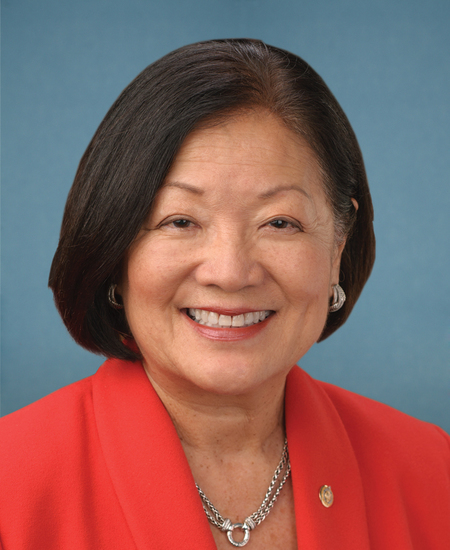
Sponsored bills
Forced Arbitration Injustice Repeal Act This bill prohibits a predispute arbitration agreement from being valid or enforceable if it requires arbitration of an employment, consumer, antitrust, or civil rights dispute.
This resolution designates the week of February 22-February 26, 2021, as Public Schools Week.
Safe Step Act This bill requires a group health plan to establish an exception to medication step-therapy protocol in specified cases. A medication step-therapy protocol establishes a specific sequence in which prescription drugs are covered by a group health plan or a health insurance issuer. A request for such an exception to the protocol must be granted if (1) an otherwise required treatment has been ineffective, (2) such treatment is expected to be ineffective and delaying effective treatment would lead to irreversible consequences, (3) such treatment will cause or is likely to cause an adverse reaction to the individual, (4) such treatment is expected to prevent the individual from performing daily activities or occupational responsibilities, (5) the individual is stable based on the prescription drugs already selected, or (6) there are other circumstances as determined by the Employee Benefits Security Administration. The bill requires a group health plan to implement and make readily available a clear process for an individual to request an exception to the protocol, including required information and criteria for granting an exception. The bill further specifies timelines under which plans must respond to such requests.
Democracy Restoration Act of 2021 This bill addresses the voting rights of individuals convicted of a criminal offense and the restoration of their voting rights. First, the bill declares that the right of a U.S. citizen to vote in any election for federal office shall not be denied or abridged because that individual has been convicted of a criminal offense unless, at the time of the election, such individual is serving a felony sentence. Further, the bill provides for enforcement of, and remedies for violations of, the bill. In addition, it sets forth requirements for state and federal notification of individuals of the restoration of their voting rights. Finally, the bill prohibits federal funding of construction or improvement of a place of incarceration unless U.S. citizens incarcerated in that jurisdiction are notified, upon release, of their voting rights.
This resolution recognizes Black History Month as an opportunity to reflect on U.S. history and to commemorate the contributions of African Americans. It calls for the United States to (1) honor the contribution of pioneers who helped to ensure its legacy; and (2) move forward as a nation "indivisible, with liberty and justice for all."
New Deal for New Americans Act of 2021 This bill provides assistance to immigrants and addresses issues related to naturalization. The bill establishes the National Office of New Americans to (1) welcome and support immigrants, (2) promote and support immigrant integration, and (3) promote the pursuit of U.S. citizenship among immigrants. The bill also establishes grant programs for eligible entities that provide (1) legal services for immigrants, (2) English language education that focuses on integrating students into society, and (3) workforce development training that supports the economic integration of immigrants. The bill also reauthorizes the Citizenship and Integration Grant Program within U.S. Citizenship and Immigration Services (USCIS). USCIS shall establish a nonprofit entity to spur innovation in the expansion of citizenship preparation programs and to support assistance for immigrants seeking permanent resident status or citizenship. The bill also requires the Department of Homeland Security to (1) report to Congress before increasing fees for immigration adjudication and naturalization services above the levels of such fees on January 1, 2019, and (2) waive or reduce certain immigration-related fees for low-income aliens. The bill also (1) waives the English proficiency requirement for the naturalization of certain permanent residents, (2) repeals the public charge ground for deportation, (3) requires states to provide for automatic voter registration to qualifying new citizens unless that individual declines, and (4) sets a floor of 125,000 to the maximum number of refugees who may be admitted into the United States each year.
International Human Rights Defense Act of 2021 This bill establishes in the Department of State a permanent Special Envoy for the Human Rights of LGBTQI (lesbian, gay, bisexual, transgender, queer, or intersex) Peoples who shall serve as the principal State Department advisor regarding human rights for LGBTQI people and represent the United States in diplomatic matters relevant to the human rights of LGBTQI people. The special envoy shall periodically provide Congress with a U.S. global strategy to prevent and respond to criminalization, discrimination, and violence against LGBTQI people. The State Department and the U.S. Agency for International Development may provide assistance to prevent and respond to such activities against LGBTQI people. The bill also requires that annual country reports on human rights practices include information on criminalization, discrimination, and violence based on sexual orientation and gender identity.
Duty To Report Act This bill requires political committees, candidates for federal office, and other individuals to report to the Federal Election Commission (FEC) and the Federal Bureau of Investigation (FBI) any offers of prohibited contributions, including offers of nonpublic information regarding other candidates, by foreign nationals. Specifically, political committees and candidates must report to the FEC within 24 hours any (1) offers of prohibited contributions from foreign nationals, and (2) meetings with foreign governments or their agents. In addition, the bill requires political committees, candidates, immediate family members of candidates, and individuals affiliated with a campaign (e.g., employees and independent contractors) to report to the FBI within 24 hours any offers of prohibited contributions from foreign nationals. Further, the bill establishes a new criminal offense for knowingly and willfully failing to comply with this reporting requirement. A violator is subject to criminal penalties—a fine, a prison term of up to two years, or both. Such reported information may not be used to enforce certain immigration provisions related to the removal of undocumented aliens.
Equality Act This bill prohibits discrimination based on sex, sexual orientation, and gender identity in areas including public accommodations and facilities, education, federal funding, employment, housing, credit, and the jury system. Specifically, the bill defines and includes sex, sexual orientation, and gender identity among the prohibited categories of discrimination or segregation. The bill expands the definition of public accommodations to include places or establishments that provide (1) exhibitions, recreation, exercise, amusement, gatherings, or displays; (2) goods, services, or programs; and (3) transportation services. The bill allows the Department of Justice to intervene in equal protection actions in federal court on account of sexual orientation or gender identity. The bill prohibits an individual from being denied access to a shared facility, including a restroom, a locker room, and a dressing room, that is in accordance with the individual's gender identity.