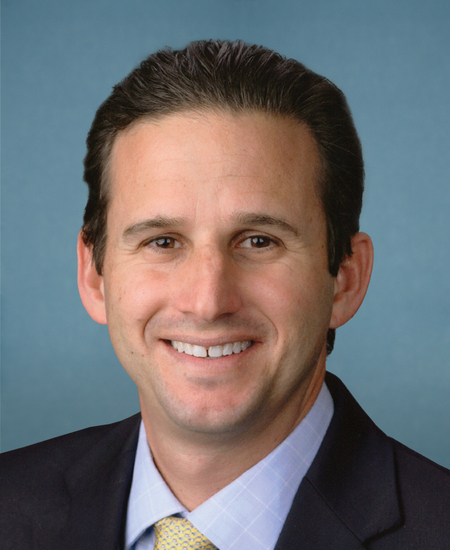
This resolution recognizes the long history and positive economic effects of the Social Security programs. It also expresses the belief that the Social Security and Supplemental Security Income programs should continue to be funded through mandatory spending.
Sponsored bills
Native American Tax Parity and Relief Act of 2022 This bill makes changes to the Internal Revenue Code to treat Indian tribal governments in the same manner as their state counterparts for tax purposes. Among other changes, the bill treats Indian tribes as states for purposes of the issuance of tax-exempt bonds, equalizes the tax treatment of charities funded by Indian tribal governments, enhances the ability of tribal governments to enforce child support orders, expands the special-needs adoption tax credit to apply to adoptions ratified by a tribal court, designates certain Indian areas as difficult development areas for purposes of the low-income housing tax credit, increases the amount of wages and benefits taken into account for purposes of determining the Indian employment tax credit, and creates an annual $175 million New Markets Tax Credit for low-income tribal communities and for projects that serve or employ Tribe members.
Solitary Confinement Reform Act This bill establishes standards for the use of solitary confinement at federal prisons. It generally limits the use of solitary confinement to situations that meet certain criteria, including confinement for the briefest term and under the least restrictive conditions practicable. It also limits the use of solitary confinement for certain categories of inmates, including pregnant women and individuals with serious mental illness. The bill requires the Bureau of Prisons (BOP) to establish a transitional process for inmates in solitary confinement, provide comprehensive mental health evaluations for inmates in solitary confinement, train employees on mental illness and the psychological effects of solitary confinement, and report annually on the use of solitary confinement. It establishes, within the BOP, an Office of the Civil Rights Ombudsman. Finally, it establishes a solitary confinement resource center within the Department of Justice's Bureau of Justice Assistance.
Maddy summaryThis resolution (SRES 805) is a non-binding Senate measure supporting the designation of September 18-24, 2022, as "Telehealth Awareness Week." It does not create new laws or policies but formally recognizes telehealth's role in expanding healthcare access - especially during the pandemic - and urges efforts to raise awareness about its benefits. The resolution highlights telehealth’s use by over 28 million Medicare beneficiaries and calls for promoting continued access to telehealth services for all communities, including rural and underserved areas. It directly affects public awareness and advocacy efforts around telehealth, without imposing any legal requirements on government or providers.
Websites and Software Applications Accessibility Act This bill requires employers, public entities, and public accommodations that provide goods or services through a website or online application to make those websites and applications accessible to individuals with disabilities. The requirement applies even if the good or service is offered only digitally. The Department of Justice (DOJ) must issue standards of accessibility for applicable entities to meet this requirement. The bill provides for enforcement by DOJ, the Equal Employment Opportunity Commission, and individual civil action. It also establishes various review and reporting requirements.
Sexual Abuse Services in Detention Act This bill authorizes grants and establishes a national resource center to support the provision of emotional support services for incarcerated individuals who have experienced sexual abuse.
Democracy Is Strengthened by Casting Light On Spending in Elections Act of 2022 or the DISCLOSE Act of 2022 This bill addresses campaign finance, including by expanding the prohibition on campaign spending by foreign nationals, requiring additional disclosures of campaign expenditures, and requiring additional disclosures regarding certain political advertisements. Specifically, the bill expands existing foreign money prohibitions to include disbursements for paid web-based or digital communications and federal judicial nomination communications. It also prohibits foreign nationals from contributing to campaigns related to ballot initiatives and referenda. The Government Accountability Office must, for each four-year election cycle, study and report on the incidence of illicit foreign money in federal elections. Next, the bill makes it unlawful to establish or use a corporation, company, or other entity with the intent to conceal an election contribution or donation by a foreign national. A violator is subject to criminal penalties—a fine, a prison term of up to five years, or both. Covered organizations (e.g., corporations, labor organizations, and political organizations) must, within 24 hours, file reports with the Federal Election Commission to disclose campaign expenditures of more than $10,000 during an election cycle. The bill also requires organizations to provide additional disclosures regarding political advertisements, including the donors who contributed the most money to that organization in the last year.

Learning Excellence and Good Examples from New Developers Act of 2021 or the LEGEND Act of 202 1 This bill requires the National Oceanic and Atmospheric Administration (NOAA) to develop and implement a plan to make certain operational models available to the public and periodically review innovations and improvements made to such models in order to improve the accuracy and timeliness of NOAA forecasts. In developing and implementing the plan, NOAA may make accommodations to ensure the public release of any model, information, documentation, or data does not jeopardize national security; intellectual property or redistribution rights; certain trade secrets, commercial information, or financial information; any models or data that are otherwise restricted by contract or other written agreement; or its mission to protect lives and property. NOAA must prioritize making available to the public operational models that it developed.
Veterans and Consumers Fair Credit Act This bill applies certain military consumer credit protections to all consumers. Specifically, the bill caps the interest rate on extensions of consumer credit at 36%.
Secure and Fair Enforcement Banking Act of 2021 or the SAFE Banking Act of 2021 This bill generally prohibits a federal banking regulator from penalizing a depository institution for providing banking services to a legitimate cannabis-related business. Prohibited penalties include terminating or limiting the deposit insurance or share insurance of a depository institution solely because the institution provides financial services to a legitimate cannabis-related business and prohibiting or otherwise discouraging a depository institution from offering financial services to such a business. Additionally, proceeds from a transaction involving activities of a legitimate cannabis-related business are not considered proceeds from unlawful activity. Proceeds from unlawful activity are subject to anti-money laundering laws. Furthermore, a depository institution is not, under federal law, liable or subject to asset forfeiture for providing a loan or other financial services to a legitimate cannabis-related business. The bill also provides that a federal banking agency may not request or order a depository institution to terminate a customer account unless (1) the agency has a valid reason for doing so, and (2) that reason is not based solely on reputation risk. Valid reasons for terminating an account include threats to national security and involvement in terrorist financing, including state sponsorship of terrorism.