

Maddy summaryS 566, the "Charitable Act," modifies tax deductions for charitable contributions for individuals who do not itemize their deductions on federal income taxes. It allows these taxpayers to deduct up to one-third of their standard deduction amount for 2023 and 2024 tax years, instead of the usual itemized deduction. The bill also removes references to a repealed penalty provision (Section 6662(b)(10)) and adjusts related penalty language in the tax code. This directly affects non-itemizing taxpayers who make charitable contributions, providing a new deduction option for those years only. The changes apply to tax years beginning after December 31, 2022.
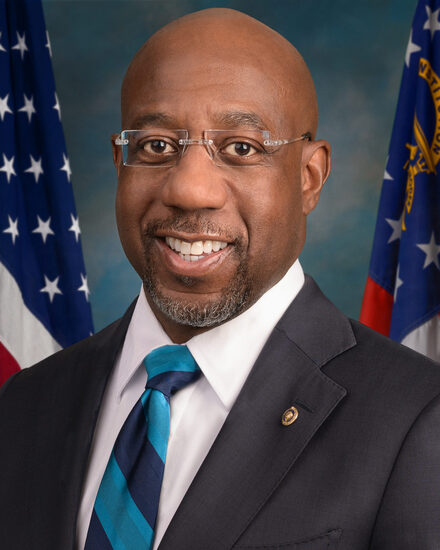
Sen. Raphael G. Warnock
Sponsored bills
Maddy summaryThis bill requires background checks for most private firearm transfers between unlicensed individuals by mandating that such transfers occur through a licensed dealer. It directly affects unlicensed buyers and sellers of firearms who would otherwise transfer guns without checks, except for specific exceptions like family gifts, law enforcement transfers, temporary safety-related transfers, or transfers for hunting/shooting at designated locations. Key provisions include requiring licensed dealers to conduct background checks as if they were transferring the firearm themselves and adding a new requirement for written certification from the unlicensed transferee. The bill does not create a national gun registry and leaves state laws intact.
Maddy summaryThe DISCLOSE Act of 2023 requires organizations making campaign-related disbursements over $10,000 to disclose detailed information about their funding sources, including the names and addresses of major donors and the top 5 or 2 funders for political communications. It closes loopholes allowing foreign nationals to influence U.S. elections by prohibiting foreign contributions to ballot initiatives and requiring disclosure of foreign money in campaigns. The bill also mandates "stand by every ad" requirements, requiring political communications to include disclaimers identifying who paid for them and listing major funders. These provisions apply to corporations, labor organizations, and other groups making political expenditures, with the goal of increasing transparency in campaign finance.
Maddy summaryThis bill amends the Food and Nutrition Act to exclude basic allowance for housing (BAH) paid to military members from income calculations for food assistance programs. It directly affects military families who receive housing allowances and apply for benefits like SNAP (Supplemental Nutrition Assistance Program). The key change adds a specific provision (paragraph 20) to the Act, ensuring BAH is not counted as income when determining eligibility. This adjustment makes it easier for military families to qualify for nutrition assistance by removing their housing allowance from income calculations.
Maddy summaryThis bill establishes new health and documentation requirements for importing live dogs into the U.S. It requires all imported dogs to be vaccinated, parasite-free, properly identified, and accompanied by a certificate from an accredited veterinarian. Importers must submit electronic documentation before arrival, and dogs imported for transfer (like adoption or sale) must be at least 6 months old. Exceptions exist for research, veterinary treatment, or Hawaii-specific cases where dogs stay within the state. Violations could trigger fines, quarantine, or removal of dogs.
Maddy summaryThis resolution (SRES 70) is a symbolic gesture by the U.S. Senate to support designating February 1, 2023, as "George Washington Carver Day." It recognizes George Washington Carver’s life and work, highlighting his origins as an enslaved person born around 1864, his pioneering role as Iowa State University’s first Black student and faculty member, and his decades of agricultural research and outreach at Tuskegee University. The resolution commemorates his contributions to developing hundreds of agricultural products and improving the lives of farmers, particularly those in poverty. It does not create new laws or policies, but formally honors his legacy.
Maddy summaryThis symbolic Senate resolution (SRES 69) designates February 18-25, 2023, as "National FFA Week" to celebrate the 95th anniversary of the National FFA Organization. It recognizes FFA’s role in developing future agricultural leaders through its educational programs, which serve over 850,000 students across all 50 states and territories. The resolution has no legal effect - it is a ceremonial expression of support, not a policy change. It directly affects the FFA organization and its members by highlighting their educational mission during a designated week.
Maddy summaryThis bill provides tax relief to new car dealers who sold inventory due to supply chain disruptions between March 2020 and January 2022. It allows dealers using the LIFO tax accounting method to avoid recognizing income from those sales in the year they occurred, instead deferring tax consequences until they replace the sold vehicles. Dealers have until 2026 to repurchase similar vehicles; if they fail to fully replace the inventory within this window, they must pay back the tax plus interest. The relief directly affects new car dealers who held LIFO inventory during the specified period and are subject to IRS tax rules.
Maddy summaryThis resolution (SRES 63) is a symbolic Senate measure formally celebrating Black History Month. It acknowledges the contributions of African Americans to U.S. history and society, recognizes the origins of Black History Month (beginning as Negro History Week in 1926), and encourages nationwide reflection on this history. The resolution does not create new laws or policies but serves as a formal Senate acknowledgment of the significance of Black History Month in February. It aims to honor the legacy of African American pioneers and promote learning about their impact on the nation.
Maddy summaryThis symbolic Senate resolution designates March 3, 2023, as "National Speech and Debate Education Day" to honor the value of speech and debate programs in schools. It does not create new laws or affect specific groups, but encourages educational institutions, businesses, and communities to recognize these programs. The resolution highlights how speech and debate education develops communication, critical thinking, and civic skills in students. It formally affirms the importance of these programs without imposing any requirements or funding changes.