

Maddy summaryThe Child Care for Working Families Act establishes a new federal program to provide affordable, high-quality child care for working families with children under age 6. It requires states to implement a sliding fee scale (with no copayment for families earning up to 85% of state median income) and develop a tiered quality system for child care providers, with payment rates that support staff wages comparable to elementary educators. The bill prioritizes access for underserved populations including children with disabilities, children experiencing homelessness, children in foster care, and children from low-income families, while requiring states to improve child care quality and supply through dedicated funding streams. States must submit detailed plans demonstrating how they will meet these requirements to receive federal funding, which will be provided through a combination of direct child care assistance and quality improvement activities.
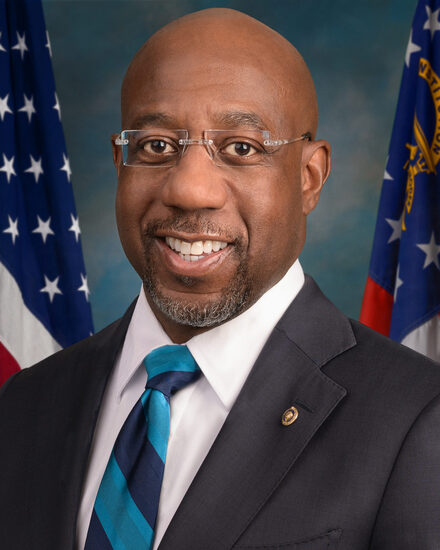
Sen. Raphael G. Warnock
Sponsored bills
Maddy summaryThis bill prohibits insurers from denying coverage, canceling policies, or increasing premiums for life, disability, or long-term care insurance solely because someone is a living organ donor, without considering actual health risks. It also updates the Family and Medical Leave Act to include recovery from organ donation surgery as a qualifying condition for leave for private-sector employees and federal workers. Additionally, the bill requires the Health and Human Services Secretary to update public educational materials about living organ donation within six months, covering benefits, risks, and the new insurance protections. These changes directly affect living organ donors, insurers, and employers who must comply with the updated leave and insurance rules.
Maddy summaryThe Forced Arbitration Injustice Repeal Act (S 1376) would prohibit businesses from requiring customers, employees, or small businesses to agree to private arbitration for future employment, consumer, antitrust, or civil rights disputes. It also bans agreements that prevent people from joining class or collective lawsuits in these areas. The bill makes such forced arbitration clauses unenforceable and ensures courts - not arbitrators - decide if the law applies. This directly affects individuals and small businesses in disputes involving workplace discrimination, product issues, unfair competition, or civil rights violations, allowing them to seek justice collectively in court.
Maddy summaryThe PREPARE Act of 2023 creates a new pre-disaster mitigation loan program for small businesses under the Small Business Administration (SBA). It allows businesses to borrow up to $500,000 to fund physical improvements that reduce future disaster damage, such as reinforcing buildings or protecting equipment. The SBA must conduct outreach to small businesses - especially in economically depressed areas - and provide technical assistance to help them apply for these loans. The bill authorizes $25 million annually from 2024 through 2028 for the program and requires annual reports tracking loan usage, geographic distribution, and cost savings avoided through mitigation efforts.
Maddy summaryThe LAKES Act (S 1358) amends federal laws to streamline how recreation fees are collected and used at water resource projects managed by the U.S. Army Corps of Engineers. It allows qualified non-Federal public entities (like local governments) and private nonprofit organizations to collect visitor fees for recreation facilities, retain up to 100% of those fees, and use them specifically for operating and maintaining the site where fees were collected. The bill requires that at least 80% of fees collected at a single location must be spent there, and it explicitly states these fees cannot replace regular federal funding for recreation site operations. This directly affects local governments, nonprofit groups managing recreation sites, and the Corps of Engineers, which oversees the implementation.
Maddy summaryThe College Transparency Act requires the development of a new, secure data system to collect and share detailed, aggregate information about college students' enrollment, progression, costs, financial aid, and post-graduation outcomes like earnings and employment. This system will make publicly accessible, non-personally identifiable information through an easy-to-use website to help students and families make informed college decisions. Institutions participating in federal student aid programs must submit data to the system, while the bill prohibits collecting sensitive information like health data, discipline records, or exact addresses. The law also includes strong privacy protections, requires data minimization, and prohibits using the data for federal rankings or selling it to third parties. The system aims to reduce reporting burdens on institutions while improving transparency about college outcomes.
Maddy summaryThis bill prohibits states from restricting or interfering with lawful reproductive health care services (including abortion, contraception, and related care) provided by health care providers like doctors, nurses, and pharmacists in states where such services are legal. It creates federal enforcement mechanisms, allowing the Attorney General, providers, or affected individuals to sue states or officials enforcing violating laws and seek court orders to stop such restrictions. The bill also blocks federal funding for states pursuing legal actions against providers offering lawful reproductive care and allocates $40 million for legal defense grants to providers and $40 million for security grants to protect facilities and patients. It explicitly prevents health insurance companies from denying coverage or suing providers solely for offering lawful reproductive services.
Resident Physician Shortage Reduction Act of 2023 This bill increases the number of residency positions eligible for graduate medical education payments under Medicare for qualifying hospitals, including hospitals in rural areas and health professional shortage areas. Current law provides for an increase of up to 200 positions per fiscal year beginning in FY2023, with a total increase of 1,000 positions; each hospital may receive up to 25 additional positions. Current law also provides for an additional increase of up to 200 positions for FY2026, with at least 100 of these positions for psychiatry or related specialties; each hospital may receive up to 10 additional positions. The bill provides for an additional increase of 2,000 positions per fiscal year from FY2025-FY2031; during this period, each hospital may receive up to 75 additional positions in total under the bill and current law. The bill also requires the Government Accountability Office to report on strategies to increase the diversity of the health professional workforce, including with respect to representation from rural, low-income, and minority communities.
Maddy summaryThis bill strengthens penalties for individuals or organizations charging veterans unauthorized fees when assisting with VA benefit claims. It directly affects veterans who might be targeted by unscrupulous representatives and the representatives themselves who attempt to charge such fees. The key provision adds a new subsection (b) to Section 5905, making it illegal to solicit, charge, or receive any fee for preparing or submitting VA claims - except as allowed under specific other sections. Violations can result in fines, up to one year in prison, or both.
Maddy summaryThe Love Lives On Act of 2023 restores survivor benefits for veterans' spouses who remarried before age 55 and before the bill's enactment, which they previously lost due to remarriage. It removes an expiration date for the Marine Gunnery Sergeant John David Fry Scholarship for surviving spouses and expands access to military commissaries and exchanges for remarried surviving spouses. The bill also extends TRICARE coverage to include remarried widows or widowers whose subsequent marriage ended.