

Maddy summaryThe PAST Act of 2024 amends the Horse Protection Act to strengthen protections against "soring" - the deliberate infliction of pain on horses to exaggerate their gait, primarily affecting Tennessee Walking Horses, Racking Horses, and Spotted Saddle Horses at shows, exhibitions, or sales. Key provisions include defining prohibited "action devices" (like certain boots or weighted shoes), implementing stricter disqualification periods for sore horses (180 days, then 1 year, then 3 years), requiring licensed, conflict-free inspectors, and increasing penalties for violations (fines up to $5,000 per offense and up to 3 years in prison). The bill directly affects event organizers, inspectors, competitors, and horse owners by mandating new inspection protocols and enforcement. It focuses on concrete policy changes to prevent animal cruelty in the horse show industry.
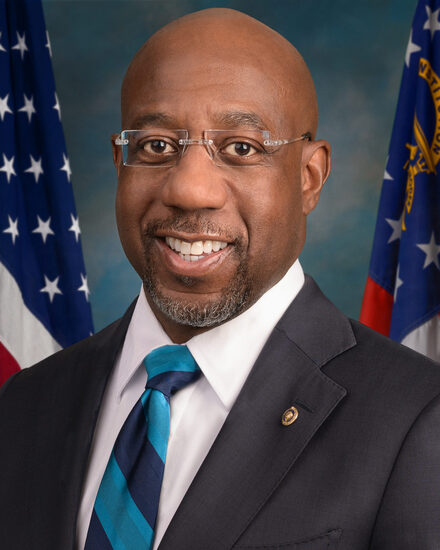
Sen. Raphael G. Warnock
Sponsored bills
Maddy summaryThe Telehealth Modernization Act makes permanent Medicare's temporary telehealth coverage rules that were set to expire in 2024, ensuring continued access for beneficiaries. It expands eligibility for healthcare providers who can offer telehealth services under Medicare, allowing the Secretary to add more professions (like nurse practitioners or therapists) after stakeholder consultation. The bill also changes payment rules for community health centers and rural clinics, treating telehealth services provided after 2025 as if delivered in person for billing purposes. Additionally, it permanently allows audio-only telehealth visits for Medicare coverage, removing previous restrictions.
Maddy summaryThe Recycling Infrastructure and Accessibility Act of 2024 establishes a federal pilot grant program to improve recycling access in underserved communities. It authorizes $30 million annually (2023-2027) to fund competitive grants for eligible entities - including states, local governments, tribes, and public-private partnerships - to build transfer stations, expand curbside recycling, and create hub-and-spoke infrastructure networks. Grants range from $500,000 to $15 million per project, with 70% of funds reserved for single or multiple underserved communities lacking nearby recycling facilities. The program prohibits grant use for education and requires the EPA to report on outcomes, including recycling rate improvements, within two years of first grants.
Maddy summaryThe Right to Vote Act (S 3916) establishes a fundamental right for all U.S. citizens of voting age to cast ballots in federal elections. It prohibits government actions that make voting harder (like strict ID laws or reduced polling places) unless those rules are the "least restrictive means" of achieving a significant government goal. Citizens can sue to challenge such rules in court, with courts required to handle these cases quickly and award attorney fees to successful plaintiffs. The law applies to all federal elections starting September 1, 2024, affecting voters and state/local governments that set voting rules.
Maddy summaryThe Downpayment Toward Equity Act of 2024 establishes a federal program providing downpayment assistance to first-generation homebuyers, primarily targeting socially and economically disadvantaged individuals and those from racial/ethnic groups that have faced historic barriers to homeownership. The program would allocate up to $100 billion in grants to states and eligible entities to cover downpayment costs, closing costs, and mortgage rate reductions for homebuyers with incomes up to 140% of median area income. Assistance is capped at $20,000 per homebuyer or 10% of the purchase price (whichever is greater), and recipients must occupy the home as their primary residence for at least five years. The program requires housing counseling before closing and mandates detailed demographic reporting to monitor equitable outcomes, with funds distributed based on population needs and housing market conditions.
Maddy summaryThe HELPER Act of 2023 creates a new FHA mortgage insurance program allowing eligible first responders and K-12 teachers to secure home loans with **no down payment**. It directly affects full-time law enforcement officers, firefighters, paramedics, EMTs, and public/private K-12 teachers who have worked in their roles for at least 4 of the past 5 years. Key provisions include requiring housing counseling, verifying employment status, and prohibiting monthly mortgage insurance premiums (replacing standard FHA requirements). The bill authorizes $660,000 for 2024 and $160,000 annually from 2025-2030 to fund this program, which expires after 5 years.
Maddy summaryThis bill aims to increase landlord participation in the Housing Choice Voucher program, which helps low-income families, seniors, and people with disabilities afford housing in the private market. It creates three main incentives: one-time payments to landlords (up to 200% of monthly housing payments) for accepting vouchers in low-poverty neighborhoods (census tracts with less than 20% poverty rate), security deposit payments to landlords on behalf of tenants, and bonus payments to public housing agencies that employ dedicated landlord liaisons. The bill establishes a $100 million annual "Herschel Lashkowitz Housing Partnership Fund" to finance these initiatives, with specific requirements to prioritize high-opportunity neighborhoods that have good access to schools, jobs, and transportation. It also includes reporting requirements for the Department of Housing and Urban Development to track the program's effectiveness in recruiting landlords in these areas.
Maddy summarySRES 575 is a Senate resolution that declares racism a public health crisis in the United States. It cites extensive evidence of racial health disparities, including lower life expectancy for Black, American Indian, and Alaska Native populations, higher maternal mortality rates, and disproportionate impacts of conditions like diabetes and cancer across racial and ethnic groups. The resolution commits the Senate to supporting local declarations of racism as a public health crisis and establishing a nationwide strategy to address health disparities and dismantle systemic racism. While this resolution doesn't create new laws or programs, it aims to raise awareness about how racism functions as a social determinant of health affecting access to care, housing, and opportunities.
Maddy summaryThis Senate resolution designates March 1, 2024, as "National Speech and Debate Education Day" to recognize the value of speech and debate programs in schools. It encourages schools, businesses, community groups, and individuals to celebrate this day but does not create new laws, funding, or requirements. The resolution acknowledges that these programs develop critical skills like communication, critical thinking, and collaboration for students. It is a symbolic gesture, not a policy change, focused on raising awareness about existing educational activities.
Maddy summaryThe John R. Lewis Voting Rights Advancement Act of 2024 updates the Voting Rights Act of 1965 to strengthen protections against voting discrimination. It clarifies how to prove vote dilution, denial, or abridgement claims and expands the types of voting changes requiring federal preclearance, including changes to election methods, boundaries, voter ID requirements, and polling locations. The bill requires states to provide public notice of voting changes at least 48 hours in advance and mandates transparency about demographic data related to polling places. This legislation directly affects states and political subdivisions with a history of voting rights violations, aiming to protect minority voters from discriminatory voting practices.