

Maddy summarySenate Resolution 740 is a formal apology by the U.S. Senate for the historical discrimination against lesbian, gay, bisexual, and transgender (LGBT) individuals who served in the military, Foreign Service, and federal civil service. It specifically addresses the forced discharges and exclusion of thousands of LGBT service members and employees from the 1940s through the 1990s, including policies like the 1949 military ban and the "Don't Ask, Don't Tell" policy. The resolution acknowledges the harm caused, apologizes on behalf of the U.S. government to affected individuals and their families, and reaffirms the commitment to equal treatment for all service members and employees. This resolution does not change current laws or provide benefits; it is a symbolic acknowledgment of past wrongs with no legal or financial impact.
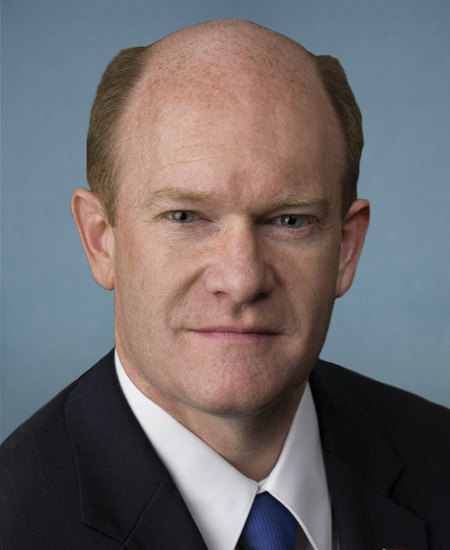
Sen. Christopher A. Coons
Sponsored bills
Maddy summaryThe Creating Hope Reauthorization Act of 2024 extends the expiration date of the priority review voucher program for rare pediatric disease treatments from September 30, 2024, to September 30, 2030. This program, established under the Federal Food, Drug, and Cosmetic Act, allows the FDA to issue priority review vouchers to pharmaceutical companies that develop treatments for rare pediatric diseases. These vouchers enable companies to expedite FDA review of other drug applications, creating a financial incentive to invest in rare disease research. The extension ensures continued support for developing treatments for rare pediatric conditions through 2030.
Maddy summaryThis bill creates a program to enhance the safety of state and local judges and court staff by establishing State judicial threat intelligence and resource centers. These centers, funded through eligible national nonprofits with expertise in judicial security, will provide security training, conduct threat monitoring, and coordinate with law enforcement to address safety risks. They will also develop standardized reporting systems, a national threat database, and security assessments for courts and judicial staff. Annual reports to Congress will track the number and severity of threats faced by judges and court personnel.
Maddy summaryThis bill reauthorizes and extends existing Alzheimer's disease and dementia programs through fiscal year 2029. It specifically provides $33 million annually for states and public health departments to support Alzheimer's initiatives, including community-based care and research translation. Key provisions require translating clinical trial findings into community practices and strengthen coordination with the CDC. The bill directly affects state health agencies and public health departments receiving federal funding for dementia care programs. It does not create new programs but extends current funding mechanisms and adds a new requirement to apply research findings to community-level interventions.
Maddy summaryThe ADVANCE Act of 2023 promotes U.S. nuclear energy development through several key provisions. It establishes prizes for the first entities to receive licenses for advanced nuclear reactors, including those for non-electric applications like hydrogen production and district heating. The bill extends the Price-Anderson Act through 2045, providing liability protection for nuclear power plant operators, and requires the Nuclear Regulatory Commission to report on reducing reliance on Russian uranium. Additionally, it includes provisions to streamline regulatory processes for nuclear facilities at brownfield sites and support workforce development in the nuclear industry.
Maddy summarySRES 735 designates July 17, 2024, as Glioblastoma Awareness Day to encourage public awareness of glioblastoma, a highly aggressive brain cancer with a 5-year survival rate of 6.9%. The resolution supports research efforts, promotes collaborative approaches to treatment development, and recognizes the challenges faced by patients and caregivers. It does not create new laws or funding but serves as a symbolic gesture to highlight the urgent need for improved treatments and greater understanding of this disease.
Maddy summaryThis bill requires Medicare Advantage plans (private insurance plans that cover Medicare benefits) to implement electronic systems for prior authorization requests by 2027, replacing outdated methods like fax. Starting in 2026, these plans must publicly report detailed data on prior authorization decisions - including approval/denial rates, appeal outcomes, and processing times - to the government. The government will publish this data online so seniors and providers can see how plans handle requests. These changes aim to reduce delays in care for seniors by making the process more transparent and timely.
Ensuring Nationwide Access to a Better Life Experience Act or the ENABLE Act This bill makes permanent three tax provisions relating to ABLE (Achieving a Better Life Experience) Accounts established to assist disabled individuals, specifically provisions allowing increased contributions to such accounts, the allowance of a retirement savings contribution tax credit up to $1,000, and allowing a tax-free rollover from a qualified tuition (529 plan) to an ABLE account.
Maddy summaryThis Senate resolution designates May 2024 as "ALS Awareness Month" to highlight amyotrophic lateral sclerosis (ALS), a progressive neurodegenerative disease with no cure. It does not create new laws or funding but formally recognizes ALS patients, caregivers, and advocates. The resolution affirms the Senate's commitment to supporting access to treatments, advancing research, reducing financial burdens, and ensuring quality care for those affected. It directly affects the ALS community in the U.S., including patients, families, and organizations working toward treatments and cures.
Maddy summaryS 4499, the Youth Lead Act of 2024, amends an existing provision in the Agricultural Research, Extension, and Education Reform Act of 1998. It extends the expiration date for grants to youth organizations from 2023 to 2029, specifically modifying Section 410(d)(2). This change directly affects organizations currently receiving or eligible for these agricultural education and youth development grants. The bill makes a procedural adjustment to the grant program's sunset date without altering funding levels or program requirements. It does not create new programs or change who qualifies for these specific grants.