

Maddy summaryThe Sudan Accountability Act requires the U.S. Secretary of State to submit regular reports on human rights violations in Sudan, including detailed assessments of atrocities like sexual violence and attacks on civilians, and U.S. responses to these violations. It mandates biannual determinations on whether actions by Sudanese armed groups constitute genocide, war crimes, or crimes against humanity, with public reports and congressional briefings. The bill also directs the development of a strategy to protect civilians through diplomatic efforts, targeted sanctions, and enhanced humanitarian access, while authorizing U.S. assistance for victim support and accountability mechanisms. These provisions primarily affect U.S. government agencies and aim to strengthen accountability for violence against Sudanese civilians, particularly women and children.
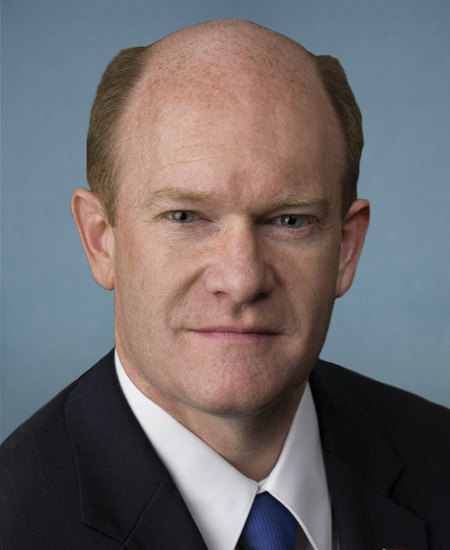
Sen. Christopher A. Coons
Sponsored bills
Maddy summarySRES 891 is a non-binding Senate resolution recognizing election workers' contributions to U.S. democracy. It formally acknowledges that approximately 630,000 election workers manage over 100,000 voting locations across 10,000 local jurisdictions each election cycle, noting their critical role in securing elections. The resolution highlights challenges like worker recruitment and the fact that many workers are over 60 years old. It does not create new laws or affect any individuals, as it is solely a symbolic gesture of appreciation.
Maddy summarySRES 892 designates the week beginning October 13, 2024, as "National Wildlife Refuge Week" through a symbolic Senate resolution. It recognizes the National Wildlife Refuge System's role in conserving habitats, protecting species (including over 380 threatened or endangered species), and supporting recreation and local economies. The resolution does not create new laws or funding but formally acknowledges the system's conservation work, recreational opportunities, and economic contributions, such as generating $3.2 billion annually for local communities. This is a ceremonial designation, not a policy change, aimed at raising public awareness.
Maddy summaryThis bill requires the National Institutes of Health (NIH) Director to submit an annual budget estimate for Alzheimer's research initiatives to the President for transmission to Congress, starting in fiscal year 2024. It specifically mandates including estimates of personnel needs alongside funding projections, based on recommendations from the National Alzheimer's Project Act. The law directly affects NIH operations by establishing a formal, recurring reporting requirement for Alzheimer's-related funding. This is not a new funding measure but a procedural change to improve transparency and accountability in budget planning for these initiatives. The bill amends Section 2 of the National Alzheimer's Project Act to add this annual reporting obligation.
Maddy summaryThe NAPA Reauthorization Act (S 133) extends the National Alzheimer’s Project through 2035, replacing previous 2025 deadlines. It requires annual progress evaluations on research, risk reduction, and health equity, with new provisions to promote healthy aging, address Alzheimer’s risk factors, and expand focus to underserved groups - including people with Down syndrome and historically high-risk populations. The bill mandates updated advisory committee membership, including individuals with Alzheimer’s diagnoses and representatives from underserved communities. These changes directly affect federal health agencies, researchers, and healthcare planning efforts focused on Alzheimer’s prevention and care.
Maddy summaryThe United States Commission on International Religious Freedom Reauthorization Act of 2024 extends funding and operational authorization for the U.S. Commission on International Religious Freedom (USCIRF) through fiscal year 2026. It amends the International Religious Freedom Act of 1998 to update annual appropriations from 2023-2024 to 2025-2026 and extends the Commission's legal authorization period until September 30, 2026. This reauthorization ensures USCIRF can continue its existing work of monitoring global religious freedom violations and providing policy recommendations to the U.S. government. The bill directly affects USCIRF by securing its continued operation and funding without changes to its core responsibilities.
Maddy summarySRES 888 is a ceremonial Senate resolution honoring the late James Ralph Sasser, a former U.S. Senator from Tennessee (served 1976-1993). It formally expresses the Senate’s "profound sorrow" over his death and requests the Secretary of the Senate transmit the resolution to his family. The resolution has no policy impact or direct effect on any individuals or entities - it is solely a commemorative gesture. As a procedural resolution, it does not create new laws or alter existing policies.
Maddy summaryThis bill authorizes the awarding of a Congressional Gold Medal to tennis legend Billie Jean King in recognition of her lifelong advocacy for gender equality in sports and society. The legislation specifically acknowledges her pivotal role in advancing women's rights, including her work leading to the passage of Title IX and her efforts to establish equal prize money in tennis. Under the bill, the Secretary of the Treasury would strike a gold medal featuring an image and inscription of Billie Jean King, with bronze duplicates available for sale to cover costs. The medal would be presented by congressional leaders as a formal recognition of her contributions to American society. This is a commemorative honor, not a policy that creates new legal requirements or funding.
Maddy summaryThis bill awards a Congressional Gold Medal to the United States Army Dustoff crews who served during the Vietnam War, recognizing their life-saving medical evacuations. The medal, to be designed by the Secretary of the Treasury in consultation with the Secretary of Defense, will be displayed at the U.S. Army Medical Department Museum. The bill honors the approximately 900,000 wounded personnel these crews transported over the course of the Vietnam War, including U.S., South Vietnamese, and allied forces, who relied on their rapid medical evacuation services.
Maddy summaryThis Senate resolution (SRES 882) designates the week of September 23-27, 2024, as "National Clean Energy Week." It is a symbolic gesture with no binding policy changes, intended to recognize the clean energy sector's role in the U.S. economy and environment. The resolution highlights clean energy's growth, job creation (citing 8.35 million jobs in 2023), and potential for reducing emissions, but does not enact new laws or allocate funding. It encourages public support for clean energy solutions and acknowledges entrepreneurs' contributions to U.S. energy leadership.